
Jump to winners | Jump to methodology
Top Young Insurance Professionals in Australia, New Zealand and Asia | Rising Stars 2026
The Rising Stars 2026, the top young insurance professionals, are rebuilding customer trust in general insurance with smarter claims, fairer pricing and broking clients can rely on
By Kim Champion
|
Key insights Why the 2026 Rising Stars matter now
|
In this report
Young insurance professionals close the trust gap
Insurance Business’ Rising Stars 2026 names 50 of the top young insurance professionals in Australia, New Zealand and Asia, all aged 35 or under. Selected by the IB team after a review of all nominations, this year’s winners are rebuilding customer trust while making claims, pricing and broking faster and fairer across the Asia-Pacific region.
Restoring trust in general insurance
David Norris, a policyholder from the NSW town of Eugowra, comes from a family that owned the local Central Hotel and stayed with the same insurer for more than 60 years. After the 2022 floods, he told a federal parliamentary inquiry that it was clear “loyalty only goes one way”.
Australian Securities and Investments Commission (ASIC) commissioner Alan Kirkland retold that story at the Insurance Council of Australia’s (ICA) Annual Conference on 10 October 2025, according to ASIC’s published remarks, “Rebuilding after the storm”.
Balancing automation with customer care
Young insurance professionals work under a squeeze. Customers and regulators want more care on every claim, while rising losses and margin pressure push insurers to automate.
Shelley Reynolds, general manager for SA at claims management firm Gallagher Bassett, says the standout young professionals look past the process to the person. “They pick things up quickly, ask useful questions and know that a good outcome often comes down to how well you solve the problem and how you treat the person behind the claim,” she says.
Why insurers are squeezed between trust and cost in 2026
-
Key takeaway: Australian general insurers face two pressures at once in 2026. Rising complaints and regulatory scrutiny demand more care on every claim, while soaring catastrophe costs and a shortage of qualified staff push insurers to automate.
Why is trust in Australian insurers falling?
Claims are where trust breaks down, and the complaint and breach data shows it.
-
17%: Trust in general insurers in CHOICE’s March 2026 survey, the lowest result in the survey’s 11-year history.
-
36,022: General insurance complaints to the Australian Financial Complaints Authority (AFCA) in 2025–26, up 5%, according to AFCA’s preliminary 2025–26 complaints data.
-
70,325: Breaches of the General Insurance Code of Practice, the industry’s self-regulatory code, self-reported by insurers in 2024–25, up 20.5% on the restated 2023–24 figure, according to the General Insurance Code Governance Committee.
-
47%: Rise in AFCA complaints about rejected comprehensive vehicle insurance claims in 2025–26.
|
Trust pressure General insurance complaints have nearly doubled in four yearsComplaints received by the Australian Financial Complaints Authority (AFCA), by financial year
2021–2218,563The baseline year, before claims from the 2022 floods reached AFCA. 2022–2327,924The biggest one-year jump, up 50%. Delay in claim handling was the top general insurance issue, with complaints about it up 66%. 2023–2429,335Up 5%. Comprehensive motor vehicle insurance made up 35% of general insurance complaints. 2024–2534,231Up 17%, driven largely by 7,880 add-on insurance complaints. Excluding add-on insurance, complaints were steady. 2025–2636,022 Nearly doubleUp 5% on preliminary data released on 4 August 2026, and 94% higher than 2021–22. |
How are rising costs changing claims work?
Insurers are handling more claims, and each one costs more to settle.
-
$4.8 billion: insured losses from extreme weather in 2025, up from $585 million in 2024, according to the ICA’s April 2026 extreme weather analysis
-
294,000: extreme weather claims handled by insurers in 2025, almost six times the year before, with the average cost per claim up 39% to $16,471, according to the ICA’s April 2026 analysis
-
$58.9 billion: claims paid by general insurers in 2025, up 18% on the previous year, according to the ICA
|
Cost pressure Extreme weather losses jumped eightfold in 2025Insured losses from declared extreme weather events in Australia, by calendar year
2023$2.35bInsured losses of $2.35 billion from declared extreme weather events. 2024$585mThe quietest year of the three, a reminder of how hard catastrophe costs are to forecast from one year to the next. 2025$4.8b Eightfold jumpMore than $4.1 billion came from Queensland alone. The November storms overtook Ex-Tropical Cyclone Alfred as the costliest event, while Alfred generated the most claims, at more than 133,000. |
|
Talent pressure Insurers are stepping up training as claims get harderShare of Australian insurers looking to increase investment in training and development Tap a bar for more 202548%Fewer than half of Australian insurers planned to lift spending on training and development. 202668%
|
|
|
Are the same pressures being felt in New Zealand and Asia?
The pressures reach across the region, and the Reserve Bank of New Zealand (RBNZ) warned that insurance affordability, underinsurance and insurer retreat from flood-exposed areas could increase financial stability risks, according to the RBNZ’s May 2026 Financial Stability Report.
In Asia, junior hiring is contracting just as insurers need to build their future bench, as explored in Insurance Business’ analysis of Asia’s insurance talent gap.
How the Rising Stars 2026 are changing the industry
Gemma Hannam, CHU Underwriting Agencies
Gemma Hannam Claims manager, CHU Underwriting Agencies
|
Gemma Hannam, catastrophe claims manager at CHU Underwriting Agencies in Melbourne, knows what customers need after a disaster because her team is the one they call. She relocated from AA Insurance in New Zealand in July 2025 and first led CHU’s Strata Service Centre team, which handles claim lodgement, a small claims portfolio and machinery breakdown claims. Within six months, she was promoted to manage CHU’s catastrophe claims.


The past year has asked Hannam’s team to handle new catastrophe events while pushing existing event claims through to completion. For Hannam, that has reinforced the value of adaptability, resilience and putting customers at the centre of every decision.
-
Claims manual. She led the development of CHU’s claims manual, a central resource that brings together the processes, guidelines and expertise its claims teams rely on.
Q&A with Gemma Hannam
You moved from New Zealand to lead CHU’s catastrophe claims response. How does managing strata catastrophe claims in Australia compare with your experience across the Tasman, and what has the past year’s event activity demanded of your team?
The scale and complexity of strata catastrophe claims in Australia presents unique challenges.
Catastrophe events often impact large numbers of owners, residents and communities simultaneously, requiring strong coordination, clear communication and effective stakeholder management to deliver the best possible outcomes for customers.
One of your key achievements was leading the development of CHU’s claims manual. What was the objective of the project, and what impact has it had on the business?
The objective of the project was to create a single source of truth that would strengthen consistency, improve knowledge sharing and support the continued growth of our claims function.
To bring the project to life, I focused on building collaboration and momentum across the business. I’m particularly proud of the project because its impact extends well beyond its development, creating a stronger foundation for both our teams and the customer experience.
Casey Kooiman, CHU Underwriting Agencies
Casey Kooiman Finance business partner, CHU Underwriting Agencies
|
Casey Kooiman, a finance business partner at CHU Underwriting Agencies in North Sydney, brings a finance lens to the customer. He joined CHU in 2020 as a graduate junior financial accountant and was promoted to finance business partner in 2023. Through CHU’s FuCHUre Forum, an annual program where selected staff spend six months on strategic projects outside their usual roles, he broke down how claims staff spend their days, and that work laid the foundation for CHU’s first customer experience program.

Kooiman is now part of Hungry Caterpillar, a project that builds on that program to improve claims communication.
-
Systems overhaul. When CHU Services outgrew its time-tracking and invoicing system, which had become so slow that each page took about a minute to load, Kooiman found a replacement, managed the supplier, migrated the data and trained staff himself. He remains the system’s administrator.
-
Tender win. His financial modelling helped CHU Services win a tender for a new business line.
Q&A with Casey Kooiman
What does a finance business partner bring to customer experience, and what changed as a result?
Finance business partners aren’t customer facing, so it might seem out of place, but nobody on the frontline sets out to give a bad customer experience; what usually gets in the way is workflows and internal operations that aren’t running efficiently. Our complaints data showed communication was one of the main pain points for customers, and that wasn’t because of how staff spoke to people; their days were filled with slow, menial tasks that could be automated.
What can you tell us about the Hungry Caterpillar project?
In strata, a single claim can involve a builder, a loss adjuster, a claims officer, a broker, a strata manager, the owner’s corporation and finally the lot owner, so even a simple update, like the builder coming on Tuesday, gets passed down the chain, which is where our caterpillar metaphor comes from. What we’re trying to work out is the best way to communicate with everyone without adding to people’s workloads by sending the same message to seven or eight people or spamming them with updates they don’t need.
Chayan Jain, CHU Underwriting Agencies
Chayan Jain Actuary, CHU Underwriting Agencies
|
For Chayan Jain, an actuary at CHU Underwriting Agencies in Sydney, trust starts with the premium. A member of CHU’s actuarial and data team, he was a major contributor to a pricing review of the company's largest product, which replaced outdated algorithms with models that are more transparent and easier to maintain. He is also helping CHU explore something new in strata pricing: the decisions owners make about how they run and look after their buildings.

Jain also keeps CHU’s catastrophe relativities up to date. These are the rating factors that adjust premiums for natural disaster exposure, and they need regular refreshing as climate change makes weather more volatile and catastrophe models draw on richer data. He measures each result against current economic conditions, so pricing stays technically sound, commercially sustainable and fair to customers.
-
Fair by design. He helped build checks, guardrails and scenario analyses to ensure that new pricing factors are applied consistently and guard against unintended bias.
-
Complaints early warning. He built an escalation-rate projection framework that gives CHU earlier visibility of complaint and claim escalation trends.
Q&A with Chayan Jain
You’re exploring behavioural indicators such as governance and proactive asset management in strata pricing. Which indicators show the most promise?
Historically, premiums have been dictated by inherent property attributes, factors largely outside an owner’s control. By introducing behavioural indicators that reflect governance and proactive asset management, we are factoring in decisions that sit squarely within the owners’ control. This directly influences premiums, driving more accurate pricing that reflects actual real-world behaviour and actively rewards positive actions.
You were a major contributor to the pricing review of CHU’s largest product. What changed for strata customers and brokers once the new models went live?
One of the biggest changes was moving to a more precise and reliable pricing approach, which gave us a much clearer picture of the underlying risk and improved the consistency of outcomes. We also undertook the pricing review in-house, giving us greater control, flexibility and the ability to revisit, replicate or refine it as needed in the future. The goal is always to strike the right balance between affordability and sustainability, ensuring pricing remains fair and relevant, not just at the point of review, but on an ongoing basis.
Lachlan Blake, The Bridge International Consulting
Lachlan Blake Consultant, general insurance practice, The Bridge International Consulting
|
Lachlan Blake, a Sydney-based senior consultant at The Bridge International Consulting, asks customers what they think, then turns the answers into decisions. At 25, he co-authored The Bridge’s 2026 Annual General Insurance Report, leading its customer research across more than 2,000 Australians. He also brought together findings from more than 200 interviews and supported the firm’s Heartbeat of General Insurance Report 2025.

Blake keeps a small helicopter on his desk. It’s a reminder from his mentor, John Simpson, to rise above the day’s tasks and see where his work fits.
-
AI 30-day challenge. During The Bridge’s Copilot rollout in 2025, he turned a Microsoft training course of 30 activities into a team competition. Staff began with drafting emails and summarising notes and progressed to building custom AI agents for their own work.
Stuart Brown, CEO of The Bridge International Consulting in Sydney, credits Blake’s range across both ends of an organisation. “He operates seamlessly from the boardroom to the front line, translating complex analytics and research into commercial outcomes that genuinely stick with clients,” he says.
Q&A with Lachlan Blake
The Bridge’s 2026 Annual General Insurance Report surveyed more than 2,000 Australians. Which finding on switching, claims or customer experience surprised you most?
Shopping around rates ranged from 82% for customers with a poor experience to 62% for those with an excellent experience, while switching rates fell from 55% to 16%. This reinforces that, although premium price is a significant factor, fast and fair claims handling is one of the strongest drivers of customer retention in insurance.
How has your mentor, John Simpson, shaped the way you work?
John was big on the fact that if you were involved in creating the work, you should also be in the room discussing and presenting it. At first, presenting to boards, CEOs and senior executives pushed me well outside of my comfort zone.
Teegan White, Sparke Helmore
Teegan White Senior associate, Sparke Helmore
|
Teegan White, a senior associate at law firm Sparke Helmore in Sydney, works where insurance law meets public confidence in the system. She advises across Compulsory Third Party (CTP) motor accident insurance and government statutory work, from designing claims systems to pursuing recoveries and auditing reserves. In the 2026 financial year, she was the highest fee earner in the firm’s CTP practice group, partners included.

As an associate, she brought a new statutory insurance client to the firm, and the work has since become an ongoing stream as the volume of transferred claims grows. She is also spearheading the firm’s AI pilot alongside three special counsel and partner-level colleagues.
-
Scheme updates. She writes Sparke Helmore’s MAD (Motor Accidents Division), a regular summary of decisions from the Motor Accidents Division of the NSW Personal Injury Commission for insurers and practitioners.
-
Mentoring. As the most senior lawyer in her team after the two partners, she trains and mentors more than 15 paralegals, graduates, lawyers and associates.
Q&A with Teegan White
You secured a new statutory insurance client created by the five-year transfer of treatment and care liability under NSW’s Motor Accident Injuries Act 2017. How did you spot the opportunity and win the appointment at associate level?
Because I had been closely involved in these matters from an early stage, I developed a detailed understanding of the claims, the statutory framework and the insurer’s objectives. When the transferred files and supporting documentation were provided to the new insurer, they recognised the value of having legal advisers who already understood the history and complexities of the claims. As a result, the client approached our firm to discuss ongoing legal support and subsequently retained our services.
Your AI pilot used synthetic data modelled on real matters. What did it show about where AI helps in CTP and statutory claims work, and where the risks sit?
Our pilot demonstrated that AI has significant potential to improve efficiency in CTP and statutory insurance practice, particularly in repetitive administrative tasks and information management. AI remains only as reliable as the information it is provided and can produce inaccurate legal or factual conclusions if outputs are not carefully reviewed by experienced practitioners or claims advisers. While AI can be a powerful assistant, it cannot replace professional judgement, empathy or the nuanced decision-making required in sensitive statutory claims.
Lachlan Hoy, Guardian Insurance Brokers
Lachlan Hoy Client relationship manager, Guardian Insurance Brokers
|
At 23, Lachlan Hoy, client relationship manager at Guardian Insurance Brokers in Adelaide, runs a book many brokers would share with a team. He manages around 250 clients and growing, without dedicated broker support staff, after taking on more clients from a colleague in October 2026. In the same week, he was promoted to client relationship manager.

Hoy moved up from an assistant role when a senior colleague became unexpectedly unavailable, completing his Diploma of Insurance Broking in three months along the way. Before Guardian, he worked at Dynamic Insurance Brokers in Unley. He learned fast that clients judge a broker on delivery. “I quickly realised that credibility isn’t determined by years in the industry, but by preparation, honesty, responsiveness and consistently delivering on commitments,” he says.
-
Insurer development programs. Allianz and QBE each selected him for their programs for emerging insurance professionals, giving him time with the underwriters he deals with every day.
-
Next steps. He becomes eligible for his Qualified Practising Insurance Broker designation in February 2027, and he plans to keep building specialist knowledge, from manufacturing to advice businesses.
Q&A with Lachlan Hoy
Tell us about a placement or claim from the past year you’re proudest of.
Earlier this year, I picked up a letter of appointment for a very big property owner, and it turned out one of their properties was really incorrectly insured. I combined all their properties onto one big policy, and about two days later they had a $150,000 to $200,000 claim on the property that hadn’t been written correctly, which probably wouldn’t have been paid under the old policy. Doing the right thing and making sure everything was covered correctly, when someone else hadn’t, meant my client benefited.
Did you set out to build a career in insurance?
I did really well in school, but I didn’t want to start engineering, realise I hated it and end up with a massive bill for uni fees, so I took a year to figure it out and worked on the phones in Allianz’s call centre. From there I moved to Dynamic Insurance Brokers in Unley, then to Guardian, and it’s just grown.
Monique Reibelt, Specialist Risk Group Australia
Monique Reibelt Partner, Specialist Risk Group (SRG) Australia
|
Monique Reibelt, a partner at Specialist Risk Group (SRG) Australia in Sydney, joined the business as its second employee in September 2025, leaving her role as principal, FINPRO/Cyber at Marsh Australia and New Zealand. Joining that early gave her the chance to shape the business from the ground up.
“I’ve always had strong views on how clients should be advised and supported, and being the second employee meant I could build those views into the foundations of the business: how we work with clients, how we grow the team and what our technology needs to deliver,” she says.
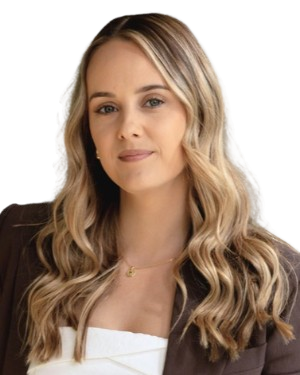
Reibelt worked on the licensing submission that let SRG launch as a self-licensed broker, led the systems build and developed the client value proposition the business trades on.
SRG Australia began trading in February 2026 and, within five months, had grown to more than 50 staff and over 400 clients and completed two acquisitions. Reibelt also built relationships in London and Singapore to bring the wider group’s expertise to Australian clients.
Her read on the market is clear. Conditions favour buyers, but the real opportunity, she says, is to do more than save premium. She wants clients to reinvest those savings in stronger cover, by restoring limits, bringing retentions back to sensible levels and removing exclusions insurers wouldn’t move on during the hard market.
The risks haven’t gone away, Reibelt says. Cyber incidents remain frequent, AI is making attacks faster and more convincing, privacy and ransomware reporting obligations have tightened, and directors face more scrutiny. “Brokers should be helping clients lock in quality cover now, because markets always turn, and the businesses that strengthen their programs today will be best placed when they do,” she says.
-
Specialist depth. She brings more than a decade of financial lines and cyber broking experience at Marsh, Honan Insurance Group and Moody Kiddell & Partners.
-
Industry voice. She has presented at Chubb and National Insurance Brokers Association (NIBA) functions and contributes to SRG Australia’s market reports.
Laurence Basell, managing director of SRG Australia, credits her with shaping every part of the business. “Monique is an amazing operator and was absolutely critical to the early success of SRG Australia,” he says.
Q&A with Monique Reibelt
In September 2025 you left a principal role at Marsh to join SRG Australia. What convinced you to make the move, and what was the hardest moment between the licence application and the first day of trading?
I worked with SRG for years on the wholesale side, so I already knew the calibre of the people and the depth of specialist capability behind the business. The opportunity to help build something in Australia with that global strength behind it, designed around the local market, was too good to pass up. The hardest part was the final few weeks before go-live, when everything had to land at once: the licence, our systems, insurer agreements and onboarding.
SRG Australia launched as a self-licensed broker with a major technology build. What did you set out to do differently for clients from day one, and how does the technology support it?
Our aim was simple: specialist advice without the friction. Rather than sending clients a stack of long forms that ask the same questions over and over, we’ve brought them together into smart online forms that capture the information once. The result is that our time goes into advice, not admin.
James Still, Still Insured
James Still Director and principal broker, Still Insured
|
James Still, director and principal broker of Still Insured in Ballarat, studied veterinary science before insurance found him. He joined his father’s Ballarat brokerage in 2014 and bought the business in December 2024. He leads a brokerage that wrote more than $4.4 million in gross written premium over the past 12 months, with a small team, a personal approach and client retention that has historically sat at around 95%.

His father, David Still, nominated him for the NIBA-Vero National Young Broker of the Year award shortly before his own death in February 2025. Still went on to win the national title and won Australia Underwriting Broker of the Year at the 2026 Insurance Business Australia Awards.
The most valuable lesson his father taught him, he says, is that “people will always remember how you treated them.” His father’s belief in relationships, integrity and going the extra mile for clients now underpins everything the brokerage does.
Still describes himself as naturally curious, and it shows in the way he brokers. “I love understanding how different businesses operate, what keeps their owners awake at night, and more importantly, what risks they haven’t even thought about yet,” he says.
The awards have also given him the confidence to challenge the way things have always been done. He is building Still Insured’s own technology ecosystem and automating administration, so clients can access insurance more easily without losing the human advice that makes a broker valuable.
“My goal isn’t necessarily to build the biggest brokerage in Australia. It’s to help build a better way of broking,” he says.
-
Trucking growth. Still Insured’s specialist trucking portfolio has doubled year on year.
-
Weird and wonderful risks. He has insured wildlife parks, travelling reptile businesses, skydiving and paragliding groups, and helicopter and luxury car events. He is now exploring how to insure emerging industrial technology, such as processing brown coal into clean energy.
Q&A with James Still
You’ve said transport and logistics is the most challenging class of risk you’re navigating. What makes it hard to insure?
Rather than simply finding someone willing to quote, we’ve worked closely with specialist underwriters and markets, drawing on decades of broking experience within our team, to develop tailored group insurance arrangements for trucking contractors. My philosophy is that just because a risk is difficult to insure doesn’t mean you stop looking for a solution.
What does running a brokerage from Ballarat ask of you that’s specific to regional clients?
In Ballarat, business is personal. We see our clients at our local supermarkets, at our children’s kindergartens and schools, at local sporting and community events and at our annual Man with a Pram event in the heart of town, that keeps us undeniably accountable to everyone we look after.
What young insurance professionals say it takes to rise
-
Key takeaway: The 2026 Rising Stars rate hard work and emotional intelligence as the traits that move a career forward fastest, and they place long tenure last. Asked separately to name the single most important trait for a leader in their own words, they most often pointed to people skills, followed by trust and integrity.
Results in this section come from Insurance Business’ Rising Stars nomination surveys for 2026 and 2025, based on the winners who answered each question (up to 41 in 2026 and 33 in 2025).
Which traits do Rising Stars rate most important?
When nominated, each Rising Star rated five traits from 1 (not important) to 5 (very important) for advancing quickly in an insurance career.
|
Proprietary data Rising Stars rank hard work first and long tenure lastHow the 2026 winners rated five traits for advancing quickly in an insurance career, compared with the 2025 winners Ranked by 2026 rating, out of 5
1Hard work
|
|
|
|
Which single trait do Rising Stars say defines a leader?
In a separate, open-ended question, winners were asked to name in their own words the single most important trait to become a leader in insurance.
|
Proprietary data In their own words, Rising Stars put people skills and trust firstAnswers to an open question asking the 2026 winners to name the single most important trait to become a leader in insurance, grouped by theme
People skills29%Emotional intelligence, empathy, care and the ability to connect with people. Emotional intelligence alone was the most named single trait, chosen by 18% of winners. Trust and integrity21%Integrity and the ability to earn the trust of clients, insurers and colleagues. Winners described acting in the client's best interests and keeping their word. Other or a mix of traits18%Resilience, accountability, enthusiasm for the industry and answers naming a mix of traits. Others named spotting problems early and the humility to keep growing. Judgement, courage and client focus16%Making sound calls, speaking up when something isn't right and putting clients first. Winners described backing their own judgement to make the hard call. Adaptability and learning16%Adaptability, open-mindedness, curiosity and continuous learning. Winners pointed to the pace of change from technology, AI, regulation and customer expectations. |
How do Rising Stars find their way into insurance?
More of this year’s winners chose insurance on purpose and more had a mentor guiding them.
Shelley Reynolds of Gallagher Bassett says employers should build on that support as the work gets harder. “As claims become more complex, young professionals need more than formal training. Giving them guided exposure to challenging work, regular feedback and access to the expertise of experienced leaders will help them build confidence and judgement without feeling overwhelmed,” she says.
What’s next for Australian insurers and young insurance professionals?
-
Key takeaway: Both sides of the squeeze are set to tighten. A redrafted General Insurance Code of Practice would make insurers’ key commitments legally enforceable and automatically accept home and motor claims left undecided after 12 months, while regulators press the industry to act on AI risk. That puts a premium on young insurance professionals who can speed up claims without losing the human touch.
What sets the top young insurance professionals in Australia, New Zealand and Asia apart?
-
Key takeaway: The 2026 Rising Stars refuse to choose between speed and care. They use data, AI and better processes to make insurance faster, while keeping the customer at the centre of every change.
Three traits set this year’s class apart:
-
They make the faster path the more human one: Their work ranges from automatic claims payments to pricing that staff can explain to customers.
-
They take responsibility early.
-
They value effort and people skills over time served: Winners rated hard work and emotional intelligence highest, and a long career at one employer lowest.
Shelley Reynolds of Gallagher Bassett has this advice for the next class: “Genuinely care about the work you do and the impact you can have on people’s lives. The recognition tends to come after that.”
Loyalty has sometimes only gone one way across the sector, but the industry’s newest leaders are working to make sure that’s a thing of the past.
Top Young Insurance Professionals in Australia, New Zealand and Asia | Rising Stars 2026







- Amber Corner
Senior Account Executive
McLardy McShane Corporate - Aram Chalabian
Sales Team Leader
BizCover - Bethany Wilson
Clinical Lead Pharmacist
Independent Medical Management - Britney Newman
Underwriter
QUS Strata Insurance - Cale Millett
Senior Account Executive – Workers’ Compensation
Elliott Insurance The Green Broker - Chris Carlin
Business Manager
Specialist Risk Group - Claire Simpson
Regional Manager
Aon - Dejah Hermans
Senior Insurance Broker
Aon - Demi Peters
Special Counsel
Wotton Kearney - Dion Owens
Branch Manager
Metrix Insurance Group - Domarena Shahen
Senior Associate
Kennedys - Ethan Gerrard
Chief Executive Officer
Gerrards Insurance Brokers - Greg Gazali
Senior General Manager
MIR Insurance Brokers - Hema Devi Raju
Data Engineer
BizCover - Irene Zhu
Senior Account Executive
KeyInsure - Isaac Proctor
Solicitor
Hesketh Henry - Isabella Sheman
Content and Communications Manager
TAL Australia - Jack Davies
Senior Associate
Meridian Lawyers - Jack Petts
Managing Principal, Cyber
Marsh - Jai Lawrance
Underwriter and QUS Elevate – Lead
QUS Strata Insurance - James Pott
Account Manager
Delmont Insurance Group - Jasmine Miller
Principal
Saltwater Insurance Solutions - Jason Wang
Director
111 Insurance Services - Julia Carraro
Senior Client Manager
Gallagher Bassett - Justin Purslowe
Senior Account Executive
Aviso WA Insurance Brokers - Kristofer Wright
Claims & Compliance Manager
Elliott Insurance The Green Broker - Kyle Patterson
Group General Manager
InsureBuild - Laura Hamblin
Liability Underwriting Manager – NSW/ACT
Vero - Leah Pryde
Partner
Mills Oakley - Ledisha Prasad
Junior Account Manager
Trans-West Insurance Brokers (NSW) - Louise McCormick
Senior Account Manager
Grace Insurance - Marcus Wolton
Chief Broking Officer
Gerrards - Matt Hay
Commercial & Personal Lines Broker
Business Insurance Limited - Nicholas Graham
Director, State Construction Manager – VIC & TAS
Johns Lyng Group - Nicola Benson
Relationship Manager
Master Builders Insurance Brokers - Nicole Hillis
Manager, Partner & External Communications
Suncorp NZ - Niki Pokala
General Manager
Sureinsure Insurance Advisors - Ozgur Gulseven
Underwriter, Professional Indemnity
Arch Insurance - Sanchita Chopra
Business Analyst
BizCover - Stephanie Mulvena
Underwriter
QUS Strata Insurance - Timothy Cantwell
Account Manager (Broker)
Shielded Insurance
Insights
Frequently asked questions: top young insurance professionals in Australia, New Zealand and Asia
What are the Insurance Business Rising Stars?
Rising Stars is Insurance Business’ annual list of the top young insurance professionals in Australia, New Zealand and Asia. Now in its 12th year, the 2026 list names 50 professionals aged 35 or under who work in or influence the general insurance industry, including 44 from Australia, five from New Zealand and one from Indonesia.
Which young insurance professionals are featured in the Rising Stars 2026 report?
The report profiles nine Australian winners: Gemma Hannam, Casey Kooiman and Chayan Jain of CHU Underwriting Agencies; Lachlan Blake of The Bridge International Consulting; Teegan White of Sparke Helmore; Lachlan Hoy of Guardian Insurance Brokers; Monique Reibelt of Specialist Risk Group (SRG) Australia and James Still of Still Insured.
Who are the Rising Stars 2026 winners in New Zealand and Asia?
In New Zealand, the winners are Ethan Gerrard and Marcus Wolton of Gerrards Insurance Brokers and Matt Hay of Business Insurance Limited in Christchurch, and Isaac Proctor of Hesketh Henry and Nicole Hillis of Suncorp NZ in Auckland. Greg Gazali of MIR Insurance Brokers in Jakarta, Indonesia, is the Asia winner.
What traits do young insurance professionals rate most important for their careers?
In Insurance Business’ Rising Stars 2026 nomination survey of 41 winners, hard work rated highest at 4.80 out of 5, followed by emotional intelligence at 4.68 and industry knowledge at 4.10. A long career at the same employer rated lowest in the Insurance Business survey, at 2.68, down from 3.00 in 2025.
Why is customer trust a priority for Australian insurers in 2026?
Trust in Australian general insurers fell to 17% in CHOICE’s March 2026 survey, the lowest result in the survey’s 11-year history. The Australian Financial Complaints Authority (AFCA) received 36,022 general insurance complaints in 2025–26, up 5%, and the Australian Securities and Investments Commission (ASIC) has made claims and complaint handling an enforcement priority for 2026.
How are young insurance professionals using data and AI?
Rising Stars 2026 winners are using data and AI to make insurance faster and fairer while keeping people in charge. Their work includes more transparent strata pricing, customer journey mapping, earlier warning of complaint escalations and an AI pilot on synthetic legal data. Shelley Reynolds of Gallagher Bassett says professionals who challenge AI outputs will stand out.
How can young insurance professionals stand out in insurance?
Shelley Reynolds, general manager for SA at Gallagher Bassett, advises young professionals to put their hand up for work that will teach them something, build relationships beyond their immediate team and be someone others can rely on. Rising Stars 2026 winners rated hard work and emotional intelligence highest in Insurance Business’ nomination survey.
Methodology
In July 2026, Insurance Business invited professionals from across Australia, New Zealand and Asia to nominate their most exceptional young talent for the 12th annual Rising Stars list. Nominees had to be aged 35 or under (as of 31 October 2026), working in a role connected to, influencing or impacting the general insurance industry. Each nominee also needed to demonstrate a clear commitment to a long-term career in insurance, with a genuine passion for the industry.
Nominees were asked to share details about their current role, key achievements, career goals and contributions to shaping the industry. Recommendations from managers and senior industry leaders were also taken into account. Following a comprehensive review of all submissions, the Insurance Business team selected 50 of the region’s most outstanding young professionals.