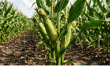
Fewer than one in four registered farmers in Davao Region hold an active crop insurance policy – even as a very strong El Niño, expected to persist through the first half of 2027, pushes drought conditions across the Philippines’ main agricultural zones.
The Philippine Crop Insurance Corporation (PCIC) reported on November 16, 2026, that only 158,447 of the 692,017 farmers on the official government registry in the region were insured as of November 15. The coverage is free. Registration does not trigger enrolment – each farmer must apply separately.
“It is not automatic that once they are registered, they are insured. We really have to look for those registered farmers so they can avail of the insurance,” said Rosalina Grabulan, PCIC Region 11 regional manager, speaking at the Kapehan sa Dabaw forum in Davao City.
Read more: Typhoon losses expose the gap Philippine crop insurance was never built to close
The gap runs deeper than enrolment numbers suggest. Even where PCIC does operate, the World Bank noted in July 2025 project documentation that its policies account for approximately 5% of total agricultural production value at risk – meaning the coverage problem persists even among enrolled farmers, according to the Manila Bulletin.
Davao Oriental recorded the lowest enrolment in the region, with 22,311 of 134,140 registered farmers covered. In Davao City, the figure stood at 16,871 of 66,641.
The 2026 General Appropriations Act raised PCIC’s budget by 45% to PHP 6.5 billion – the highest allocation in the programme’s history – expanding projected national coverage to 2.93 million farmers and fisherfolk, up from 2.35 million in 2025, according to the Department of Agriculture (DA).
Despite that, Davao Region had used only 80% of its PHP 407 million allocation as of October 30, 2026.
Grabulan urged eligible farmers to enrol before crops are exposed to risk, as coverage cannot be obtained once a peril has already materialised. Farmers not yet on the Registry System for Basic Sectors in Agriculture (RSBSA) – the government’s official agricultural registry – must register first before applying.
Drought-related claims have already begun. PCIC released PHP 442,973 to 78 corn farmers in Malita, Davao Occidental, on November 11 and 12, 2026, for dry spell losses. A further PHP 63,982 was paid to five corn farmers in Manay, Davao Oriental, on October 30.
As of November 15, PCIC had paid out PHP 192.16 million to 33,617 Davao Region farmers, with rice farmers accounting for PHP 145.66 million of that total. Nationally, the Department of Agriculture reported on November 11 that PCIC had paid PHP 703.06 million in El Niño-related claims to 77,522 farmers.
The Philippine Atmospheric, Geophysical and Astronomical Services Administration (PAGASA) forecast in July 2026 that there was an 81% probability of a very strong El Niño developing between October 2026 and January 2027, with a 97% probability of persistence through the first half of 2027, according to GMA News.
The scale of uninsured exposure is arriving just as the Philippines prepares a structural change to its agricultural insurance market.
A co-insurance pool – funded by US$70 million in World Bank loan proceeds over five years – is targeted for launch in January 2027, according to the Department of Agriculture. The pool will allow private insurers to operate alongside PCIC on a shared-risk platform. The Philippine Insurers and Reinsurers Association (PIRA) has confirmed it is participating in the pool’s design process alongside the DA, PCIC, and World Bank specialists.
PIRA executive director Michael Rellosa set out the case for private sector entry in July 2025: “Our agricultural sector, the backbone of our food security, and a significant employer, is particularly vulnerable to weather-related risks. By leveraging private sector efficiency and risk management expertise, we can create a more robust and sustainable agricultural insurance market,” he said, speaking at the 2025 CSR Conference and Expo.
Rellosa added: “If the risks that the farmers face are actually de-risked by the insurance industry, then banks would be willing to lend to farmers.”
Read more: Most Philippine farm losses fall outside the insured pool
PCIC has operated without reinsurance, which the World Bank has confirmed makes it among a very small number of agricultural insurers globally underwriting a national portfolio of crops, livestock, and fisheries against catastrophe risks with no risk transfer in place.