Hanwha Life’s latest international move did not involve acquiring a local insurer, licensing agents, or writing new policies in a new market. It involved blockchain infrastructure, tokenized assets, and a stablecoin MoU. For an industry watching large Korean carriers push further offshore, that choice of entry point is worth examining.
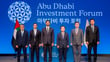
Hanwha Finance – which groups Hanwha Life, Hanwha General Insurance, Hanwha Investment & Securities, and Hanwha Asset Management – signed a series of agreements with Abu Dhabi institutions on September 17, a day after hosting the Abu Dhabi Investment Forum Seoul at JW Marriott Hotel Seoul.
Hanwha Life signed a partnership with the Abu Dhabi Investment Office (ADIO) across three areas: developing a digital asset ecosystem, connecting the capital markets of South Korea and Abu Dhabi, and advancing digital banking. The agreement includes real-world asset (RWA) tokenization – converting ownership of a financial or physical asset into a blockchain-based token.
Separately, Hanwha Asset Management, Abu Dhabi Global Market (ADGM), and Hana Financial Group – one of South Korea’s four largest banking groups – signed a memorandum of understanding (MoU) to explore stablecoin infrastructure and cross-border payment solutions between the two countries.
Hanwha Finance also joined as a premier partner for Abu Dhabi Finance Week (ADFW) 2026, scheduled for December. No financial commitments or implementation timelines were disclosed.
Read next: Korean insurers are becoming distribution architects, not just underwriters
The Abu Dhabi move sits within a broader pattern. South Korean life insurers’ cumulative net profit for the first three quarters of 2025 fell 8.3%, while non-life profit dropped 19.6% over the same period, according to data from South Korea’s Financial Supervisory Service (FSS) cited by The Korea Times. Demographic headwinds and tighter capital requirements under the Korean Insurance Capital Standard (K-ICS) are squeezing domestic margins.
An official from a major South Korean life insurance firm, quoted anonymously by The Korea Times in November 2025, put the pressure plainly: “Generating new profits from the core insurance business alone is challenging and competition is becoming increasingly fierce, making overseas expansion and the pursuit of new business lines essential.”
That is showing up in deal flow. The FSS reported that 46 overseas units of 12 Korean insurers generated combined net profit of US$197 million in 2025, up 24.8% year-on-year, according to Korea JoongAng Daily. Total assets held by those units reached US$16.24 billion, more than doubling from US$7.34 billion the prior year.
Hanwha Life has been active across multiple fronts. Beyond Abu Dhabi, it acquired a 40% stake in Indonesia’s Nobu Bank in mid-2025 and took a 75% stake in US brokerage Velocity Clearing shortly after, according to The Korea Times.
The agreements reflect a bilateral economic relationship that has grown considerably in scope. Non-oil trade between the UAE and South Korea reached US$6.9 billion in 2025, according to the UAE Embassy in Seoul. In April 2026, the two countries activated a Comprehensive Economic Partnership Agreement (CEPA) — South Korea’s first trade deal with any Gulf Cooperation Council member – covering tariff reductions on 91.2% of traded goods and services, according to Gulf News.
Abu Dhabi has also built regulatory infrastructure specifically designed for digital asset institutions. ADGM’s Financial Services Regulatory Authority (FSRA) first introduced a digital asset framework in 2018. By the end of 2025, over 20 firms were licensed within ADGM for virtual asset or fiat-referenced token activities, assets under management rose 36%, and 347 financial institutions were based in the centre, with 80 newly licensed that year, according to ADGM’s 2025 annual results.
H.E. Rashed Al Blooshi (pictured left), CEO of the Registration Authority at ADGM, said the bilateral relationship underpins the interest from Korean institutions. “The growing economic relationship between the UAE and the Republic of Korea creates significant opportunities for Korean companies and investors looking to establish and expand their presence in Abu Dhabi and across the region,” he said.
Read next: South Korea life agents face 13% drop in new protection contracts
The RWA tokenization element is where insurance professionals should focus – because the infrastructure being discussed is already operational elsewhere in the sector.
In July 2025, Bermuda-regulated investment manager Members Capital Management launched MCM Fund I on the Archax digital asset exchange – described as the first tokenized, institutional-grade reinsurance fund. It holds exposure to natural catastrophe and cyber reinsurance contracts executed with global reinsurers and Lloyd’s syndicates.
The Bermuda Monetary Authority published a discussion paper in November 2025 examining how tokenized insurance-linked securities fit within existing rules, and followed with a formal consultation paper in April 2026.
Tokenized structures are beginning to reshape how reinsurance capital is sourced, collateralised, and moved across borders. If carriers with the scale of Hanwha Life – US$130 billion in AUM – build cross-border digital financial infrastructure from Abu Dhabi, the capital mechanisms behind insurance products may shift accordingly.
The UAE insurance market gives that backdrop some weight. Gross written premiums rose 14.9% year-on-year to AED74.8 billion in 2025, with health insurance the largest individual line of business at AED36.42 billion when national and foreign insurers are combined, according to the Central Bank of the UAE’s annual statistical report, as reported by Khaleej Times.
Hyek Woong Kwon (pictured fourth from the left), vice chairman and CEO of Hanwha Life, said the aim is to convert the agreements into operational outcomes. “Through this agreement, we will turn our cooperation with Abu Dhabi’s financial ecosystem into tangible business opportunities. Building on this partnership, we will further strengthen Hanwha Life’s foundations for growth as a leading global financial institution,” he said.
Dongjun Im (pictured fifth from the left), CEO of Hanwha Asset Management, focused on shared infrastructure. “We will contribute to building a stable and interoperable digital asset ecosystem while continuing to strengthen our competitiveness in the global digital finance sector,” he said.
Fatima Al Hammadi, head of the Fintech, Insurance, Digital and Alternative Investments cluster at ADIO, described the partnership’s scope. “Through our partnership with Hanwha we look forward to exploring opportunities across digital finance, digital assets, and financial innovation, while strengthening connections between Abu Dhabi’s financial ecosystem and key international markets,” she said.