Prudential Singapore has announced that its tied-agency financial representatives will be authorised to distribute unit trusts from 2027 – what the company describes as an industry first for Singapore’s life insurance sector. No other insurer has publicly made the same claim, but it has not been independently verified.
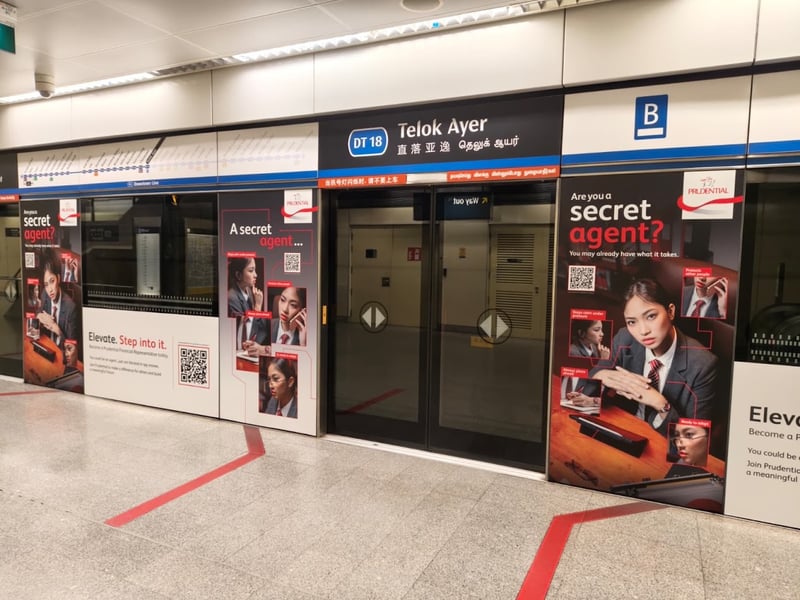
The announcement was first made in September 2026. Until that point, unit trusts had sat outside the tied agency model, available to clients only through independent financial advisers (IFAs) and separately through Prudential’s own independent financial advisory arm, Prudential Financial Advisers Singapore (PFA). The expanded scope will cover all approximately 5,400 financial representatives across both channels, per the company’s September 2026 announcement. Prudential is simultaneously running a recruitment marketing campaign – #PRUSecretAgent – to grow its agency force, targeting fresh graduates, mid-career professionals, and experienced representatives.
Rom Lee, chief agency officer at Prudential Singapore, said: “We recently announced that in 2027, we’ll be the first life insurer in Singapore to allow our tied agency financial representatives to distribute unit trusts, so they can meet growing demand for holistic financial advice.”
Read more: Singapore’s FA channel pulls ahead – and FWD is moving with it
Representatives who wish to advise clients on unit trusts will need to attain Capital Markets and Financial Advisory Services (CMFAS) certification before doing so, per the same September 2026 announcement. This sits within Singapore’s broader Financial Advisers Act framework, which governs the distribution of investment products including unit trusts, and applies equally to tied agents and IFAs.
Ben Tan, chief distribution officer at Prudential Singapore, said: “With this expanded offering, our financial representatives can help customers consider how unit trusts may support their retirement plans and goals. We want to make it simpler and more convenient for customers to have access to professionally managed, diversified portfolios as they build and grow their wealth for the long term.”
The move arrives as Singapore’s independent FA channel has steadily gained ground over tied agency. According to the Life Insurance Association Singapore’s (LIA Singapore) full-year 2025 results, FA representatives accounted for 35.7% of total weighted new business premiums – the largest share of any distribution channel for the second consecutive year. Tied representatives accounted for 28.2% over the same period, with 12,389 representatives holding exclusive contracts with tied-agency companies at end-2025.
Demand for investment-linked policies (ILPs) has been a key driver of that FA channel growth. ILPs accounted for 44% of total weighted new business premiums in the first half of 2026, per LIA Singapore’s 1H 2026 results. As more clients seek products that combine life insurance protection with investment returns, tied agents without access to investment products have faced a structural product gap relative to their IFA counterparts. By enabling tied agents to distribute unit trusts, Prudential is extending its captive network into that space – without converting to an open-architecture model.
Read more: Financial advisers overtake banks in Singapore life insurance sales
The competitive stakes extend beyond any single insurer. In May 2026, the Monetary Authority of Singapore (MAS) confirmed that ILPs will be classified as complex products, requiring standardised product disclosure through new Product Highlights Sheets and strengthened distribution safeguards. That decision applies to every intermediary distributing ILPs in Singapore, whether through a tied agency or an independent firm. For tied agents entering the unit trust space in 2027, those regulatory requirements will apply from the point of their first sale.
The implications reach further than Singapore. Across the Asia-Pacific region, the boundary between tied and independent distribution channels is under pressure from similar forces: rising client demand for investment-oriented products, regulators tightening disclosure standards, and insurers building out wealth management capabilities within their existing distribution networks. In Hong Kong, independent brokers have faced questions about commission disclosure requirements that have benefited tied agents. In Malaysia, the bancassurance and tied agency model continues to dominate but faces growing competition from licensed financial planners offering broader product access. Singapore’s experiment – expanding tied agent product scope without dismantling the tied model itself – will be closely watched as a template for how that pressure is managed elsewhere in the region.