Hong Kong’s Insurance Authority (IA) is preparing to release an artificial intelligence (AI) governance framework for the insurance sector, its chief executive has confirmed. Brokers and insurers operating in the city do not yet know what the framework will require of them or when it will take effect.
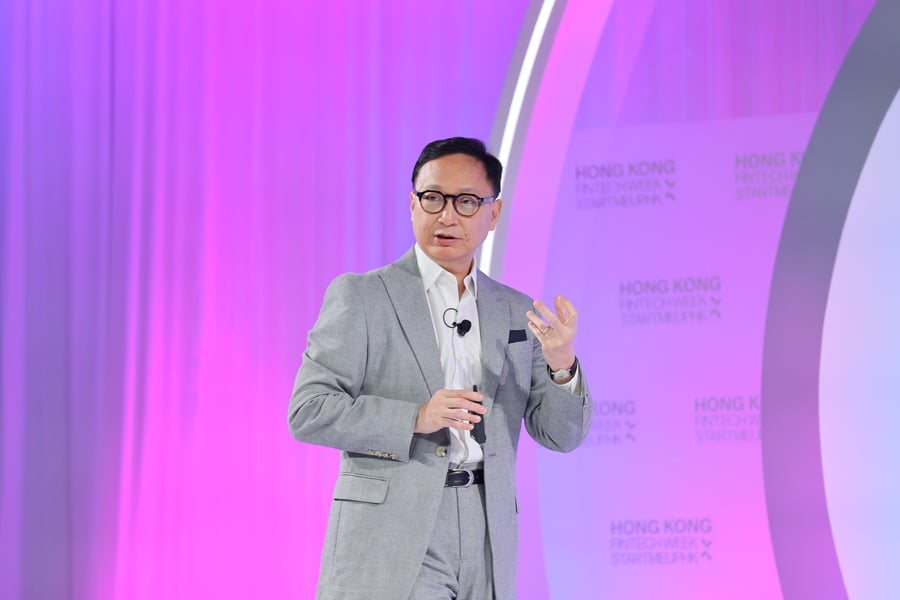
IA chief executive officer Clement Cheung (pictured) made the announcement during a keynote address at Hong Kong FinTech Week on November 2, 2026. The strategy sits under three pillars: governance, solution deployment, and talent development. It is tied to Hong Kong’s First Five-Year Plan, which positions the city as an international innovation and technology centre.
“In alignment with Hong Kong’s First Five-Year Plan to reinforce its position as an international innovation and technology centre, our artificial intelligence strategy for insurance sector covers governance, solution deployment and talent development, while leveraging our strategic strengths for greater resilience,” Cheung said.
Read more: Hong Kong plan puts new insurance markets on brokers’ radar
The IA’s AI Cohort Programme now includes 10 core participants after three insurers joined in June 2026, bringing the total to firms including AIA Group, AXA Hong Kong and Macau, FWD Group, HSBC Life (International), Prudential Hong Kong, and Manulife (International).
The programme has incubated more than 800 AI use cases and engaged more than 400 industry participants through solution-matching workshops that connect insurers with technology providers.
Each participant is required to establish an AI Centre of Excellence (CoE) in Hong Kong, develop internal AI talent, and sign an AI Pledge on responsible use. Some insurers have disclosed specific applications. Manulife Hong Kong, for example, is running AI tools across distribution, underwriting, and claims, including a bilingual customer enquiry assistant and a data-driven sales tool for agents.
The IA has not published a breakdown of which business lines or functions account for the bulk of the 800 use cases, making it difficult for brokers to assess how these tools might affect distribution, pricing, or claims handling in practice.
The governance framework is the detail that matters most for intermediaries. Once released, it will set the rules for how insurers adopt AI, with likely implications for third-party providers and distribution partners.
The IA has not disclosed a release date or the specific obligations the framework will impose. This is consistent with a pattern: the IA’s Five-Year Plan, announced in September 2026, did not attach implementation timelines to any of its commitments, including on AI.
That gap puts Hong Kong behind at least one regional peer. The Monetary Authority of Singapore (MAS) issued its Guidelines on Artificial Intelligence Risk Management on October 7, 2026, according to MAS. Those rules require financial institutions to maintain AI inventories, assign board-level accountability for AI risk, and apply proportionate controls across the AI life cycle. They take effect on October 7, 2027.
Read more: Agentic AI enters Hong Kong insurance – and brokers aren’t in the room
The International Association of Insurance Supervisors (IAIS) published its Application Paper on the Supervision of Artificial Intelligence in July 2025. It covers governance, accountability, robustness, transparency, and fairness, and reinforces that existing supervisory expectations apply to AI use in insurance.
Cheung also pointed to climate-related risks as an area where data modelling and AI could support the sector, noting that reliable data and sophisticated modelling enable informed decision-making for climate resilience.
For brokers across Asia-Pacific, the practical question is when Hong Kong’s framework will arrive and what compliance requirements it will carry. Until then, intermediaries working with Hong Kong-based insurers are operating under a regime that is encouraging AI adoption faster than it is writing the rules to govern it.