
Singapore's weather has become a betting market. Traders on Polymarket have put thousands of dollars on how hot the city-state will get, despite the platform having been blocked here for nearly two years. Weather contracts like these are now at the centre of a bigger push by Polymarket's US rival, Kalshi, which wants small businesses to treat prediction markets as a form of insurance.
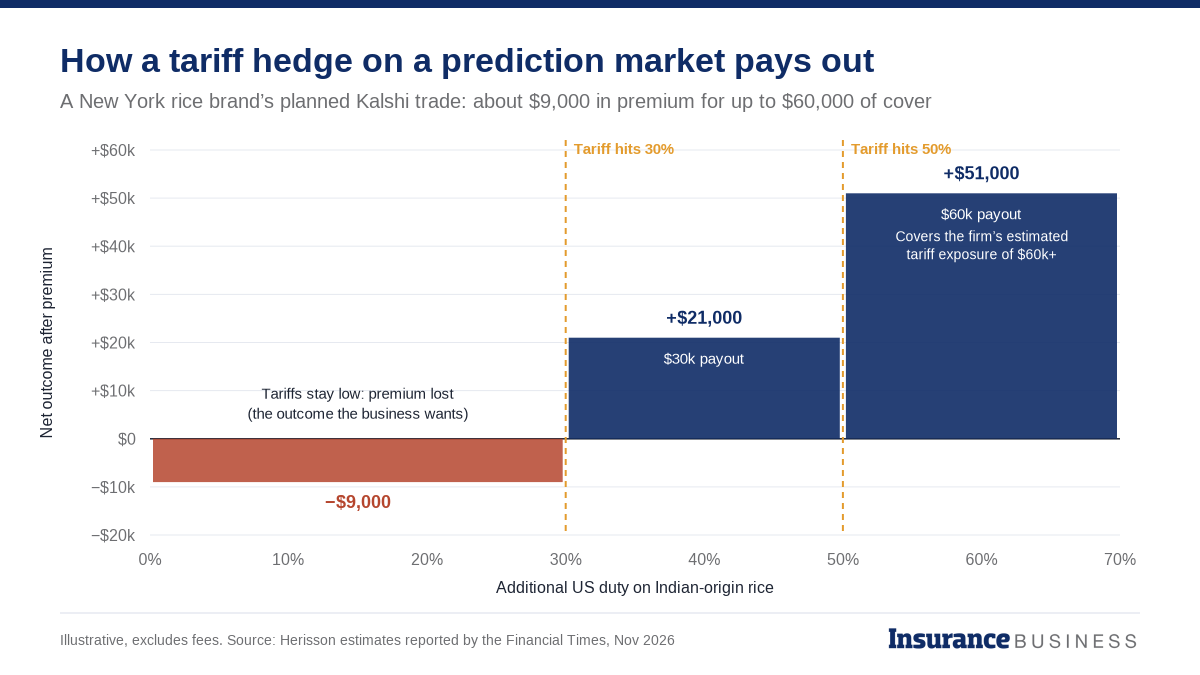
The case study Kalshi is promoting involves an Asian supply chain. Not So Boring, a New York health-food brand, imports rice from India and fears higher US duties could cost it more than US$60,000. So it plans to hedge on Kalshi.
The trade was structured by brokerage start-up Herisson. It asks whether the extra US duty on Indian-origin rice will pass a set level by a set date. The company would pay about US$9,000 and get back US$30,000 at a 30% tariff, or US$60,000 at 50%. Chief executive Izzy Sarrafzadeh told the Financial Times the contract was easier to understand than rice futures, and that banks won't build bespoke hedges for firms her size.
Tariffs are exactly the kind of risk keeping finance chiefs in the region awake. IB has reported that Allianz Trade expects Singapore insolvencies to rise 22%, partly because of tariff-driven cost pressure, as Singapore's CFO confidence slumps.
Read next: Singapore's CFO confidence crash conceals a broker opening
Kalshi says about 500 businesses have used it to hedge commodity prices, extreme weather and power outages. Nicolas Hull, its director of business development, describes the product as close to microinsurance, while conceding that most small firms he meets have never hedged.
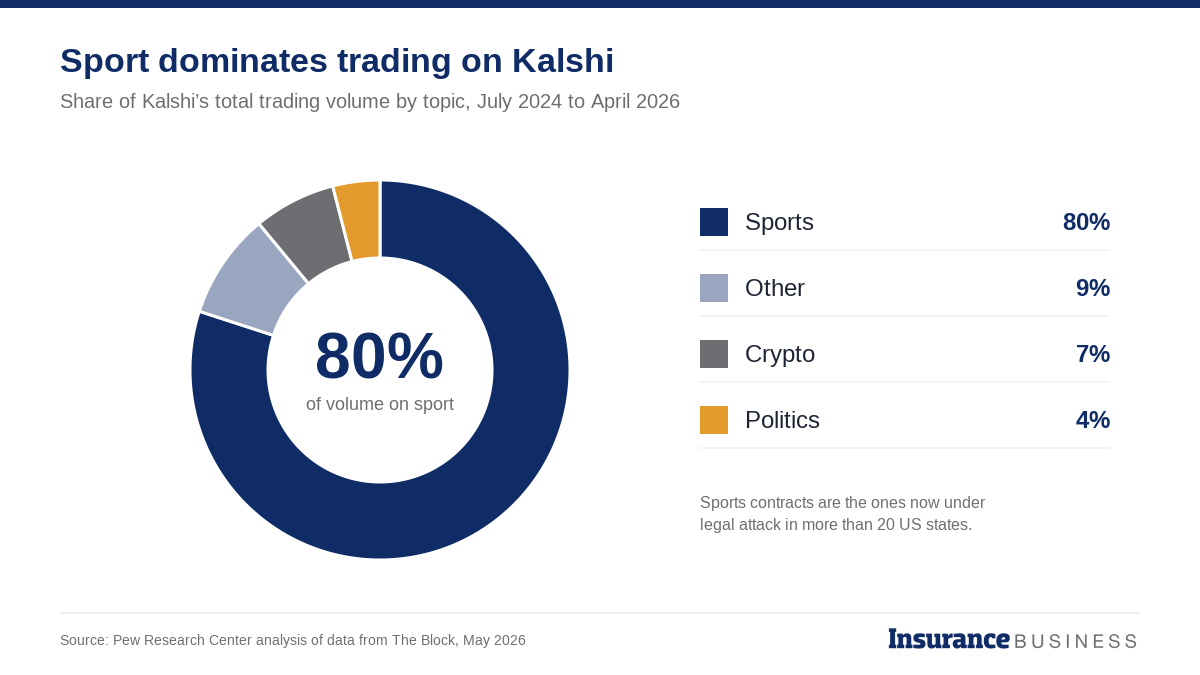
The push has a clear motive. Pew Research Center found that sports made up 80% of Kalshi's trading volume between July 2024 and April 2026. Those contracts are now under legal challenge in more than 20 US states. Kalshi argues that oversight by the Commodity Futures Trading Commission puts it beyond state gambling law. This week, though, it stopped serving customers in Utah after losing a federal appeal.
AI-driven brokers such as Herisson and Castle Tech scan regulatory changes to find exposed SMEs and package their risks into contracts. Large trading firms such as Susquehanna and Jump Trading take the other side, and Kalshi is paying traders cash incentives to build liquidity. Castle co-founder Lucas Cavalieri has pointed to the core difficulty: popular markets draw money but seldom match one company's losses, while tailored ones struggle for traders.
Lockton's Sarah Downey told the FT that the platforms have pitched themselves as a way to close insurance gaps, "but we haven't seen much uptake yet."
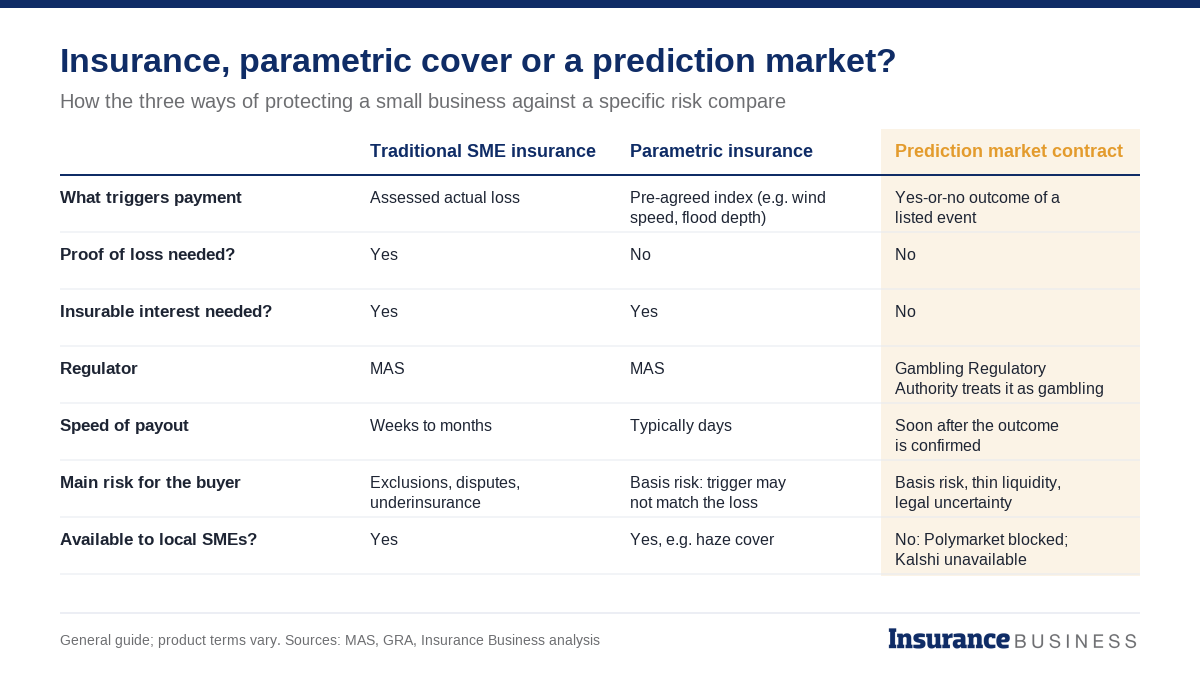
Swiss Re Corporate Solutions' HazeShield and a prediction market contract on air quality look similar, since both pay when an index passes a threshold. The difference is that HazeShield is insurance. It is written for a business with a genuine exposure, by an insurer regulated by MAS. A prediction market contract pays anyone holding the winning side, with none of those protections.
Read next: Prediction markets are becoming a cheaper reinsurance alternative for sports bonus risk
Singapore takes a hard line. The Gambling Regulatory Authority classed Polymarket as an unlicensed gambling service under the Gambling Control Act 2022 and had internet providers block it in January 2025. Kalshi is closed to Singapore users too. Its standing with the CFTC counts for nothing here, because operators need a GRA licence. Unlike in many markets, individuals who gamble with unlicensed providers can face penalties as well.
That leaves the job to insurers, and there is plenty to do. A QBE survey found that 74% of Singapore SMEs worry about losing income to business interruption, but only 23% have cover for it.
The building blocks are already in Singapore. HazeShield pays out on pollution readings. The Southeast Asia Disaster Risk Insurance Facility uses parametric triggers to release money quickly after disasters, as IB noted in its report on a new Singapore facility for data centre risk. The government and MAS have also signalled that they want Singapore to grow as a hub for parametric solutions.
Read next: APAC insurers confront geopolitics, catastrophes, and AI in 2026
Kalshi will almost certainly never sell to Singapore businesses. Its pitch still shows what SMEs want: fast, simple protection against specific shocks such as a tariff decision, a haze episode or a power outage. The region's insurers have the parametric tools to provide it. The opportunity is to package them for small businesses at prices they will actually pay.
Read next: Is a Kalshi-style weather contract insurance? Look to insurable interest