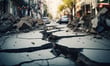
Japan’s insurance market faces another earthquake loss after a 5.7-magnitude tremor struck Shizuoka Prefecture in central Japan early on Sunday, November 8, 2026, injuring at least 24 people, damaging commercial property, and halting Shinkansen bullet train services.
The event adds to a year of mounting catastrophe exposure for the Japanese market, which is still processing claims from the 7.1-magnitude Kumamoto earthquake in July 2026 that killed 38 people and generated insured property losses estimated at up to US$2.1 billion.
The Japan Meteorological Agency (JMA) recorded the quake at 1:04am local time at a depth of approximately 40 kilometres. No tsunami warning was issued. JMA official Ayataka Ebita urged the public to stay alert. “Please be on the lookout for mudslides, falling rocks and the possible effects from rainfall,” Ebita told reporters, as reported by Al Jazeera.
Read more: Japan’s non-life insurers report residential claims after Kumamoto earthquake
An emergency official in Aichi told Agence France-Presse that authorities had received 16 reports of mostly minor injuries. In neighbouring Shizuoka, at least three women sought emergency medical care, including a woman in her nineties who injured her shoulder after falling from her bed.
The Chunichi Shimbun newspaper and Tokai Television separately reported at least 24 people were hurt across the two prefectures.
In Toyohashi city in the Aichi region, windows of a car dealership were found shattered. A large book store in Toyota city, also in Aichi, reported merchandise falling from shelves. The tremor was felt as far west as Osaka, where a foreign resident was taken to hospital after falling from a second-floor apartment.
JR Central confirmed that Tokaido Shinkansen services were delayed between Shizuoka and Gifu-Hashima stations after safety checks. JMA said it had observed no apparent change in the Nankai Trough, where scientists have long flagged the potential for a megaquake.
A separate 4.3-magnitude earthquake struck the Kumamoto region later on Sunday, November 8, 2026. There were no immediate reports of serious damage or injuries from that event.
Read more: Kumamoto earthquake raises questions about contingent business interruption policy gaps
Verisk estimated insured losses from the July 2026 Kumamoto earthquake at between JPY 220 billion (approximately US$1.4 billion) and JPY 340 billion (approximately US$2.1 billion), covering property damage from ground shaking and liquefaction before recoveries under Japan’s earthquake insurance programme. That estimate excluded business interruption, infrastructure, and automobile losses.
The General Insurance Association of Japan (GIAJ) reported that as of August 28, 2026, insurers had accepted 110,809 residential claims from the Kumamoto event, with JPY 23.78 billion paid across 30,838 settled claims. More than 74,000 claims remained under investigation at that date. The 2016 Kumamoto earthquake sequence, by comparison, produced approximately JPY 391 billion in dwelling payments, according to GIAJ data.
Kentaro Tada, CEO of Howden Re Japan, said shortly after the July 2026 event: “It’s too early for formal estimates, but we’d expect insured losses to remain well below the 2016 Kumamoto earthquake.”
The accumulation of losses arrives after a period of rate softening in Japan’s property catastrophe reinsurance market. At the April 2026 renewal, Japanese catastrophe excess-of-loss programmes recorded risk-adjusted price reductions of up to 20%, according to Howden Re. Aon’s renewal report noted that global reinsurance capital had reached a record US$785 billion, with Japan among Asia-Pacific markets recording double-digit rate decreases.
Whether 2026’s combined earthquake and typhoon losses are enough to arrest that trajectory at the April 2027 renewal remains an open question for brokers placing Japanese property catastrophe risk.
Household earthquake insurance penetration in Japan stood at 35.1% of total dwellings, with an attachment rate of 69.7% among fire policyholders, according to Japan Earthquake Reinsurance Co. (JER) data published in Toa Re’s Japan’s Insurance Market 2025. That means nearly 65% of Japanese households carry no earthquake cover at all.
Japan’s Financial Services Agency (FSA) has directed financial institutions to support the restoration of livelihoods for those affected by the 2026 Kumamoto earthquake, according to its Strategic Priorities for July 2026 to June 2027.
Japan sits on the Pacific “Ring of Fire” and records hundreds of earthquakes annually. The 9.0-magnitude undersea earthquake in 2011, which triggered a tsunami that killed or left missing around 18,500 people and caused the Fukushima nuclear disaster, remains the country’s deadliest seismic event in recent memory.