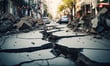
Japan’s non-life insurers paid ¥23.78 billion across 30,838 residential claims following the July 28, 2026, Kumamoto earthquake, according to data released by the General Insurance Association of Japan (GIAJ) on September 17. The figures cover the combined activity of GIAJ member companies and the Foreign Non-Life Insurance Association of Japan’s member companies as of August 28.
The payout total is significant. But the data also reveals a claims conversion rate and a structural coverage gap that carry direct implications for brokers serving clients with Japan exposure.
Verisk’s Catastrophe and Risk Solutions group estimated total insured losses from the event at between ¥220 billion and ¥340 billion – covering ground shaking and liquefaction damage before recoveries under Japan’s earthquake insurance program – according to its August release. The GIAJ’s ¥23.78 billion in residential payments represents between 7% and 11% of that range.
The gap is partly structural. The GIAJ figures cover only residential dwelling and household goods claims at an early processing stage, excluding commercial and industrial property, business interruption, and infrastructure losses. But they also reflect how much settlement work remains unfinished.
Of 110,809 accepted claims recorded as of August 28, only 36,514 had completed investigation. That leaves more than 74,000 cases – roughly 67% – still pending, a full month after the earthquake struck.
Read next: Japan’s soft reinsurance market faces a new catastrophe test
Of the 36,514 investigations completed, 30,838 resulted in a payout – approximately 84%. Around one in six did not.
For brokers, that figure raises a direct question: when a loss event occurs, are clients holding policies that actually respond?
Part of the explanation sits in Japan’s earthquake insurance framework. Earthquake cover is sold as an optional rider attached to a fire insurance policy – fire insurance alone does not cover earthquake damage. Some of the consultations counted within the GIAJ’s accepted claims figure may be revealing policyholders who hold fire cover without an earthquake rider, leaving them with no residential earthquake protection at all.
That structural feature, combined with an opt-in market, shapes what the settlement figures ultimately show.
Japan Earthquake Reinsurance Co. data, published in Toa Re’s Japan’s Insurance Market 2025, shows the household earthquake insurance penetration rate against total dwellings stood at 35.1%. Fewer than four in 10 Japanese households carry earthquake cover.
Verisk explicitly cited earthquake insurance take-up rate uncertainty as a factor in its loss range for the 2026 event – a direct acknowledgment that the coverage gap shapes what modellers can predict.
Kumamoto Prefecture accounted for 103,306 of the 110,809 accepted claims, approximately 93% of the national total, and ¥22.57 billion of total payments. That concentration reflects the earthquake’s footprint and illustrates how quickly a single-prefecture event moves through – and strains – claims infrastructure.
For context, the 2016 Kumamoto earthquake sequence produced approximately ¥391 billion in dwelling insurance payments alone, according to GIAJ data. The 2026 event is tracking below that level, though claims remain open and commercial and industrial losses have yet to be fully counted.
Japan’s Financial Services Agency (FSA) identified insurance protection gaps as a formal supervisory priority in its July 2025-June 2026 Strategic Priorities document. The FSA noted that companies – both domestic and international – face increasing business interruption risk from the growing frequency and severity of natural disasters, alongside geopolitical risks, and committed to leading G20 discussions on closing gaps where existing insurance does not sufficiently cover risks.
That regulatory framing matters for brokers. The FSA is not only flagging the gap as a market issue – it is signalling that supervision of how non-life insurers address business interruption exposure will intensify.
Read next: 2026’s calm cat year is luck, not a trend - Swiss Re
Kentaro Tada, CEO of Howden Re Japan, said shortly after the July 28 event that the scale of loss was likely to remain below 2016 levels – but flagged the conditions under which that assessment could change.
“It’s too early for formal estimates, but we’d expect insured losses to remain well below the 2016 Kumamoto earthquake and closer to the 2024 Noto earthquake, unless the aftershock sequence reveals more extensive damage,” he said.
Beyond the residential picture, the event has drawn attention to contingent business interruption (CBI) coverage for clients with supply chain exposure to Kyushu’s manufacturing and semiconductor sector. CBI policies typically require physical damage at a named dependent location before cover triggers. Where suppliers suspended operations for safety inspections but reported no confirmed structural damage, those triggers may not be met – regardless of actual downstream production delays.
That creates a specific review checklist for brokers: whether dependent suppliers in Kumamoto are scheduled in the policy, whether the physical damage trigger wording reflects what actually happened on the ground, and whether indemnity periods reflect realistic recovery timelines for industrial and semiconductor operations.
The next GIAJ settlement update will show whether the claims conversion rate improves as investigations conclude – or whether a persistently high non-payment rate signals that a material share of claimants lacked effective cover when they needed it most.