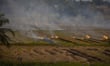
Singapore is preparing legal, regulatory and financial measures against companies linked to Indonesia’s ongoing haze crisis that go well beyond the plantation operators directly managing fire-affected land, raising governance and insurance questions for Singapore-listed agribusinesses, their corporate owners and the banks that finance them.
Senior Minister K Shanmugam said on October 19 that authorities were examining measures targeting corporate financing, government incentives and investor relationships. Existing laws could be amended or new legislation introduced urgently to compel cooperation. The warning extends to Singapore-listed companies, corporate shareholders and financial institutions with exposure to potentially implicated businesses.
“Companies cannot play hide and seek with different corporate structures. Nor should they hope that because the evidence and actions are in Indonesia, they can escape responsibility in Singapore,” Shanmugam said.
Singapore’s Transboundary Haze Pollution Act allows authorities to pursue companies whose overseas activities cause or contribute to haze within Singapore. Liability can extend to entities involved in another company’s management under specified circumstances, and certain offences carry aggregate fines of up to S$2 million. These provisions are directly relevant to agricultural groups operating through subsidiaries and cross-border holding structures, where responsibility may extend beyond the entity directly managing fire-affected land.
The National Environment Agency has now issued preventive notices to 10 Indonesian forestry and agricultural companies under the Act - seven on October 16 and three more on October 19. The notices require firefighting and preventive action and do not constitute findings of wrongdoing, but three of the targeted companies received similar notices during the 2015 haze crisis, with those cases still open.
The Singapore Exchange has separately questioned seven listed agricultural businesses: Golden Agri-Resources, Bumitama Agri, First Resources, Wilmar, Kencana Agri, Indofood Agri and TSH Resources. First Resources said fires originating outside its concessions had spread into managed areas.
Shanmugam indicated that such statements would be tested against the evidence before authorities determined further action.
For brokers advising Singapore-listed agribusinesses and their financiers, the coverage questions are now live across several lines. D&O policies may respond to certain claims involving management oversight failures or disclosure obligations, while environmental liability coverage can address specified pollution liabilities and remediation costs. However, fines, penalties and statutory obligations are likely to fall outside both. Withdrawn government incentives and lost financing opportunities present further commercial losses with no obvious insurance route.
The banking sector faces its own dimension. Shanmugam cited the Monetary Authority of Singapore’s supervisory responsibilities and said banks financing potentially implicated businesses would also come under examination. MAS issued transition-planning guidelines for banks, insurers and asset managers in March 2026 addressing climate-related risks, a framework that could now be applied to haze-linked financing relationships. Brokers advising financial institutions with agribusiness exposures should be considering whether their clients’ governance and risk management documentation is adequate against that scrutiny.
Singapore recorded 12 consecutive days of unhealthy air quality readings before conditions improved on October 16. Shanmugam said enforcement should not create bilateral difficulties with Indonesia, while Prime Minister Lawrence Wong backed continued action against companies responsible for the fires.
This article should be read alongside IB Asia’s coverage of Indonesia’s own enforcement campaign, which details the restoration orders, compensation claims and criminal proceedings now running against 32 companies domestically.