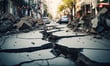
Typhoon Dujuan killed at least six people, left six others missing, and damaged more than 470 buildings across eastern Japan – with the pattern of destruction concentrated in precisely the perils that Japan’s standard property insurance products cover least reliably.
The typhoon made landfall on Japan’s Pacific coast on September 21, carrying sustained winds of 130 km/h and gusts of up to 194 km/h, according to BBC News. The Japan Meteorological Agency (JMA) issued its highest-level landslide special warning for parts of the Izu Islands, including Oshima, where rainfall in the 48 hours through 1:30 am. Tuesday reached 832 millimetres – the highest amount on record for that location, The Japan Times reported.
Damage spread across Kanagawa, Chiba, and Ibaraki prefectures. Japan’s Cabinet Office activated the Disaster Relief Act across 25 municipalities.
Fatalities were concentrated in Chiba and Kanagawa, where police, firefighters, and Self-Defense Forces personnel conducted search operations. In Yokosuka, a 64-year-old woman died after a mudslide struck her home. In Kamogawa, a couple in their 80s were killed in separate landslides and two men remained missing. Further deaths were confirmed in Sanmu and Mobara, also in Chiba.
Around 42,260 households across four prefectures lost power as of Tuesday afternoon, according to Tokyo Electric Power Grid, with Chiba accounting for most outages. Rail services were suspended across multiple lines. Flight cancellations disrupted Silver Week travel at Haneda Airport, where 261.5 mm of rain fell in 48 hours — also a record.
The JMA warned that saturated ground continued to pose landslide risk across Kanto even after the storm passed, as water in soil can trigger slides well after rainfall stops.
Read next: Japan’s soft reinsurance market faces a new catastrophe test
For insurance professionals, the type of damage Dujuan caused matters as much as the scale of it. Fire insurance in Japan covers wind, typhoon, and a range of weather-related damages. Japan’s Financial Services Agency (FSA) has stated that “the damages from wind disasters, such as typhoons, are covered almost 100% both for households and for companies,” because wind damage is bundled automatically into fire policies, according to Green Central Banking’s September 2025 reporting, which cited a direct FSA spokesperson interview.
Flood coverage is different. It is an optional rider that requires an active decision to add. The FSA has documented a decline in take-up: the proportion of Japanese households holding flood coverage fell from around 80% in 2013 to just over 60% in 2022. The FSA’s Annual Report on Insurance Monitoring for June 2024 stated directly that “in Japan’s household sector, the coverage rate of fire insurance covering flood disasters is decreasing,” and that property insurance including fire and flood had been in chronic deficit for the previous decade.
Landslide damage caused by rainfall sits in a further gap. Standard fire insurance does not cover it, and earthquake insurance covers it only when seismic activity triggered the event. With landslides responsible for the majority of Dujuan’s fatalities and structural damage, a material share of affected households may find their losses fall outside standard policy terms.
The storm arrives as Japan’s non-life insurance market is navigating a period of structural repricing and regulatory pressure.
Japan’s FSA Annual Report on Insurance Monitoring, published in August 2026, noted that reinsurers had become “increasingly cautious amid rising natural catastrophe and large-loss risks,” and that non-life insurers were expected to strengthen underwriting practices with greater emphasis on risk-sharing with corporate policyholders. The FSA described this shift as “an irreversible trend.”
The same report noted that reinsurance capacity had exceeded demand through the preceding period, resulting in softer pricing conditions – conditions that Dujuan will now test against existing programme structures.
For brokers, the practical question is whether cedants used that period of softened pricing to reinforce coverage structures or to reduce spend.
Read next: Nepal flood was triggered by a glacier, not an earthquake. For brokers, the cause is the question
Dujuan sits within a broader structural picture for the region. Asia-Pacific’s natural catastrophe protection gap stands at 88%, against a global average of 67%, according to Munich Re. In full-year 2025, Asia accounted for approximately 30% of global economic catastrophe losses while representing only around 5% of insured losses, according to Swiss Re sigma research published in March 2026.
Japan’s aggregate non-life penetration rate sits above the regional average – the GIAJ Fact Book 2024-2025 places Japan eighth globally by non-life gross direct premiums. But aggregate figures mask the product-level gaps in flood and landslide coverage that Dujuan has now made tangible.
Closing those gaps is a stated regulatory priority. In its Strategic Priorities for July 2025 to June 2026, the FSA committed to leading international discussions, including within the G20, on protection gaps arising when coverage does not sufficiently address existing risks – citing the growing frequency and severity of natural disasters as the driving context, according to Chambers and Partners’ 2026 legal commentary on Japan’s insurance regulatory framework.
No aggregate insured loss estimate for the event had been published at the time of writing.