The world's seafarers keep roughly 90% of global trade moving, yet most lose the medical and accident cover their employer provided at sea the moment they step off the ship. That gap has been tolerated for decades, but a worsening officer shortage is now forcing shipowners to compete harder on crew welfare. As a result, marine brokers worldwide are increasingly being asked to advise shipping clients on the retention and duty-of-care exposure this creates.
The scale of the problem is laid out in the Seafarer Workforce Report 2026, published jointly by the Baltic and International Maritime Council (BIMCO) and the International Chamber of Shipping (ICS). The report estimates that 2.57 million seafarers currently crew the world's 85,148 merchant ships but the industry already faces a shortfall of 39,100 Standards of Training, Certification and Watchkeeping (STCW) certified officers this year - a gap the report projects will require 113,735 additional officers by 2030 just to keep pace with demand.
Into that environment, global insurance intermediary Howden has launched SAFER at Home (Seafarers and Families Enhanced Resilience), developed in partnership with UK-based Crewsure and supporting the Mission to Seafarers, offering hospitalisation cover for seafarers and their families during the months they spend off contract and off payroll.
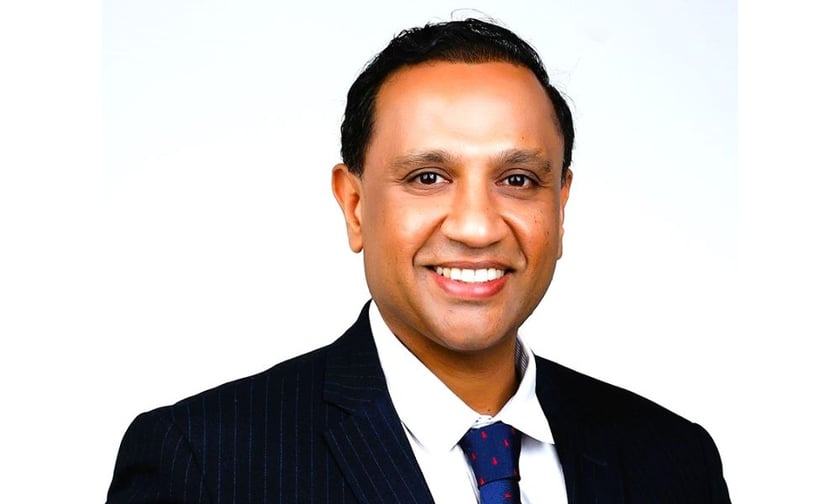
Captain Hari Subramaniam (pictured), Howden's chief growth officer for marine, spent 17 years at sea before moving ashore. He said the product closes a gap most of the industry has simply worked around. "It's a very niche and bespoke cover offered to a very unique community," said Subramaniam. Under the Maritime Labour Convention, protection and indemnity (P&I) cover follows a seafarer only as far as their journey home – after that, unless an employer pays for something more, they are uninsured until their next contract begins.
That gap matters commercially as much as humanely. Industry safety data increasingly points to distraction, rather than a lack of training, as a driver of onboard incidents and psychologists are now examining seafarers' financial and family pressures as part of that picture. "Financial well-being is particularly relevant because seafarers are often the sole breadwinners in their families," Subramaniam said.
He points to a telling moment as evidence of how invisible this pressure remains to the wider public. Flying to meet him in Mumbai recently, his wife found herself seated near two seafarers signing off after a contract. One of them was on a routine rotation, the other flying home on unpaid compassionate leave because his wife was facing unexplained stomach pain and possible tests for a growth. With no cover of his own, he was funding the trip himself, worrying about the diagnosis and the bills - and racing to be back on board within a week or risk losing his job. She told her husband afterwards that the encounter had finally made his work make sense to her. She also wondered if other industries had similar blind spots worth examining.
The Mission to Seafarers' own Seafarers Happiness Index has tracked this pressure quarter by quarter. Its Q1 2026 survey recorded overall happiness falling to 7.18 out of 10, down from 7.26 the previous quarter, with the report noting that even seafarers outside active conflict zones described a pervasive sense of uncertainty. Wage stagnation against a rising cost of living was a recurring theme in seafarers' own responses to the survey.
Howden is not alone in responding to this pressure. Marine mutual insurer NorthStandard has partnered with Sailors' Society on Sea Mate, an online mental health awareness programme that trains seafarers to become onboard wellbeing officers, part of its wider My Mind Matters initiative. Norway-based Marine Benefits, meanwhile, has spent a decade building its own evidence base through its Re:fresh health study, tracking how family illness, financial uncertainty and workplace culture shape seafarer wellbeing both onboard and ashore.
For brokers advising shipping clients, Subramaniam's advice is don't oversell it.
"This is not mandatory, so when you're approaching a shipowner, you can't go in with something all-singing, all-dancing - they'll say they've got a business to run," he said. The pitch that works, he argued, links welfare directly to commercial outcomes already being measured by the industry, including the Tanker Management Self-Assessment (TMSA) and Dry Bulk Management System schemes, both of which factor crew welfare into vessel ratings that charterers actively use to choose ships.
Read next: UAE makes seafarer’s insurance mandatory
On board seafarers are traditionally covered by P&I insurance but families have nothing. Closing that gap, argued Subramaniam, is precisely what is now being priced, packaged and sold as a retention tool rather than a compliance afterthought. Howden is negotiating discounted group rates and directing a portion of every policy back to the Mission to Seafarers' chaplaincy network across roughly 200 ports. This positions the product as a low-cost and community minded add-on to a shipowner's welfare spend, rather than a major new line item.
Whether that model holds and whether rival insurers move beyond wellbeing training and data studies into underwriting comparable cover could be the next test facing brokers advising shipping clients globally.