Swiss Re saw its first-quarter net income climb 19% year-on-year to US$1.5 billion, with the reinsurance group crediting the results to contributions from all three business units, a benign natural catastrophe quarter and a solid investment performance.
Return on equity rose to 23.6% from 22.4% a year earlier, while the insurance service result advanced to US$1.7 billion from US$1.3 billion. Group insurance revenue slipped to US$10.0 billion from US$10.4 billion, weighed by lower P&C Re revenues and the wind-down of the iptiQ business.
The Q1 reinsurance results put Swiss Re on track to meet a full-year 2026 net income target of US$4.5 billion unveiled in December 2025, alongside a multi-year IFRS return on equity goal of more than 14% and dividend growth of at least 7% per year through 2027.
The plan also includes a US$500 million annual share buyback program, contingent on the group hitting its 2025 net income target of more than US$4.4 billion, with management targeting US$300 million in cost savings by 2027.
New business contractual service margin (CSM) eased to US$1.2 billion from US$1.7 billion, reflecting January P&C Re renewals and quieter L&H Re deal activity. Return on investments came in at 4.6%, with recurring income of US$1.0 billion.
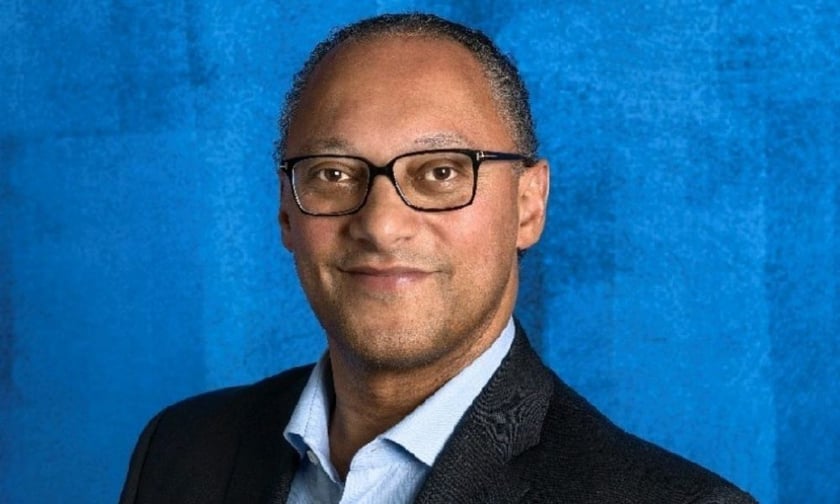
Group chief executive Andreas Berger (pictured above) said the quarter "shows strong earnings generation, reflecting the strategic actions taken in recent years to reinforce our businesses," citing cycle management and underwriting discipline.
Chief financial officer Anders Malmström flagged L&H Re's recovery following a 2025 portfolio review, while noting the group had set aside additional reserves for potential inflationary effects from the Middle East conflict. The Swiss Solvency Test ratio stood at 252% as of April 1, above its 200–250% target range.
P&C Re led divisional performance with a 43% surge in net income to US$754 million and a combined ratio of 79.5%, down from 86.0%. Natural catastrophe claims totaled US$133 million, driven by Storm Kristin in Portugal, while man-made losses came in at US$41 million.
April treaty renewals brought in US$2.3 billion in premium volume, an 8% decrease, with a 2.5% nominal price drop translating into a 6.1% net price decline after a 3.6% rise in loss assumptions.
Corporate Solutions net income rose 26% to US$262 million on a combined ratio of 85.1%, while L&H Re net income climbed 12% to US$491 million on favorable US mortality. L&H Re's CSM balance stood at US$16.8 billion, with a full-year net income target of US$1.7 billion.
In other developments, Swiss Re has appointed Dean Galligan as head of transactions for L&H Re, effective August 1, in a newly created London-based role bringing together global teams handling complex capital, balance sheet and longevity reinsurance solutions.
L&H Re chief executive Paul Murray said the market for complex reinsurance transactions "is growing as life insurers seek to optimize their capital and structure reinsurance protection for risks such as demographic changes or financial market volatility."
Galligan joins from Phoenix Group, where he was chief capital officer. He previously led cross asset structuring at Barclays and spent more than 15 years at Goldman Sachs advising re/insurers.