South Korea’s five largest non-life insurers recorded a combined auto insurance underwriting loss of 10.5 billion won in the first half of 2026, reversing a 126.1 billion won profit from a year earlier. New claims analysis by Samsung Fire & Marine Insurance identifies a specific, seasonally predictable pedestrian risk category – concentrated after dark on roads without sidewalks – that accounts for nearly one-third of fatal pedestrian accidents in those environments. The same insurer has already built the tool to price it differently. Brokers whose fleet clients are not engaged with that tool are carrying unpriced exposure into an accelerating loss environment.
Samsung Fire & Marine Insurance published the results of its five-year automobile insurance compensation database analysis on September 2, 2026, drawing on claims records and black box footage from accidents on roads without sidewalks. According to the Asia Business Daily, the dataset recorded 4,057 fatal traffic accidents resulting in 4,229 deaths over the review period. Vehicle-to-pedestrian collisions were the single largest category, at 1,561 cases – 38.5% of total fatal accidents – and 1,575 deaths, or 37.2% of all fatalities.
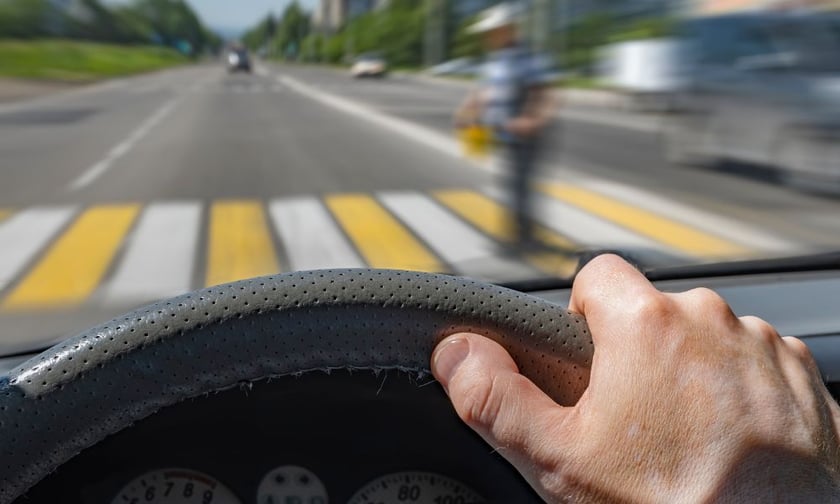
A focused review of 105 accidents on sidewalk-free roads found that 30.5% involved “stealth pedestrians”: individuals lying or sitting on the road surface who are difficult for drivers to detect. Of that group, pedestrians lying on the road were involved in fatal accidents three times more frequently than those who were sitting. The Korea Road Traffic Authority’s Traffic Accident Analysis System corroborates the broader pattern independently: 234 people died in pedestrian accidents outside crosswalks in 2025, representing nearly one-tenth of the 2,549 traffic fatalities recorded that year – a proportion that has held at 9% to 10% consistently since 2020, indicating a structural rather than cyclical feature of Korea’s road risk environment, according to Korea Herald.
The Samsung data defines the exposure window with precision. Nighttime incidents accounted for 62.5% of stealth pedestrian accidents. By hour, the 7pm to 8pm slot recorded the highest share at 15.6%, followed by 9pm to 10pm at 12.5%. Seasonally, autumn – September through November – represented 34.4% of cases, with winter at 28.1%. This is a risk with a known time of day, a known season, and a known road type. That specificity is what makes it commercially actionable.
The cumulative auto insurance loss ratio for Korea’s four major non-life insurers averaged 84.5% in the first half of 2026, up 1.9 percentage points year-on-year, according to the Seoul Economic Daily. The sector’s break-even threshold is approximately 80%. AM Best, which maintained its stable outlook on South Korea’s non-life segment in July 2026, noted that the non-life industry experienced declining underwriting results in 2025, with higher loss ratios in auto lines a primary driver – and that the headline profit improvement in H1 2026 reflected investment income rather than underwriting recovery.
The Seoul Economic Daily reported that auto insurance underwriting posted a 708 billion won loss in 2025, and that some industry estimates now project the full-year 2026 auto underwriting deficit could exceed 1.2 trillion won. Premium increases implemented in 2026 – the first in five years – have not been sufficient to offset the claims trajectory. The rate environment is tightening, and fleet clients whose risk profiles have not been individually assessed face above-average renewal pressure as a result.
The Samsung Fire & Marine Insurance Traffic Safety Culture Research Institute pointed to the structural collision of driver visibility limitations and pedestrian vulnerability. “Stealth pedestrian fatalities are a classic example of blind spot accidents that occur when a driver’s lack of nighttime visibility on shared roads and a pedestrian’s vulnerable state coincide,” the institute stated, calling for expanded installation of smart streetlights, protective barriers, and action-recognition AI CCTV systems capable of detecting pedestrians on the road surface in real time.
Critically, Samsung Fire & Marine Insurance is not waiting for infrastructure to catch up. In July 2025, the insurer announced a strategic partnership with Cambridge Mobile Telematics (CMT), the world’s largest telematics provider, to launch an AI-powered safe driving program in South Korea. The program uses smartphone sensors and AI to detect distracted driving, build safer driving habits, and enable real-time crash response – and it already monitors time-of-day driving patterns as a pricing input. “South Korea has made great progress in reducing traffic deaths, and now we have the opportunity to help accelerate that momentum,” said William V. Powers, co-founder and CEO of Cambridge Mobile Telematics, at the time of the partnership announcement.
For brokers, this creates a direct, immediate opportunity. The same insurer that published the stealth pedestrian risk profile has a live telematics platform that captures the exact behavioural variables – night-hour driving, route type, braking patterns – that the research identifies as loss drivers. Fleet clients in logistics, delivery, utilities, and field services who operate after dark on residential or rural roads are carrying the exposure the Samsung data describes. Those who can demonstrate, through telematics data sharing, that their operations fall outside the high-risk profile stand to benefit from differentiated pricing. Those who cannot are increasingly likely to be assessed conservatively as Korean insurers tighten underwriting standards in response to sustained margin pressure. The infrastructure for that conversation already exists. The data to have it is already being collected. The gap, for most fleet clients, is simply that no one has asked.