The Monetary Authority of Singapore (MAS) has opened a consultation on a protected cell company (PCC) framework that would position the city-state to compete for captive insurance, insurance-linked securities (ILS), and sovereign risk-pooling business in a segment where Labuan has been the only Asian domicile equipped to operate.
The consultation opened on July 7, 2026, and closes on August 7, 2026. It follows the framework’s announcement by Gan Kim Yong, deputy prime minister, minister for trade and industry, and MAS chairman, at the Association of Banks in Singapore (ABS) Annual Dinner on June 25, 2026.
A PCC would operate as a single legal entity with a central “Core” and one or more “Cells,” with the assets and liabilities of each Cell legally segregated from those of other Cells and the Core. It would be open to MAS-licensed entities carrying out captive insurance, ILS, and sovereign risk pools. MAS said existing structures require a separate legal entity, such as a special purpose vehicle, for each programme, and that the cost and effort can deter adoption.
Labuan IBFC describes itself as the only jurisdiction in Asia to offer the PCC structure. The Malaysian centre reported that captive insurance premiums grew 7.2% to US$726 million in 2025, contributing more than a third of the premiums underwritten by its insurance industry. Singapore is the region’s largest captive domicile by number – the Singapore Captive Insurance Association reports close to 90 captive insurance companies in the city-state – but has lacked a cell structure to match Labuan’s.
Read next: The CIO who goes looking for problems is heading to InsuranceFest
Singapore does not start from zero in alternative risk transfer. Between December 2018 and November 2025, 29 catastrophe bonds were issued in the city-state, with total issuance exceeding US$4 billion, and MAS has extended its ILS grant scheme, which offsets part of the upfront issuance cost, to the end of 2028, according to Chambers and Partners. The first sovereign catastrophe bond in Asia, covering the Philippines’ earthquake and tropical-cyclone risks under a World Bank programme, was listed on the Singapore Exchange in 2019 – a precedent for the sovereign risk-pool use case the PCC framework is meant to serve.
MAS has framed the proposal against rising and correlated risks. In his June address, Gan said risks today are “more complex, more connected, and harder to price,” and that Asia remains underinsured. MAS cited about US$65 billion in economic losses from natural disasters across Asia in 2025, of which more than 90% were uninsured, attributing the figure to the Swiss Re Institute. The Swiss Re Institute estimated the global natural-catastrophe protection gap at US$424 billion in 2025, up from US$395 billion a year earlier.
The conditions that motivate the framework also mark its limits. At an MAS captive forum on July 2, 2026, executive director Lim Cheng Khai noted that only 5% to 6% of global captives are owned by Asian parents, and the Swiss Re Institute put the insurance resilience index for emerging Asia at about 5% in 2025. Low ownership and low take-up reflect demand-side barriers – affordability, awareness, and thin local risk capital – that a corporate structure alone does not resolve. A PCC lowers the cost of building a vehicle; it does not create the buyers or the investor base to fill one.
Read next: MAS: newer surgical procedures may not be covered under old CI policies
The framework sets out several use cases. For captives, companies could run multiple self-insurance programmes through separate cells, or take part in “rent-a-captive” arrangements typically sponsored by the insurance-management arm of a licensed broker. Lim cited Alphabet, Google’s parent, using its captive insurer to access the catastrophe-bond market for earthquake protection as an example of captives reaching alternative capital. For ILS, MAS said cells would let sponsors issue without forming a new special purpose vehicle for each deal. For sovereign risk pools, PCCs could support facilities pooling risks across multiple countries.
Describing the mechanics, Gan said: “The result is greater flexibility, lower cost, and more efficient risk transfer. PCCs can make captive insurance solutions more accessible for corporates and make it faster and cheaper for sponsors of insurance-linked securities to transfer risks to capital markets.” He added: “By enabling more alternative risk transfer solutions, the PCC framework will complement the traditional reinsurance market, expand risk capacity, and deepen Singapore’s role as a hub for insurance and risk solution innovation.”
MAS has proposed to establish a new legislative framework for the structure – primary legislation rather than an amendment to existing rules, and a longer path than a supervisory notice. The consultation closes on August 7, 2026; MAS has not announced when a framework would take effect.
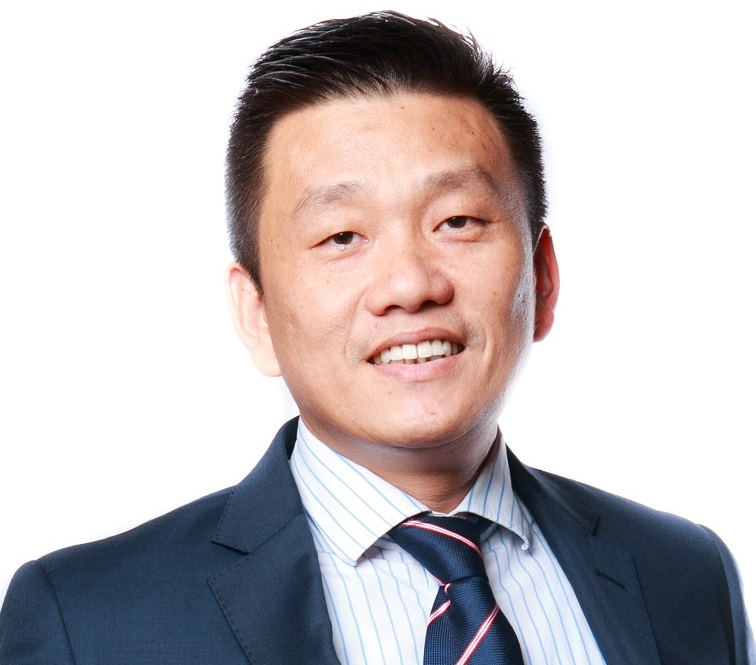
Brokers have signalled demand. George Ong (pictured immediately above), regional director, captive and insurance, global risk consulting at Aon, said the framework could broaden access to risk-financing solutions “without the cost, complexity, and governance burden of establishing a standalone legal entity.” He said likely users include small and mid-size corporates seeking a lower-cost option than a standalone captive, larger corporates taking incremental steps before running a licensed insurance subsidiary, and ILS sponsors. Ong pointed to Aon’s White Rock PCC platform and drew a parallel with Singapore’s Variable Capital Company structure for funds.