Home and motor rates in Australia still have room to rise, if Macquarie has read Allianz's third-quarter result correctly. Anyone renewing a mid-market property programme this month would barely recognise that description.
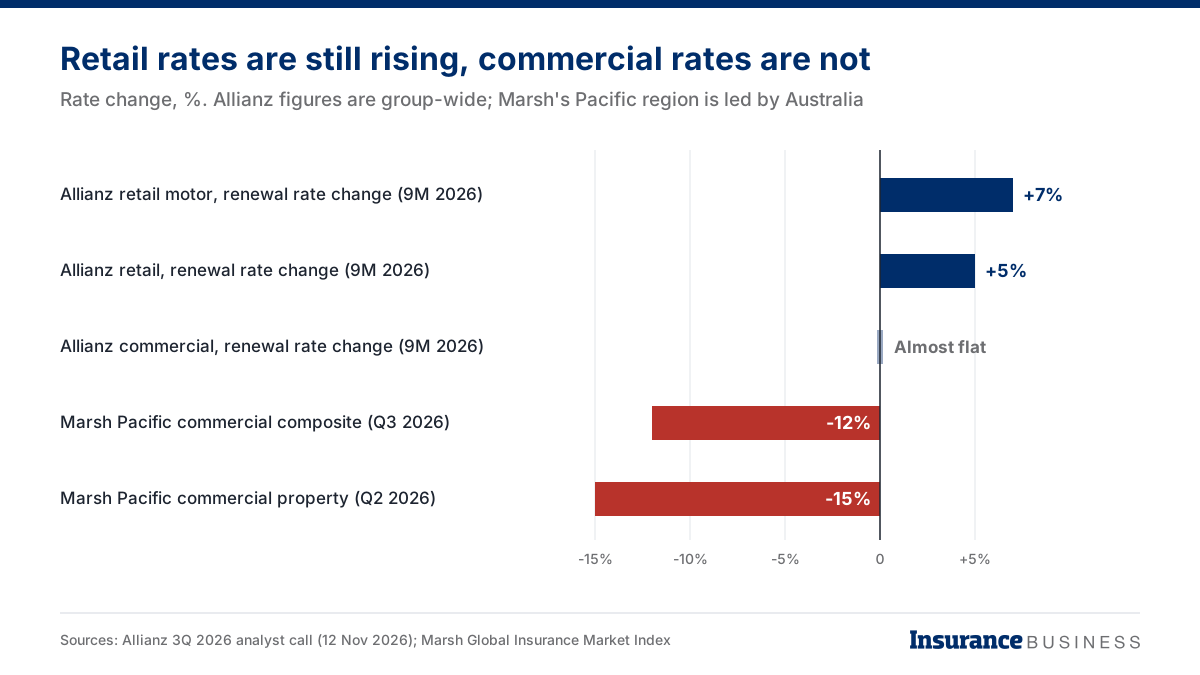
Allianz released its third-quarter figures on 12 November. Its retail property and casualty book, which includes SME and fleet business in Allianz's reporting, grew 7% on an internal basis over the first nine months of 2026, according to the group's nine-month earnings release. That growth came from both rate increases and new policies, though chief financial officer Claire-Marie Coste-Lepoutre told analysts volume growth slowed in Q3 as several markets prioritised margin over volume.
On pricing, she noted retail renewal rates were up 5% year to date, "including 7% in retail motor".
Macquarie analysts took that as a positive indicator for Australia's two listed majors, Insurance Australia Group and Suncorp. In a note to clients, they maintained a constructive view on domestic general insurers while inflation and interest rates stay elevated.
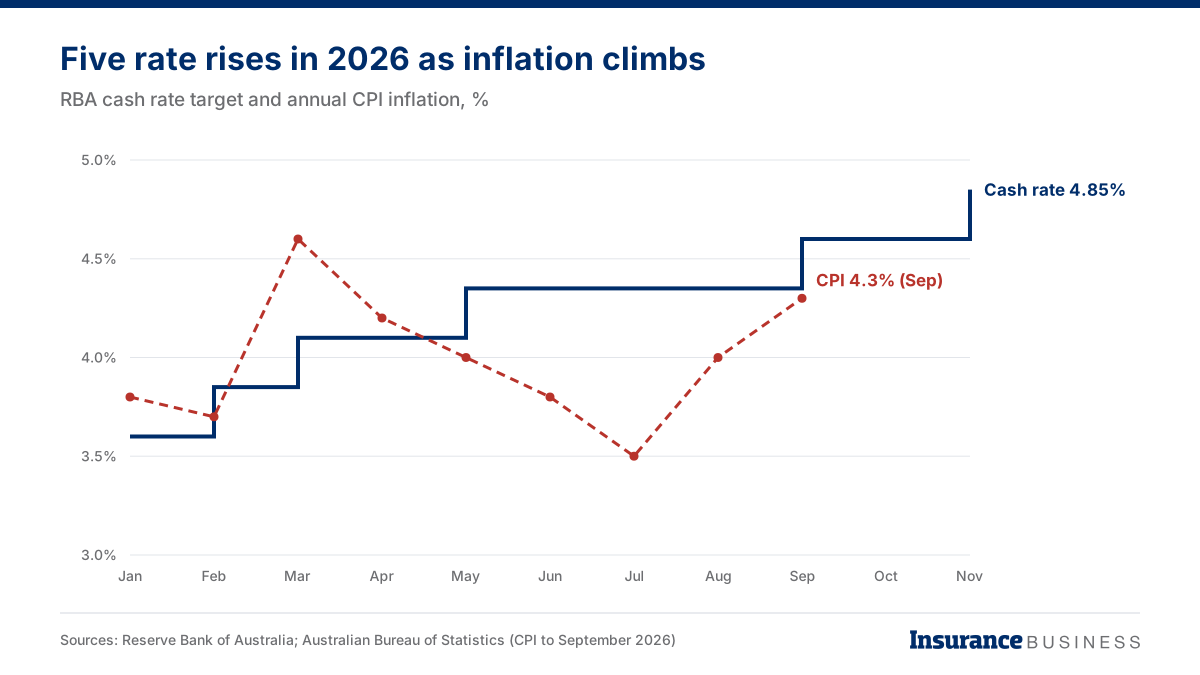
Economic conditions support that view, at least on the investment side. The Reserve Bank lifted the cash rate to 4.85% on 3 November, which was its fifth hike this year and the highest level since 2008. Headline inflation reached 4.3% in the year to September, up from 4% in August, according to the Australian Bureau of Statistics.
For general insurers, that is good and bad. Higher yields on invested premiums boost earnings, yet persistent inflation drives up repair, rebuild and parts costs, which continues to push premiums higher.
Allianz expects inflation to stick around. Coste-Lepoutre told analysts the group left untouched the inflation buffer added to its reserves in the first half, anticipating further cost pressures. That caution follows a third quarter already hit by European storms, which IB covered last week.
Read next: IAG and Suncorp likely to raise premiums after bushfires – analysts
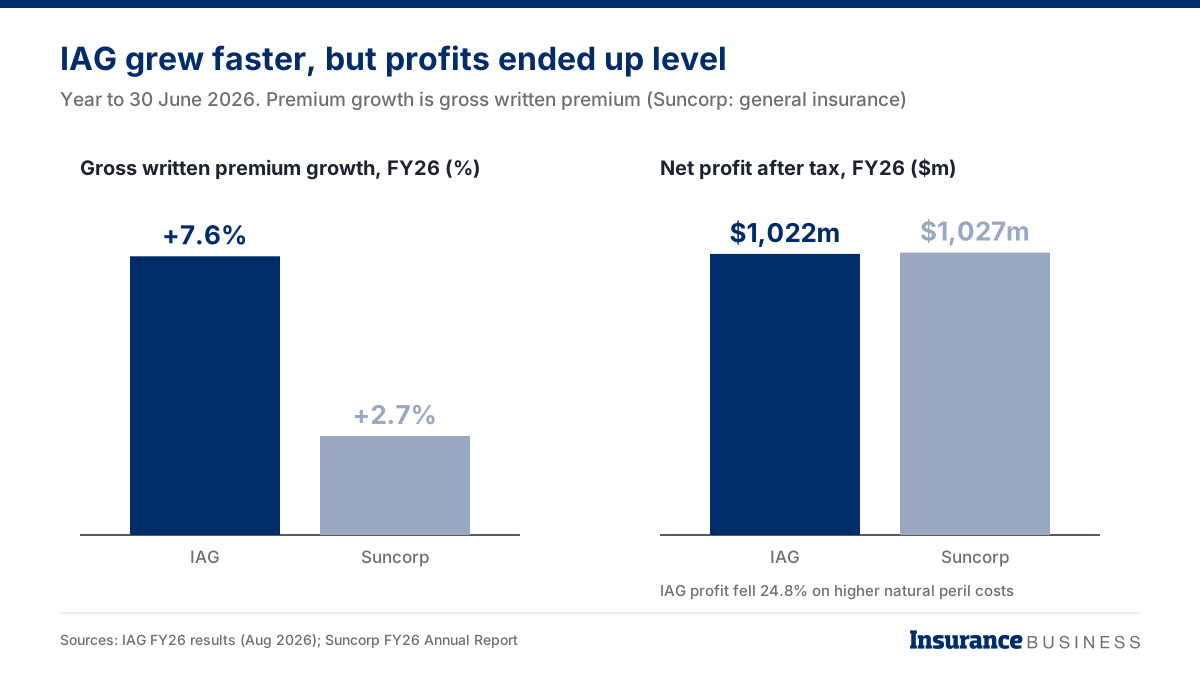
Both domestic majors have leaned heavily on rate increases. IAG grew gross written premium 7.6% to $18.4 billion in the year to 30 June, while Suncorp's general insurance GWP rose 2.7% to $15.4 billion, according to its FY26 annual report.Each posted a net profit just over $1 billion.
Macquarie's read-across carries one important caveat. Allianz's 7% motor figure is a global average and does not automatically apply to Australia. A Morgan Stanley premium survey in March found Allianz had cut local motor rates to stay competitive, keeping overall Australian motor rate growth around 1% year on year while home rose roughly 6%.
Further rate hikes will also draw sharper scrutiny. ASIC's August review of five motor insurers, including Allianz, found none of their renewal notices adequately explained why premiums were outpacing inflation.
Read next: Logan homes left uninhabitable as insurers brace for second wave of storms
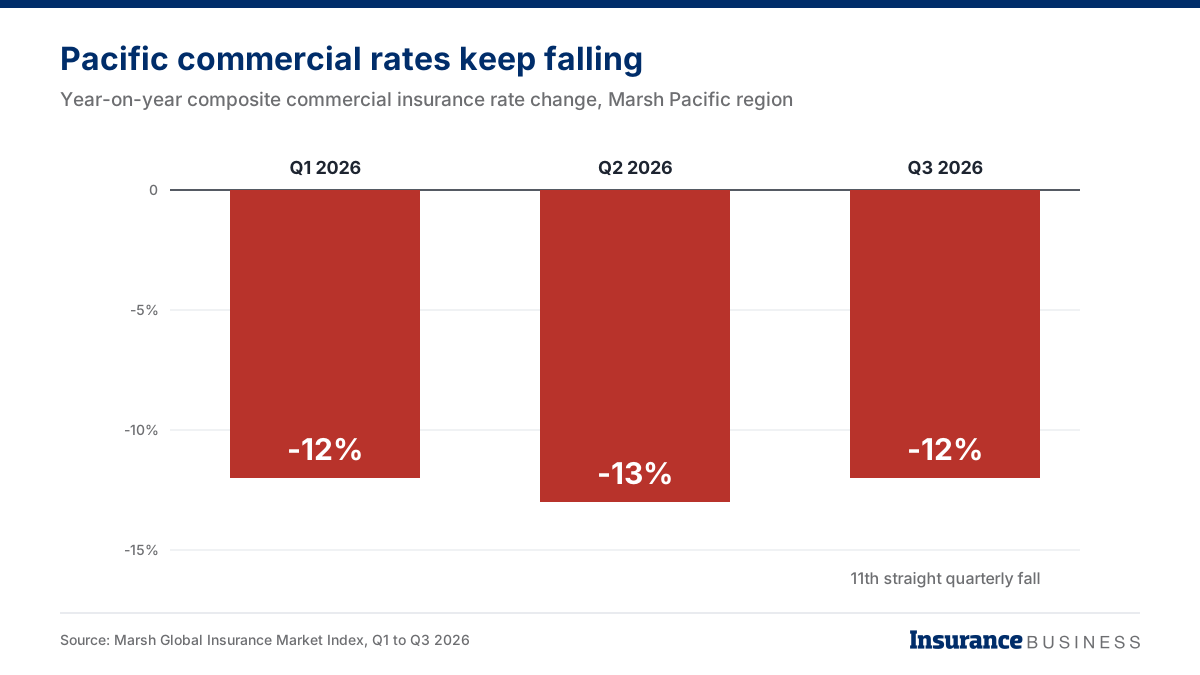
The notion that pricing is rising across the board falls apart at a commercial renewal. Marsh's Global Insurance Market Index showed Pacific commercial rates down 12% in Q3—the eleventh consecutive quarterly drop, as IB noted in recent coverage of underwriting discipline.
Allianz's numbers reflect the same divide. Coste-Lepoutre said large-ticket commercial business continued to soften. Mid-market accounts and Allianz Partners' commercial book held on to modest increases, leaving overall commercial renewal rates roughly flat with 3% internal growth.
Local trends match up. CGU and WFI chief executive Jarrod Hill told IB in August that roughly two-thirds of IAG's intermediated book was growing at 4% to 5%—concentrated in SME, rural and broker personal lines—while heavy competition in mid-to-large commercial weighed on the headline figure.
Read next: Global commercial insurance rates fall 6% in Q2, Pacific posts second-steepest regional decline
For larger brokerages, the takeaway is straightforward: the two sides of the book require completely different conversations. Personal lines and smaller SME clients are still absorbing rate rises, and following the ASIC review, they will push for clearer explanations. Mid-market and corporate clients have leverage to negotiate deductibles, limits and policy terms alongside price—and a soft market gives them an opening to fix underinsurance by updating declared values.
Read next: Australian commercial insurance market remains soft through H1 2026
Catastrophe exposure remains the main risk to that outlook. Property in flood, bushfire and cyclone zones has largely missed the softening, storm season is just getting underway, and a severe summer could tighten capacity fast. Equity analysts may favour the listed insurers right now, but for brokers over the next six months, the priority is knowing which side of the market each client sits on.