What happened: An NSW court dismissed a child's motor accident claim after her mother took eight months to provide a single document her lawyers repeatedly requested
Who's involved: Allianz Australia Insurance (CTP insurer), Law Partners (plaintiff solicitors), Hall & Willcox (defendant solicitors)
What's at stake: A damages claim for injuries including a fractured jaw, suffered by a child allegedly struck by a car at age nine
Why it matters: Limitation periods under the MAI Act can be enforced even against child claimants when their legal representatives fail to act, and partial admission of liability does not save an out-of-time claim
Where it stands: Claim dismissed; plaintiff ordered to pay defendant's costs
According to the filing, she was nine years old, playing on the grass outside a house in South Kempsey, when she ran onto the road and was hit by a car. A helicopter took her to hospital. Surgeons operated on her fractured jaw. She stayed for days and wore a wire in her jaw for about a year.
Four years later, her compensation claim has been thrown out - not because of what happened on the road, but because of what did not happen in a solicitor's inbox.
The NSW District Court has dismissed the child's motor accident claim after finding her mother - who brought the case on the child's behalf as her legal guardian in the proceedings - failed to give a "full and satisfactory explanation" for why the case was filed almost a year past the three-year deadline set by the Motor Accident Injuries Act 2017. Under that Act, injured claimants generally have three years from the date of an accident to start court proceedings. Miss the deadline without a good reason, and the court has no choice but to shut the door.
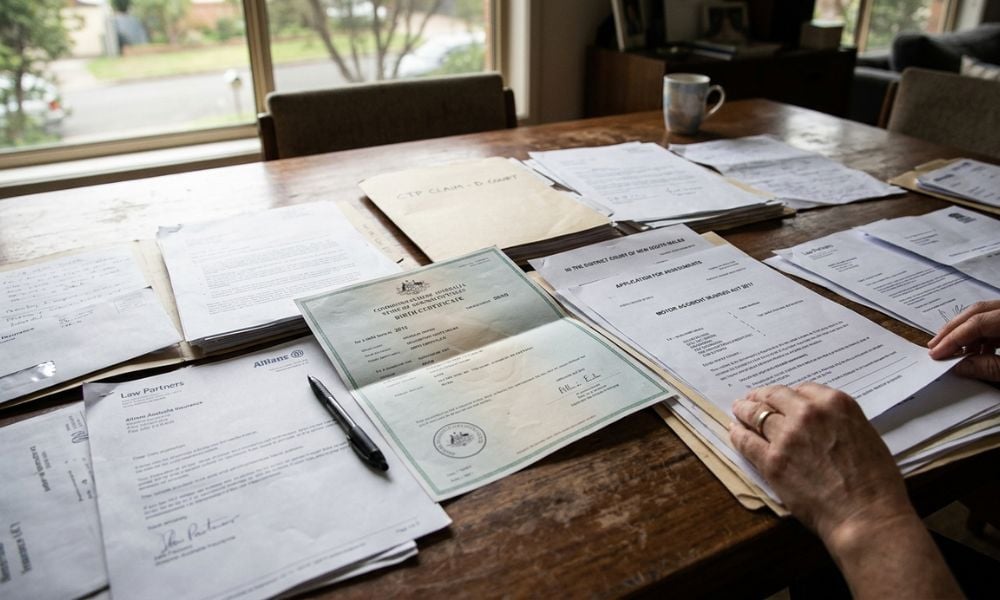
The sticking point was a certified copy of the child's birth certificate. Without it, the mother's solicitors could not lodge an application with the Personal Injury Commission - the body that handles motor accident disputes in NSW - to progress the claim. They first asked for it in late February 2025, about two weeks before the deadline expired on 14 March 2025.
What followed was an eight-month pursuit. The solicitors called, texted, emailed, and offered to meet the mother in person at their Port Macquarie office. She did not provide the document until 2 October 2025.
Along the way, a file note recorded that the mother told a law clerk she felt she was "being lied to" and "does not trust anyone with her daughter's birth certificate." In her evidence to the court, she said she had concerns about the privacy of sending personal information by email. She said her town had flooded and she could not access services. She said the certificate might be in a storage unit in Kempsey that only her brother - who lived in Queensland - could open.
When she finally found it, she emailed it to her lawyers without apparent difficulty.
The court found the mother had been advised of the three-year deadline in a detailed letter from her solicitors in July 2024 - eight months before the deadline expired. The letter explained that court proceedings generally had to be started within three years of the accident, and that missing the deadline could stop the claim from going ahead. It invited her to call with any questions.
She told the court she had "a vague memory" of receiving the letter and did not "fully understand" what it meant. But she accepted in cross-examination that if she had read it, she would have appreciated the deadline.
The court was not persuaded. The judge found that a reasonable person in the mother's position - even accounting for her circumstances as a single parent, the flooding, and her unfamiliarity with the legal process - would have responded to the repeated urgent requests, sought clarification on what she did not understand, and prioritised the one document her lawyers told her they could not proceed without.
What makes the outcome particularly striking for claims professionals is that the CTP insurer, Allianz, had already partially admitted liability for the child's injuries in a letter dated February 2024. The insurer flagged it would seek a 20% reduction for contributory negligence on any settlement, but the path to a damages assessment was open.
That path is now closed. The court held that the mandatory wording of the Act left no room for discretion: without a full and satisfactory explanation for the delay, it could not grant permission to file late. The claim was dismissed, and the mother was ordered to pay the defendant's legal costs.
The case is a sharp illustration of how mechanically limitation deadlines operate under the MAI Act. A partially admitted claim, a sympathetic claimant, and serious injuries were not enough to keep the door open once the deadline passed without a justifiable reason for the delay.