Story updated at 1330 to include comment from broker Melissa Jolly.
Australian homes are worth less than they were in March, and the people who track these things think there is a long way still to go. For the insurance industry, though, the more telling number is the one moving in the other direction: what it costs to put a house back up.
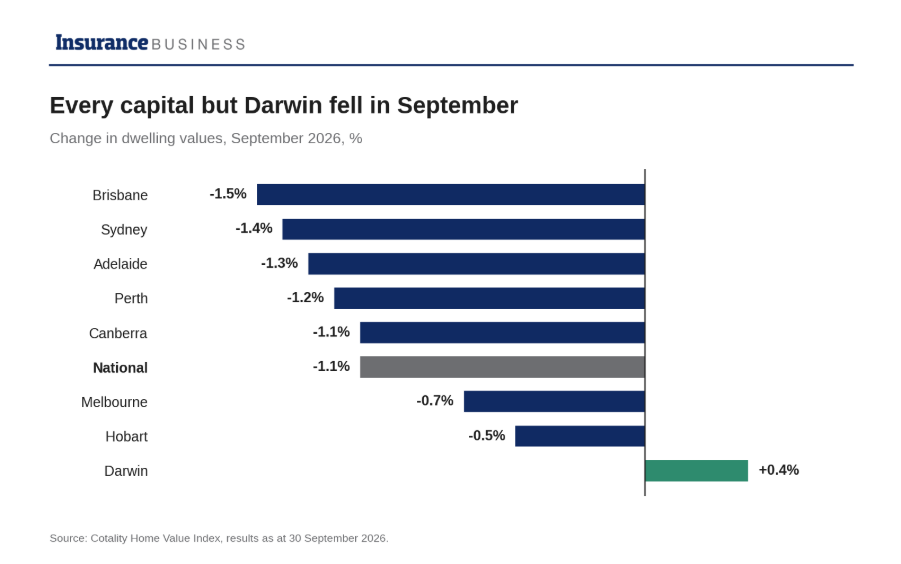
Cotality's Home Value Index fell 1.1% in September, the sixth monthly decline in a row, leaving national values 5.2% below their March peak. Brisbane led the capitals down with a 1.5% drop, Sydney lost 1.4% and Melbourne 0.7%. Only Darwin, up 0.4%, escaped. Sydney is now 8.6% off its February high.
The pain is wide rather than deep, at least for now. Almost every capital city suburb, 97% of them, recorded a fall over the past three months. Cotality research director Tim Lawless told the ABC that a peak-to-trough fall of 10% to 15% looked like a reasonable estimate, with declines likely to run into 2027 depending on how far interest rates climb.
They have already climbed a fair way. The Reserve Bank has lifted the cash rate four times this year, most recently at its September meeting, taking it to its highest level in about 15 years. The federal budget's changes to negative gearing and capital gains tax have also cut investor demand sharply, according to Cotality.
Read next: Rebuild costs outpace inflation, exposing sum insured gaps
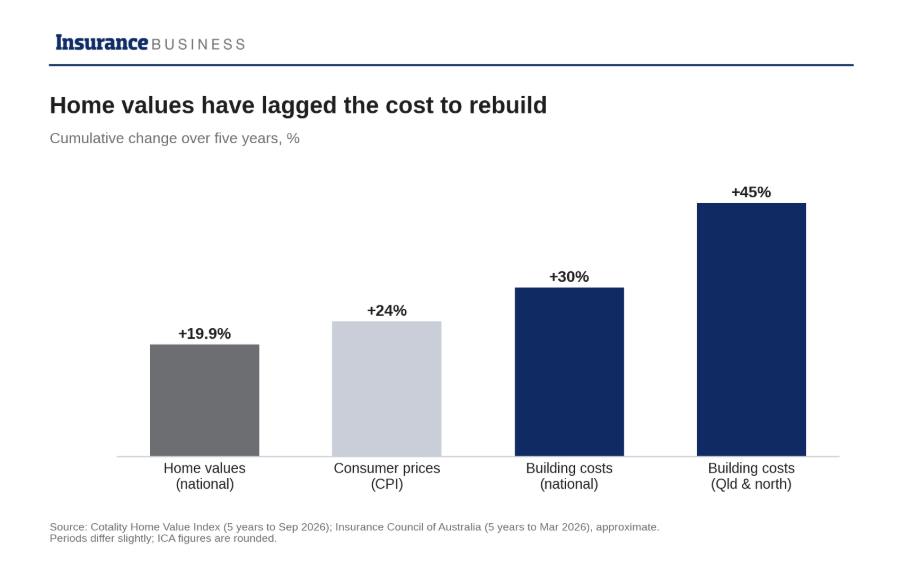
Here is the catch for anyone writing or broking home cover - a falling market value says nothing about rebuild cost, and the two are now heading in opposite directions. Insurance Council of Australia analysis found building costs rose about 30% in the five years to March 2026, against CPI growth of around 24%, and by roughly 45% for a standard home in Queensland and northern Australia.
The worry is that householders read headlines about falling prices and trim their sums insured to match. Many are already guessing. Compare the Market research found just 11.5% of homeowners feel confident they know what a rebuild would cost at today's prices, and the industry has spent the past year warning about a widening protection gap as premiums rise. 
"The risk for homeowners right now is that a falling property value gets mistaken for a falling rebuild cost," said Melissa Jolly, managing director of Pinnacle Insurance Brokers in Perth.
The two have very little to do with each other and with labour, materials and compliance costs still well above where they were five years ago, many clients are already underinsured before they even think about trimming their cover.
"Brokers have a real role to play here," said Jolly. "That means having the sum insured conversation at every renewal, encouraging clients to use a rebuild cost calculator or get a professional estimate instead of relying on what the house might sell for, and making sure they understand what demolition, debris removal, professional fees and temporary accommodation could add after a major loss."
She said with builder insolvencies also climbing, it's a good time to check that clients understand how their home warranty protection works too.
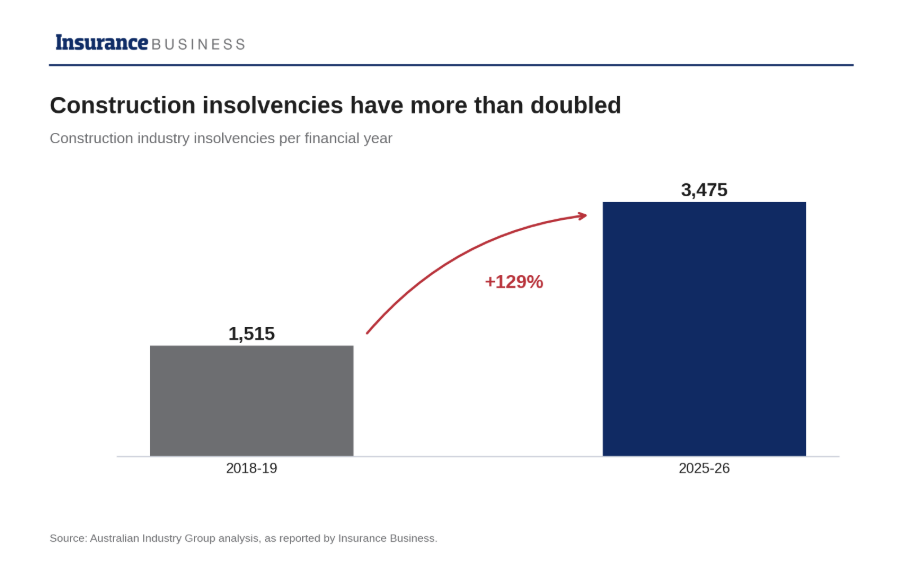
Builders are feeling the squeeze. Gold Coast developer Soheil Abedian, the man behind the Q1 tower, told the ABC that a 10% to 15% fall in values, on top of rate rises and the tax changes, would push more construction firms into collapse. Construction insolvencies already climbed from 1,515 in 2018-19 to 3,475 in 2025-26, according to Ai Group analysis.

Read next: Builder collapses test home warranty and surety cover limits
When a residential builder fails, the bill lands in the home warranty system, and the cover is not always as generous as homeowners assume. Victoria overhauled its scheme on 1 July, replacing last-resort domestic building insurance with a state-run Home Warranty product that pays out when a builder won't or can't fix defective work, capped at $400,000. The Building and Plumbing Commission is now the only provider, after the private market was closed.
Lenders' mortgage insurers are the other obvious exposure. Helia, the biggest of them, posted a 25% fall in first-half net profit to $100 million in August, with gross written premium down 44% to $61.6 million after it lost Commonwealth Bank's new business.
Claims, though, stayed negative, a reminder of how much equity borrowers built up during the boom. A slow, steady 5% decline barely dents that cushion. A 15% fall paired with job losses is a different conversation.
Read next: S&P cuts Helia outlook on CBA exit risk
That is the scenario AMP chief economist Shane Oliver is concerned about. He told the ABC that if the Iran war drags on, oil hits US$150 a barrel and unemployment rises, prices could fall as much as 20%, enough to knock about 2% off consumer spending and risk a recession. "This is already shaping up as the biggest downturn in property prices that we've seen in the last 40 years," he said, though he thinks rates have now peaked.
The market is also slowing in ways that touch insurers directly. Cotality estimates national sales over the past three months ran 19.1% below a year earlier, and 27.2% lower in Brisbane, with capital city homes taking a median 39 days to sell, up from 23, while unsold stock across the capitals is up 23.1%.
Fewer settlements mean fewer new home policies. Meanwhile the national rental vacancy rate rose to 2% in September, up from a record low of 1.5% in February, which matters for landlord cover and rent-default claims.
None of this changes what a builder charges to replace a roof after a hailstorm. For brokers heading into renewals, the message to clients is simple enough: your house may be worth less on paper, but it hasn't got any cheaper to rebuild.