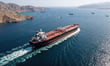
Marine war-risk cover is becoming increasingly dependent on the details of individual voyages, requiring more information as conflict affects some of the world’s busiest shipping routes.
Frédéric Denèfle, president of the International Union of Marine Insurance (IUMI), said insurers need to understand not only the vessel itself but where it is going, how long it will remain in high-risk waters and how much time it will spend loading or discharging. The shift makes war-risk placements more fluid than conventional marine cover, particularly for cargo owners accustomed to broader annual arrangements.
“As marine insurers, we are at the very heart of the risk, and we must ensure that we continue to develop the optimum tools to support and facilitate global trade in all conditions, no matter how challenging,” Denèfle said.
Speaking at IUMI’s annual conference in Rotterdam, Denèfle said war-risk underwriting requires considerably more information than the vessel age, flag, classification and trading history typically considered in conventional marine insurance.
IUMI had already highlighted that change earlier this year. In April, the association said Gulf war cover remained available on a single-voyage basis, while a June analysis said single-voyage assessments had become standard in volatile waters.
That places greater weight on the information available when cover is arranged. Cargo owners may not always have full visibility over the vessel, route or transit arrangements, while protection involving high-risk areas will generally be offered on a contract-by-contract basis rather than through the annual open covers many have historically relied on.
The shift comes against a markedly more dangerous backdrop. As of September 16, the International Maritime Organization had verified 80 attacks on merchant vessels in and around the Strait of Hormuz since the current Middle East conflict began on February 28, resulting in at least 22 seafarer deaths.
Another complication arises when conditions deteriorate after cover has already been arranged.
“When a conflict situation arises, there is often a misunderstanding that cover is cancelled. This is not necessarily the case. When risk increases significantly, some insurers will serve a Notice of Cancellation in relation to the cover their assureds have in place. This enables the insurer to reassess the risk and then reinstate the cover on adjusted terms,” Denèfle said.
Cancellation notices became a prominent issue in the Gulf earlier this year, where war-risk policies were repriced as conditions changed. Rather than necessarily ending protection, the mechanism allows insurers to reassess the exposure and offer fresh terms.
“It is important to recognise that a Notice of Cancellation does not necessarily end the cover. The cover can be amended to ensure that the insurer and the client can address the renewed risk together, with confidence in both the terms and the price. In the current dynamic environment, we must remain flexible and adaptable,” Denèfle said.
Capacity has not disappeared altogether. Lloyd’s in June backed a new Strait of Hormuz war-risk consortium offering up to $200 million separately for hull and P&I exposures and another $200 million for cargo.
The development underscores the distinction between capacity being available and the terms on which it can be deployed. In high-risk waters, access increasingly depends on the circumstances of each voyage.
Risk mitigation also factors into that assessment. Naval escorts and other government protections can reduce exposure, but Denèfle said insurers cannot assume they will always be available: “Whilst this is hugely appreciated, insurers cannot completely rely on protection being available for every transit. The availability and reliability of such protection must also be taken into account when offering cover.”
Insurers must also consider CNED—confiscation, expropriation, nationalisation or dispossession—where a state takes control or ownership of a vessel or its cargo. Time spent in a high-risk area can be particularly important, as vessels remaining at port or alongside for extended periods may face different exposure from those simply transiting.
“CNED risks in times of war are significant and can arise when states decide to take control or ownership of a vessel or its cargo. It is therefore important for an insurer to fully understand how long a vessel will be operating in a high-risk zone and, in particular, how much time it will spend alongside loading or discharging. In general, cover is provided for a limited period in order to minimise exposure to CNED risks as far as possible,” Denèfle said.
“Cover for war risks is becoming more commonplace, and it is important for vessel and cargo owners to understand that insurers need much more information than ever before in order to create tailor-made contracts that deliver adequate protection. Global, blanket cover is simply not an option anymore.”