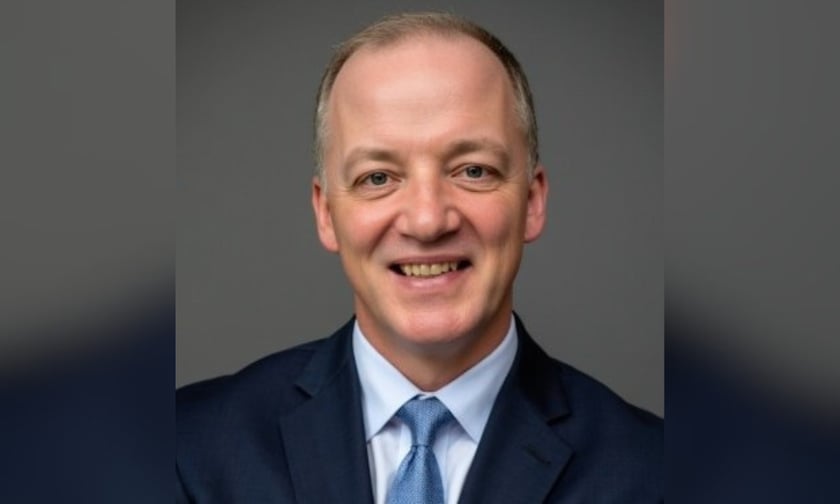
The appointment of Andrew Hare (pictured) as chief executive officer for Japan, Marsh Re, announced September 3, is the first significant Japan leadership move under a brand that is itself only two days old– and it arrives as three of the world’s major reinsurance intermediaries execute simultaneous expansion strategies in one of Asia’s most consequential renewal markets. Guy Carpenter formally became Marsh Re on September 1, 2026. Marsh Re president and CEO Dean Klisura said the change would bring the reinsurance business into closer collaboration with Marsh’s risk advisory operations while leaving its team and market strategy unchanged, saying: “Our heritage remains the same. We continue to lead in reinsurance and capital, and none of that will change as we move forward.” Hare’s appointment – effective January 1, 2027, subject to regulatory approval – is the new brand's opening statement on Japan.
The competition for position in Japan’s reinsurance broking market has widened beyond the traditional two-firm dynamic. In July 2024, Howden entered the Japanese market with the launch of Howden Re Japan Ltd. and a partnership with Keystone ILS Capital, a Japanese insurance-linked securities advisory firm, citing Japan’s US$30 billion natural catastrophe protection gap and growing demand for capital markets solutions. Howden appointed Kentaro Tada – former president of Guy Carpenter Japan – as CEO of the new entity.
Aon expanded its Japan operations in January 2026 after Aon Solutions Japan obtained an insurance broker license and established a corporate brokerage division aimed primarily at large companies with global operations. The new business is designed to combine Aon’s broker and agency capabilities, allowing it to compare and negotiate with multiple insurers while drawing on the group’s global resources and access to insurance and reinsurance markets. Aon also announced plans for a new office in Nagoya to expand its presence in the Chubu region.
Marsh has been building on two fronts. In addition to the Hare appointment, it agreed earlier in 2026 to acquire two insurance operations from ENEOS Holdings – ENEOS Insurance Service Co., Ltd. and the insurance arm of ENEOS Material Trading Co., Ltd. – accessing specialized commercial lines historically distributed through affiliated or captive brokers within Japan’s large industrial conglomerates. The reinsurance leadership appointment and the primary broking acquisition are parallel tracks of the same Japan strategy.
Japan is a key market in the April 1 reinsurance renewal season, which Aon describes as the main renewal for insurers in Japan, Korea, India, and China. Aon reported that global reinsurance capital reached a record US$785 billion at year-end 2025, while insurers renewing at April 1 increased demand by about 10% globally, including through higher limits and extended catastrophe towers. In Japan, Aon reported risk-adjusted pricing reductions of 15% to 18% for property catastrophe excess-of-loss programs, while proportional commissions increased by 3% to 5%.
At the April 1, 2026, renewals, Japanese cedants benefited from a softer property catastrophe market, with abundant capacity and relatively benign catastrophe losses supporting more competitive pricing. Howden Re reported risk-adjusted price reductions of up to 20% for Japanese catastrophe excess-of-loss programs, with a point estimate of 16%. It also reported that commissions on property surplus and earthquake quota-share treaties increased by 2 to 5 percentage points. Aon similarly reported 15% to 18% risk-adjusted reductions for Japanese property catastrophe excess-of-loss programs.
A softening rate environment shifts what brokers compete on. When double-digit price reductions are broadly available, placement access alone is insufficient differentiation. Program design, retention optimization, and advisory capability – areas where established client relationships and deep local knowledge carry more weight – become the primary competitive variables. That is precisely why all three firms have chosen this moment to invest in Japan-specific infrastructure and leadership.
Japan’s regulatory transition is generating structural demand for sophisticated reinsurance structuring that reinforces the value of senior local expertise. Japan’s Insurance Capital Standard – J-ICS – took effect for fiscal years ending March 31, 2026, introducing an economic value-based solvency regime aligned with the IAIS Insurance Capital Standard. For life insurers, the framework raises the capital cost of long-dated guarantees and makes reinsurance counterparty risk explicit through capital charges calibrated by reinsurer rating, maturity, and credit-risk mitigation, according to Freshfields.
Asset-intensive block life reinsurance transactions involving Japanese cedants reached an estimated US$20 billion to US$30 billion in 2024, according to market analysis cited by Freshfields. The same analysis estimated that up to 30% of Japan’s life insurance liability pool could be addressable by asset-intensive reinsurance in the coming years, subject to market conditions. On April 8, 2026, the Japan Financial Services Agency (JFSA) published proposed amendments to its Comprehensive Guidelines for Supervision for Insurance Companies, citing the growing use of reinsurance by life insurers and seeking to encourage stronger risk management and clarify supervisory expectations. Brokers operating in that environment are being asked to do more than place risk. Capital structure advice, counterparty risk assessment, and treaty design that can satisfy intensified regulatory scrutiny are now embedded in client service expectations.
Hare brings more than 20 years of experience in the reinsurance and insurance industry, including 15 years in Asia-Pacific, according to Marsh. He spent 17 years at Aon before joining financial services technology provider FIS, where he was head of insurance for Asia-Pacific. He joined Marsh in May 2026 as head of growth for Marsh Re in Asia-Pacific and will continue in that role alongside his incoming Japan leadership position. Hare will relocate from Singapore to Tokyo in mid-2027 and will report to Tony Gallagher, CEO of Asia-Pacific, Marsh Re. He succeeds Jeremy Fox, who remains as chairman of Asia-Pacific, Marsh Re – a deliberate continuity arrangement in a market where cedant relationships are built over years, not quarters.
Gallagher said: “Japan is a vitally important market for our clients and Andrew is a leader of exceptional commercial judgement who understands the importance of long-term relationships. He will build on the strong foundation established by Jeremy, whose continued role as chairman will ensure a smooth transition for our clients.” Hare said: “I am honoured to take on leadership responsibility for Marsh’s reinsurance business in Japan, which is one of the most sophisticated markets in our industry and built on relationships measured in decades. I look forward to working with our talented colleagues and the market as we support our clients in managing their risk portfolios.”