Australian Signals Directorate (ASD) figures show an SME reports cybercrime to national authorities every six minutes — and according to data published by Databox Solutions, small and medium businesses now make up 71% of the ransomware victims named on criminal leak sites.
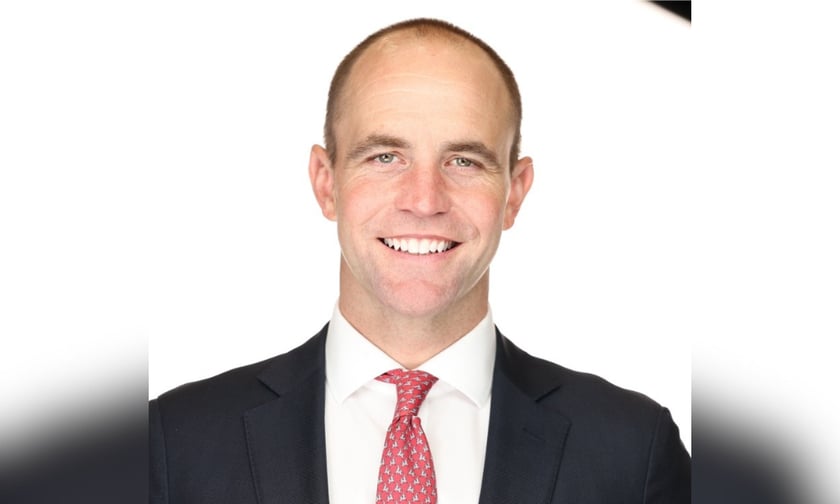
"What we understand is that customers, particularly in the SME mid-market space, want more than just a risk transfer product," Morgan said. "They want an insurer who's able to provide a service offering that sits around the insurance product, both before and after a loss."
That distinction between a policy that pays out and a partnership that prevents and contains losses likely sits at the heart of where the cyber market itself is heading.
Specialist underwriter DUAL has warned that international cyber rates have fallen 43% since the fourth quarter of 2023, even as claim severity climbs. This slide, said DUAL, is pushing the sector toward an inflection point in 2026. S&P Global Ratings has forecast premium increases of 15% to 20% in 2026 as severity catches up, while Coalition data placed the average ransom demand above US$1 million last year — a 47% jump.
Combined ratios are deteriorating across the US, Europe, the UK and Australia, with DUAL flagging that several markets could turn unprofitable by 2027 if current trends persist.
For Morgan, that's exactly why a service-led model has moved from nice-to-have to competitive necessity. Before a loss, he said, customers want help quantifying vulnerabilities; after one, they want a partner who can guide them through ransomware response or a major outage.
He said their new broker offering reflects that thinking. It uses AI to underwrite, quote and bind in under five minutes and provides ongoing AI-driven risk ratings benchmarking each customer's cyber posture against millions of data points. It's distributed exclusively through licensed brokers for Australian businesses with up to $100 million in annual turnover. Morgan said the proposition leans on proprietary technology developed with global partner Cowbell to assess risk.
However, the bigger broker story, he argued, is what flows back to the customer. "What differentiates us is the information we provide back to the customers," he said, pointing to risk reports made available to help businesses better understand the threats they face.
If the commercial logic for launching now is the softening market and rising claim severity, the operational logic is darker — and increasingly geopolitical.
QBE's threat intelligence places Australia as the ninth most-targeted country globally for ransomware attacks. The Australian Signals Directorate, meanwhile, has reported a surge in state-sponsored actors targeting critical infrastructure, including Chinese-affiliated espionage campaigns against telecoms providers and Russian state-sponsored campaigns against Western logistics firms.
Morgan said that turbulence is reshaping the loss picture in real time.
"When we see global conflict, as we've seen in the Middle East at the moment, you do see spikes in targeted attacks to groups that are linked to one or another kind of state or political affiliation," he said. While war exclusions still apply, "we do see the threat landscape heat up a little bit when you have tension in the world."
For brokers, that's a sales conversation shifting under their feet. Penetration in the SME segment has historically been thin, but Morgan said the door is opening as business owners recognise their reliance on technology and the cascading consequences if it's compromised.
To help brokers capitalise, Morgan pointed to threat-assessment tools provided at quotation, training delivered through a broker academy and global claims data that gives intermediaries a sharper view of the loss patterns clients are actually facing.
In a market where price is no longer the primary differentiator and severity is climbing fast, the winners could be the carriers that turn cyber cover into a year-round service relationship — not an annual transaction. For brokers, that could also be the next test of how this conversation gets sold.