Updated Thursday 26 November 2026
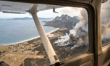
For several days the Flinders Island fire has barely moved - that has suddenly changed this week.
The Tasmania Fire Service (TFS) said earlier today that that the fire had burned about 13,000 hectares across the north of the island and was making a significant run to the south-west. On Tuesday the burnt area was about 3,000 hectares.
The fire started east of Palana Road around lunchtime last Thursday and stayed largely in place for several days, according to the Parks and Wildlife Service. On Monday a cold front with 70 to 80 km/h winds pushed it through containment lines and towards the east coast. It has been growing since.
An emergency warning is in place for the Mount Killiecrankie and Mount Blyth areas. Residents there have been told to move somewhere safer and not to head south, where fallen power lines are blocking several roads. Watch and Act alerts cover Killiecrankie, Leeka, Mt Tanner, Mount Boyes, Carnacs Flat and Lughrata. The latest warnings are on TasALERT.
Read next: Tasmania bushfires bring fresh insurance pressure for brokers and businesses
TFS deputy regional chief Steven Richardson said heavy fuel loads in the north, combined with rising winds, had made the fire too dangerous to attack directly in places. Crews worked with little visibility overnight and were reassessing the fire ground on Thursday morning.
Aerial surveys on Wednesday confirmed some structures had been destroyed. Richardson said crews would need to reach those sites on the ground before they could say whether any were homes. No injuries have been reported.
Communications are also affected. Several mobile towers are running on backup generators while crews work to restore power.
On Wednesday Tasmania Police took nine people, plus a dog and a wombat, off West End Beach by boat. An evacuation centre is open at the Furneaux Arts and Entertainment Centre in Whitemark. The island has a population of just under 900, and tourists have been among those evacuated.
The state government is offering emergency relief grants to displaced residents. Premier Jeremy Rockliff said the grants are worth $250 per adult and $125 per child, capped at $1,000 per family. Applications opened at 2pm on Thursday.
Getting help to the island is slow. Firefighting vehicles, tankers and water left Launceston by barge on Wednesday. Before that, around 40 firefighters with a handful of helicopters had been working the fire. The fire had crossed Palana Road in several places, splitting crews into groups north and south of the fire front.
The early losses are mostly agricultural.
Tom Youl, who runs cattle at the northern end of the island, said he had lost a few hundred hectares of ground and much of his fencing. The fire burned around most of his boundary and spotted into his property in several places. He described the scene to the ABC as "a bit apocalyptic", though the fire hadn't spread much overnight.
Nearby, farmer Mick Grimshaw said he and his neighbours had moved about 400 cattle away from the fire.
Smoke has reached as far as Triabunna on Tasmania's east coast, around 280 km to the south.
Read next: BOM's summer outlook comes with an unusual warning sign
At the time of writing the Insurance Council of Australia had not declared a significant event or catastrophe. With losses so far concentrated in farmland, this fire may never reach the national loss tables. Its effect on individual policyholders could still be severe.
AFAC's Spring 2026 seasonal bushfire outlook, released in August, flagged above-normal fire potential in north-eastern Tasmania after a run of below-average rainfall.
Fencing is likely to be the first point of contention. Farm packages handle boundary fencing in different ways: some include it in full, some cap it, and some leave it out entirely. Rebuilding kilometres of fence on an island where materials and contractors arrive by barge costs more and takes longer than the same job in the Midlands. Brokers with clients on the island will want to check those limits now, before claims are lodged.
The same applies to buildings. The ICA's most recent Catastrophe Resilience Report, drawing on Cotality's Cordell index, found Tasmanian home building costs rose about 43% over the five years to 2026, compared with about 30% nationally. Bushfire also has the highest average claim cost of any peril, at $114,888 per claim since 2019. On a remote island, freight and demand surge push rebuild costs higher again. A sum insured set three or four years ago is unlikely to be enough.
Tasmania's overall exposure helps explain why affordability is such a live issue there. ICA figures put about 98% of the state in bushfire-prone land. Insurable dwelling exposure of around $119 billion equals 278% of state economic output, the highest ratio in the country. Those numbers have been central to the debate over TasInsure, which has since been reworked into a government-owned, not-for-profit statutory authority.
Read next: Bushfire claims surged 20-fold at major Victorian insurer
This year's Victorian fires showed how quickly rural fire losses can shift to the commercial side of insurance. Commercial property accounted for 68% of insured losses from the January event, an unusual split that the market is still working through.
Flinders Island depends on beef, lamb and tourism. Losses are likely to show up in farm packs, livestock cover, holiday accommodation and business interruption. With roads closed and visitors evacuated just ahead of summer, brokers should be checking indemnity periods, denial-of-access extensions and the exact wording of BI triggers.
Capacity is the background problem. IB has reported that some bushfire-zone commercial risks are only 20% to 30% placed, because underwriters are reluctant to write full limits even as rates soften elsewhere. Any meaningful loss on Flinders Island will add to that caution.
There is one positive trend for clients who have invested in resilience: about half the home insurance market now reflects certified bushfire mitigation in its pricing.
Lightning is the likely cause, but the TFS said it won't confirm that until an investigator has visited the site.
This article was produced in partnership with GreenShield.