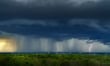
The insurance tally from last Monday's storm in Central Australia tells only part of the story. About 400 claims had been lodged in Alice Springs by Wednesday, the Insurance Council of Australia told the ABC. Much of the damage in remote outstations and town camps, though, is being repaired by government or by residents themselves.
Winds of up to 96km/h swept through southern parts of the Northern Territory on Monday 12 October. They uprooted trees, cut power across the region and ripped roofs from homes. Residents of outstations and town camps told the ABC that the poor quality of many homes made the damage worse.
Maryanne Malbunka, a Western Arrarnta woman and health worker, was in Canberra when the storm destroyed her homeland property near Hermannsburg. She said existing housing problems left outstation homes more exposed.
"Maybe when we get more rain or more storms like that our houses will be flown out, because we're only living in a tin shed, and some of those brick houses aren't being renovated or looked at properly," she said. Power went out across most outstations in the region for about two days, she said. Clean-up will mean many trips to the tip, which is costly given the high price of fuel.
In Alice Springs, a Northern Territory government spokesperson said four public housing properties were uninhabitable. There were 59 storm-related repair jobs across public housing in town, including five town camps. The government is "prioritising relocating" affected families to other public housing while repairs are carried out.
For Mpwetyerre/Abbott's Town Camp resident Caleb Doolan, the storm was a second blow in one year. "We had to chuck everything out from the fridge," he said. "It was hard for us." The camp was still recovering from floods earlier in the year. The Northern Territory government activated emergency arrangements on 1 March after heavy rain sent the Todd River over its banks.
After the storm, the federal and Northern Territory governments activated disaster recovery assistance across the Alice Springs, MacDonnell and Central Desert council areas, according to the ABC. Eligible households can receive a one-off payment of up to $16,901 for essential structural repairs where insurance will not meet repair costs. Details are on Disaster Assist.
For brokers with Central Australian clients, that payment hinges on what insurance will not pay. Clients whose storm claims are declined, or settled below the cost of structural repairs, will need the insurer's decision in writing to show where the gap sits. Insurers will also be pricing renewals for a town that has now been through two declared events in seven months.