PERILS has increased its insured loss estimate for the January 2026 bushfires in Victoria to $810 million as loss information from Australian insurers continues to develop.
The Zurich-based catastrophe data provider released its second industry loss estimate on April 13, 2026, for the fires that burned between Jan. 7 and 13, 2026. The new figure compares with an initial estimate of $786 million issued on Feb. 26, 2026, about six weeks after the event end date.
Under PERILS’ coverage definition for Australia, the loss number reflects insurance claims from the property and motor hull lines of business. Other classes, including liability, are not included in the current estimate. Following its standard reporting timetable, PERILS plans to publish another update on July 13, 2026, six months after the end of the event, when more fully developed claims data are expected to be available.
Read next: Revealed - loss estimate for January Victorian bushfires
The Victoria bushfires formed part of a wider period of fire activity in January 2026, during which more than 30 significant fires were recorded across the state in south-eastern Australia. In total, the fires burned about 400,000 hectares. The most damaging phase occurred between Jan. 7 and 13, when approximately 900 buildings were destroyed, including 330 homes. There was damage to infrastructure, losses of more than 20,000 livestock, and one reported fatality. The revised PERILS estimate offers an updated view of the aggregate insured loss and is being used in internal assessments of bushfire exposure, capital requirements, and catastrophe model performance for Australian portfolios.

The January 2026 event has invited comparison with the 2019-20 “Black Summer” bushfires, but PERILS has highlighted differences in both loss experience and hazard characteristics. Darryl Pidcock, head of Asia-Pacific at PERILS, said the fires mark a return to fire-related catastrophe losses after several years in which major events have been dominated by other perils. “Whilst this event is less severe than the ‘Black Summer’ fires of 2019/20, it is the first major bushfire event for the insurance industry in the last six years. During this period, we have observed major Cat losses caused primarily by ‘wet’ events such as cyclones, floods, and severe convective storms,” Pidcock said.
Read next: Victorian bushfire insurance bill tops $200 million as more than 3,000 claims lodged
Pidcock said there has been a sustained focus on understanding bushfire risk since the 2019-20 season. “There has been considerable research since the Black Summer fires into the impacts of major fires with subsequent efforts by the industry and government to improve awareness and risk mitigation of rural properties. This event differed from the 2019-20 fires as it occurred primarily in grassland areas, fuelled by extremely dry grasses, intense winds, with fires moving at up to 25 kmph at their peak.” He said the next loss report, due on July 13, 2026, will include more detailed information, such as breakdowns by postcode and coverage type, for use in bushfire models in the insurance sector.
The Insurance Council of Australia (ICA) escalated its significant event declaration for the Victoria bushfires to an Insurance Catastrophe on Jan. 16, 2026. The declaration covers bushfires affecting 18 local government areas across Victoria since Jan. 7, 2026. After the initial significant event declaration, insurers gained broader access to affected regions and were able to refine early assessments of property and asset damage. More than 2,600 claims had been lodged across household, commercial property, and motor lines at the time of the catastrophe escalation, with further development expected as policyholders continue to submit claims. The catastrophe declaration activates sector-wide arrangements that include prioritised handling of claims from affected customers, structured data collection, and coordination between insurers, government agencies, and emergency services.
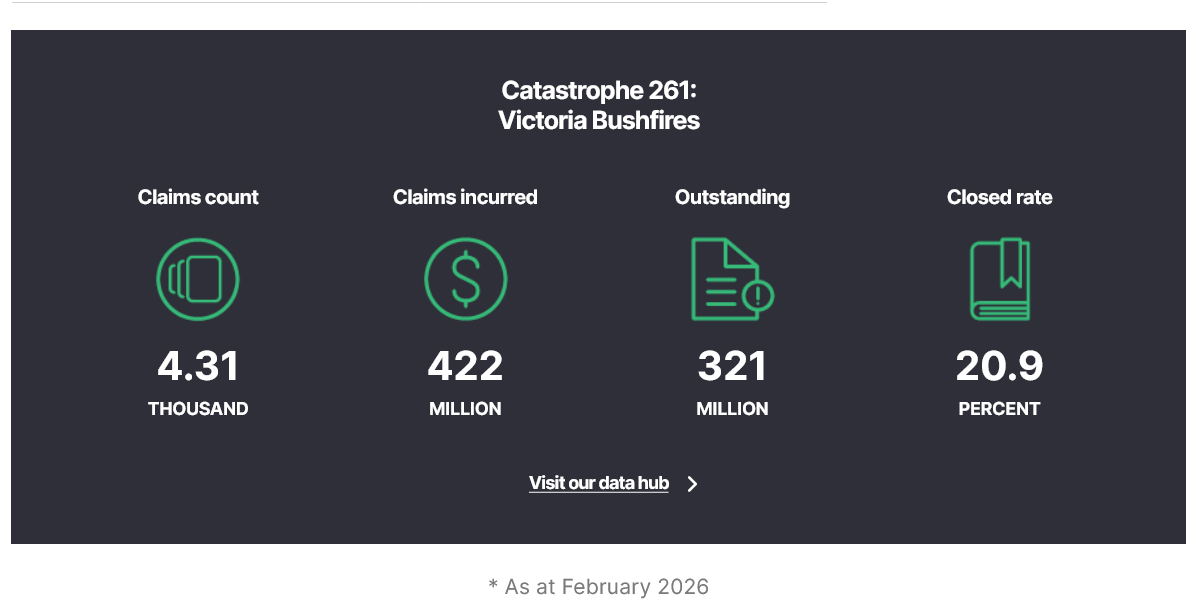
The ICA is collecting loss and exposure data from the Victoria bushfires through its data hub, which aggregates information from member insurers on declared catastrophes and other significant events. The data are included in ICA publications on resilience and climate impacts, and in material related to land-use planning, building regulation, and mitigation spending. These datasets, alongside PERILS’ industry loss estimates, are being used by insurers, reinsurers, and model vendors in reviewing bushfire accumulations, updating model assumptions, and assessing implications for pricing, underwriting, and reinsurance purchasing for future seasons.