What happened: A NSW review panel found an Uber driver's psychiatric impairment from a low-speed bus crash fell below the 10% whole person impairment threshold, revoking an earlier assessment that had cleared it.
Who's involved: Allianz Australia Insurance Limited and a rideshare driver assessed under NSW's compulsory third-party scheme.
What's at stake: The driver's access to lump-sum damages, after his impairment rating was cut from 12% to 8%.
Why it matters: The decision shows how the diagnostic test for PTSD can swing a psychological injury claim across the statutory threshold in a minor crash.
Where it stands: Decided. The original certificate has been revoked and replaced.
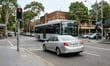
A bus hit a stationary Toyota Camry from behind at a Neutral Bay traffic light in December 2023. The airbags did not deploy. The driver walked away without a scratch.
That was the accident. What came next was the claim.
The driver - working as an Uber driver at the time - suffered no physical injuries. But within weeks, he was, in his own words, "breaking down for no reason." His wife sent him to a doctor, who referred him to a psychologist. He was started on an antidepressant.
What makes this case unusual, and what sent it all the way to a Personal Injury Commission review panel in NSW, is what the crash brought back. Nearly 20 years earlier, in 2004, the driver's first wife and eldest daughter had been killed in a separate motor vehicle accident. He had never sought psychiatric treatment for those losses. He remarried, raised more children, and kept working - first as a taxi driver, then for Uber.
The bus crash brought it all back.
Allianz Australia Insurance Limited, which insures the at-fault vehicle under the compulsory third-party scheme, admitted liability for the damages claim. The dispute was whether the driver's injuries were serious enough to cross a critical line: the 10% whole person impairment threshold. Under NSW's Motor Accident Injuries Act 2017, that threshold is the gateway to lump-sum damages for pain and suffering. Below it, a claimant still receives statutory benefits like treatment and income support, but the bigger payout is off the table.
The first medical assessor to examine the driver certified 12% impairment - just above the line. He diagnosed both post-traumatic stress disorder and major depressive disorder, reasoning that while the bus accident itself was not severe enough to cause PTSD in a person of "normal fortitude," the driver's buried trauma from the 2004 deaths had been reawakened by the crash.
A second assessor, examining the driver in a separate dispute, disagreed. She rejected the PTSD diagnosis entirely. The accident, she found, did not meet DSM-5 Criterion A - the diagnostic rule that requires exposure to actual or threatened death, serious injury, or sexual violence. The driver had not been seriously hurt. His car was stationary when it was struck. She diagnosed major depressive disorder only.
Allianz sought a formal review of the first certificate, arguing the PTSD diagnosis was wrong and the impairment scores were too high.
The review panel re-examined the driver remotely in September 2026, nearly three years after the accident. By then he was 63 years old, taking two antidepressants daily. He had been referred for a 21-day psychiatric inpatient stay, which the insurer had approved. His youngest daughter had begun self-harming - a development he linked to his own inability to recover.
The panel's two medical assessors agreed the December 2023 accident caused major depressive disorder. They also agreed it did not cause PTSD. The crash had not placed the driver in immediate serious physical danger, had not exposed him to another person's death, and had not caused him serious physical injury. The diagnostic gateway for PTSD was not met.
On the impairment scale, the panel scored the driver lower than both the original assessor and a psychiatrist retained by the driver's lawyers, who had put the figure at 20%. The panel found mild impairment in self-care, social activities, travel, and relationships, moderate impairment in concentration and focus, and severe impairment in his ability to adapt and return to any kind of work. It noted he had holidayed on the Gold Coast, in the Snowy Mountains, and in New Zealand since the accident - evidence that weighed against higher scores in several categories.
The result: 8% whole person impairment. No adjustment for pre-existing conditions. No uplift for the effect of treatment.
The original certificate - 12%, above the threshold - was revoked.
The gap between 12% and 8% is not just arithmetic. Crossing below the 10% line means the driver keeps his statutory benefits - treatment funding and income support - but loses the path to a lump-sum damages award for pain and suffering.
For claims teams handling psychiatric injury in low-impact CTP crashes, the decision is a pointed reminder that the diagnostic gateway for PTSD matters as much as the scoring that follows. A deep personal vulnerability - even one as profound as unprocessed family deaths - does not satisfy that gateway if the triggering accident itself does not meet the severity test.