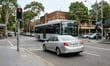
What happened: A review panel overturned approval for wrist surgery after CCTV contradicted the claimant's account of a Sydney tram-door incident.
Who's involved: QBE Insurance (Australia) Limited and a pedestrian claimant, before the NSW Personal Injury Commission.
What's at stake: Approval for right wrist fusion surgery and right shoulder surgery under the Motor Accident Injuries Act 2017.
Why it matters: The decision shows how surveillance footage can unravel a causation case - even one that already passed an initial medical assessment.
Where it stands: Decided. The panel revoked the original certificate and issued a new one denying both treatment requests.
A man told doctors his wrist was "smashed" multiple times in the doors of a Sydney Light Rail tram. He described the pain as being hit by a "flame thrower." Two surgeons recommended surgery. An independent medical assessor certified the wrist procedure was accident-related and that QBE Insurance was liable to fund it.
Then the insurer played the CCTV.
The footage, roughly one minute long, showed the tram doors opening and closing several times near the man's wrist - likely striking it at least once. The review panel that examined the footage found no evidence the man needed to use any force to remove his arm. When the video was put to him at examination, he agreed.
That concession proved decisive. The NSW Personal Injury Commission's review panel has now overturned the earlier approval, finding that neither the wrist surgery nor a separate shoulder procedure was caused by the October 2023 incident.
The case was heard under the Motor Accident Injuries Act 2017, which requires a claimant to show that an accident made at least a "material contribution" to the need for treatment. The claimant sought two procedures from QBE: a right wrist fusion surgery and a right shoulder repair including rotator cuff and biceps reattachment.
QBE had declined both, arguing the injuries were pre-existing and unconnected to the tram-door incident.
The panel's reasons run to 372 paragraphs, and a large share of them catalogue the claimant's medical history. The picture is stark.
From 2019, the man had attended his GP repeatedly for chronic right shoulder and wrist pain following a fall at home. By 2020, he was being treated for wrist inflammation. By 2021, he was attending Westmead Hospital's hand therapy clinic and chronic pain clinic, reporting wrist pain at 10 out of 10. Imaging showed a partial tendon tear in his right shoulder.
Through 2022 and 2023, the records show ongoing treatment for chronic pain in both the wrist and shoulder, referrals to orthopaedic surgeons, prescription pain patches at increasing doses, and - critically - a referral to the very surgeon who later recommended wrist surgery, made less than a month before the tram incident.
At the chronic pain clinic in 2023, the claimant described his pain as "can't live pain." He was doubling up on prescription pain patches and told clinicians the medication was not helping.
The claimant had told treating doctors that the tram doors "smashed" his wrist and forearm "multiple times" and that he had to use force to free his arm. His original complaint to Sydney Light Rail said his "wrist/forearm was crushed in the doors multiple times until a bystander pressed the door button."
The CCTV showed something different. The doors appeared to open and close several times, likely striking his wrist at least once. The panel found no evidence of any wrenching or forced removal of the arm. At examination, the claimant agreed the footage did not show him using force. He declined to watch it again, saying he had seen it "lots of times" and that it "only showed one angle."
A separate medical assessor, reviewing the footage for an earlier threshold injury dispute, had already flagged the mismatch. That assessor recorded that the claimant "confirmed that the CCTV footage was not consistent with the history that he had provided" and "confirmed that his arm was not trapped or forcefully removed from the doors."
On the shoulder, the panel found "no possibility" the incident caused a right shoulder injury. There was no wrenching force, no mention of shoulder pain after the accident until around July 2024 - nine months later - and the post-accident MRI was not meaningfully different from pre-accident imaging.
On the wrist, the panel accepted that the doors may have struck the man's wrist at least once and could have caused a minor flare-up of his existing pain. But it found the force involved was only enough to cause "minimal soft tissue bruising" that would have cleared up within days - nowhere near enough to justify fusion surgery.
The post-accident X-ray, taken the day after the incident, showed no fracture. The post-accident MRI looked similar to pre-accident imaging. The referral for that MRI had been made before the tram incident even occurred.
The panel also noted that treating doctors who had supported a link between the surgery and the accident had not been given an accurate account of how the incident actually happened. It placed limited weight on their reports for that reason.
Because neither procedure was connected to the accident, the panel revoked the original medical assessor's certificate and issued a new one denying both requests. Whether the surgeries were reasonable or necessary never came into play - without a causal link, that question does not arise under the Act.
For CTP claims teams, the decision is a sharp reminder of what pre-existing condition documentation, surveillance footage, and on-the-record concessions can do to a causation case - even one that has already cleared an initial assessment.