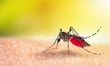
A Monash University study says warming is raising dengue and malaria risk globally, including in northern Australia, while national figures show more than 94% of Australian dengue cases are still caught overseas, leaving travel policies as the most direct point of exposure for clients and the brokers who place their cover.
The study, released last week, examined how climate change and other factors interact to affect the two diseases, AAP reported. Dengue-affected areas are growing as transmission expands to higher altitudes and into more temperate regions not historically associated with the disease. Co-author associate professor Katie Anders said places without a history of dengue, such as southern Europe and the southern United States, are increasingly getting local outbreaks, and that the risk could spread further south in Australia as temperatures rise.
Malaria has moved the other way. It has declined globally despite more suitable climate conditions, which Anders suggested could reflect better drugs and risk-reduction campaigns. Southern Australia is not considered at risk of malaria. Projections are not uniform, either: an earlier ANU-led modelling study suggested dengue risk in Queensland’s wet tropics could fall by 2050 under a high-emissions scenario because mosquito breeding sites would dry out.
Control in northern Queensland has improved. Wolbachia, a bacteria that reduces mosquitoes’ ability to transmit viruses, has been introduced across Cairns, Townsville and other urban centres, and Anders said it is largely responsible for cutting outbreaks in northern Queensland to almost zero over the past decade. “We absolutely would still be having outbreaks without Wolbachia,” she said.
Local transmission has not disappeared. Townsville recorded its first locally acquired case in five years in January 2025 and went on to have 16 locally acquired cases in two inner-city suburbs during the 2024-25 wet season, which brought higher-than-average rainfall. It was the city’s first sustained outbreak since Wolbachia releases began. Cairns confirmed its first locally acquired case since 2018 in May 2025.
Most cases are acquired abroad. A peer-reviewed analysis found 12,568 of the 13,343 dengue cases reported in Australia between 2012 and 2022, or 94.2%, were imported, 584 (4.4%) were locally acquired and 191 (1.4%) had no origin recorded. Locally acquired cases fell from a peak of 236 in 2013 to zero in 2021 and 2022, and Queensland accounted for 96% of them. Vaccine maker Takeda cites national figures putting more than 94% of 2,641 cases in the 12 months to March 30, 2025 as acquired overseas.
Notifications have also fallen from a peak. Australia recorded a record 2,381 notifications in 2024, dropping to 1,863 in 2025, newsGP reported. National data therefore show local transmission confined to northern Queensland and the great majority of cases arriving with travellers, so the study’s concern about southward spread is a projection rather than a trend in the notification figures.
Anders said a new vaccine and Wolbachia-based control give an opportunity to suppress dengue. Takeda’s Qdenga is now available in Australia for people aged four and over on private prescription. The Australian Technical Advisory Group on Immunisation recommends it for people with a confirmed or likely history of dengue who are travelling to endemic areas, and for people without a history who plan prolonged or repeated visits. For short-term travellers without a dengue history, it says vaccination can be considered on an individual risk-benefit assessment. The vaccine is given in two doses at least 12 weeks apart.
Neither the study nor the national figures say how many cases led to a travel insurance claim. The Insurance Council of Australia says most travel insurance policies exclude outbreaks of infectious diseases, pandemics, epidemics and known events, so a declared dengue outbreak at a destination can bear on cover.
Policies differ. CHOICE found almost 60% of the single-trip policies it compares exclude cover for pandemics. Some insurers, including Allianz, Travel Insurance Direct and Cover-More, cover medical costs from a pandemic or epidemic, but Travel Insurance Direct and Cover-More exclude cancellation costs.
Whether an insurer treats a declared dengue outbreak as an epidemic under its exclusion depends on the policy wording. Insurance Business reported on Samoa’s declared outbreak, where Allianz’s terms state a general exclusion, with limited exceptions, for epidemics and pandemics, and the answer varies by product disclosure statement. Clients who buy after an outbreak is declared face the further risk that it is a known event when they take out the policy.