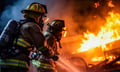
Fire and Emergency New Zealand (FENZ) is seeking a formal protocol with the New Zealand Professional Firefighters Union (NZPFU) on how emergency incidents are handled during strike periods, in the wake of a recent fire in Pakuranga that has drawn public and political attention.
Deputy National Commander Megan Stiffler said FENZ has again approached the union to agree on a structured process that would apply when paid firefighters are on strike, covering situations where there is a risk to life, potential for fires to spread, or a need for specialist equipment. “Our aim was to put arrangements in place to mitigate the risk to public safety during strikes, while preserving NZPFU members’ right to take industrial action. This would cover potential loss of life, when fires are likely to spread, and the need for specialist equipment,” Stiffler said.
Stiffler said FENZ views the proposal as in line with expectations on other organisations that provide essential services during industrial action, noting that “given the nature of the work we do,” there is an obligation to agree clear settings for strike periods. “Unfortunately, our request was rebuffed by the NZPFU. That is hugely disappointing and puts our communities in harm’s way,” she said. The NZPFU has notified further one-hour stoppages at midday on Jan. 23 and 30. Stiffler said FENZ has “consistently called on NZPFU officials to call off these strikes while we’re actively engaged in independent facilitation to progress collective agreement negotiations. There is no point in putting public safety at risk when that process is ongoing.” The next facilitation sessions between FENZ and the NZPFU are scheduled for Jan. 26 and 27.
FENZ’s latest approach to the union comes as one-hour strikes by career firefighters continue on a rolling basis. Between 12pm and 1pm on Jan. 16 – the ninth such strike period – FENZ recorded 11 incident calls. Ten occurred in areas where paid firefighters were participating in industrial action. Six of the 11 calls were fire alarm activations that did not involve a fire. The other calls in strike-affected areas related to a quad bike motor vehicle crash, a report of a dog locked in a vehicle, and a reported car fire later determined to be a false alarm. FENZ said it responded to each of those incidents.
Another event, a medical emergency, was reported during the strike hour but not attended by FENZ under its contingency arrangements for the industrial action. Hato Hone St John provided the emergency response for that case. Stiffler noted the contribution of volunteers and management staff to maintaining responses during the stoppage. “I want to thank our 11,800 volunteers across the country, and their employers for supporting them to respond over today’s strike hour. I would also like to thank our Operational Commanders and Communication Centre Managers, who contributed to the response,” Stiffler said.
Alongside the bargaining dispute, the NZPFU has raised privacy concerns that extend beyond employment issues and into the use of surveillance and data by public agencies. In a statement dated Jan. 14, NZPFU national secretary Wattie Watson said the union “has received information detailing members of FENZ executive leadership asking or directing Auckland Transport CCTV operators to access cameras in Auckland in order to watch NZPFU members at their pickets in Pitt Street, in Karangahape Road, and at East Coast Bays.”
Watson said the activity allegedly occurred at FENZ’s regional offices on Pitt Street, with other Auckland managers and representatives from other agencies present. “We have also received information that at least one Auckland senior manager went to the Auckland Transport Control Centre on another occasion and their presence was explained as being there ‘to spy on paid firefighters’ or words to that effect,” Watson said.
The NZPFU said it accepts that CCTV systems may be used to observe emergency responses, for example road crashes, during the one-hour strikes. However, it argues that using cameras to observe striking firefighters, union members, and their supporters is “a gross breach of privacy” and believes such use would breach CCTV access and use agreements and policy. “The NZPFU has written to the Privacy Commission notifying of these serious breaches of privacy asking for an investigation to be undertaken with urgency in order to prevent any further similar breaches,” Watson said. The union said it is concerned that comparable activity could occur in Wellington and Christchurch, which also have CCTV control centres, and has lodged Official Information Act requests on the issue. A detailed public response from FENZ to these specific allegations was not included in the source material for this article.
The work stoppages form part of negotiations over the collective employment agreement for paid firefighters. On Dec. 5, the Employment Relations Authority (ERA) referred the parties to facilitation, with sessions on Dec. 9 and 10, and further dates set in January. The NZPFU has stated that members have been working under an expired agreement without a pay increase since mid‑2023. The union has argued that FENZ’s proposals do not adequately address remuneration, minimum staffing, workloads, fleet condition, and health, safety, and wellbeing concerns.
FENZ, which has signalled a restructure that would involve role reductions, has said it must manage employment claims within existing budget settings while meeting service delivery requirements. Government ministers have publicly urged an end to the strikes and have referred to the Pakuranga fire in their comments. The union has questioned that political involvement while investigations into the cause and circumstances of the Pakuranga incident continue.
For insurers, reinsurers, and intermediaries, the dispute is taking place within the framework of FENZ’s levy-based funding model, which is directly linked to insurance products. Around 95% of FENZ’s operating revenue is collected through levies on home, contents, and motor insurance policies, with the remainder coming from other government and non‑levy sources. FENZ’s network includes about 14,900 personnel, a fleet of roughly 1,300 fire appliances, and close to 600 stations nationwide, responding to approximately 89,000 incidents per year. Adjustments to pay scales, workforce numbers, fleet renewal, or technology can influence its operating expenditure. If bargaining outcomes or subsequent policy decisions result in a higher ongoing cost base, there may be pressure over time to review fire and emergency levy rates. Any upward adjustment would intersect with current affordability pressures in the insurance market, particularly for catastrophe‑exposed property, higher‑risk locations, and motor portfolios already affected by higher repair and replacement costs.
For insurance professionals, the industrial outcome and any ruling by the Privacy Commissioner on the CCTV allegations both carry potential implications. The first could shape levy settings and expectations of FENZ service capacity; the second could clarify how agencies and partners may use third‑party CCTV and data in incident management, with flow-on effects for liability exposure, contract terms, and data governance. These developments are relevant to underwriting, pricing, and risk advisory across professional indemnity, public liability, and cyber and privacy lines, as market participants consider how operational, employment, and privacy risks within emergency services may influence claims patterns and portfolio risk.