The world’s insurance protection gap is growing faster than the industry’s ability to close it, new analysis from Moody’s warns.
Moody’s projects the global economic impact of physical risk could reach US$41.4 trillion by the mid-2040s. Sea levels are rising, temperatures are climbing, and natural disasters are growing more frequent. A large share of the losses from these events would fall outside existing insurance policies.
The gap does not simply go unfunded. Governments, businesses, and households absorb what insurance does not cover, and that burden can stall economic recovery in the regions most affected.
The cost is already measurable. Aon’s 2026 Climate and Catastrophe Insight found natural disasters caused US$260 billion in economic losses in 2025, more than half of which remained uninsured. Swiss Re warned separately that insured losses alone could reach US$148 billion in 2026 if they return to long-term normal levels.
Moody’s published an interactive data visualization mapping protection gap variations by region and peril. The tool covers earthquakes, wildfires, and hurricanes, and shows how coverage differs by location and hazard type.
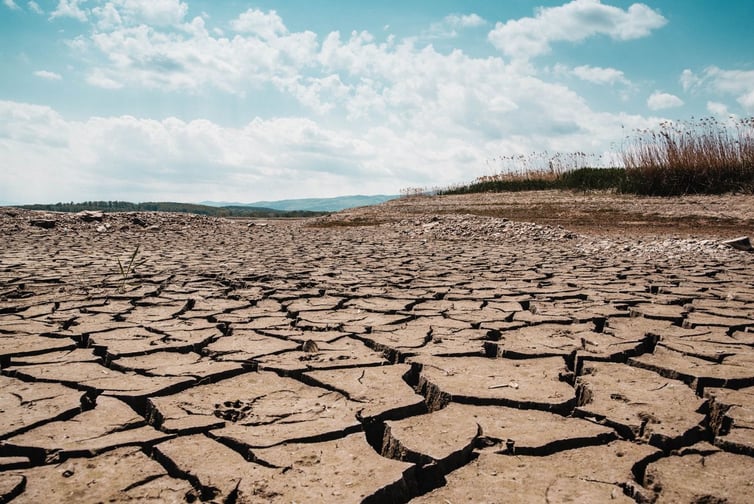
Heatwaves and water stress are generating increasingly large losses but remain largely outside standard insurance coverage. Around 95% of losses tied to the 2025 European heatwave were uninsured, Moody’s found.
Heat and water stress build over time. They are harder to model, harder to price, and poorly suited to conventional policy structures built around discrete loss events.
That modeling gap is widening. Western Europe swung more than 12 degrees Celsius within 10 days this spring. Scientists now call this pattern “temperature whiplash,” and it exposes shortfalls in products built around historical climate assumptions.
Moody’s data visualisation maps these gaps across perils and regions. Insurers and reinsurers can use it to identify where exposure concentrations are highest.
Flood data in the Moody’s analysis points to stark differences across Europe. Demand for flood insurance in Germany has risen steadily since the early 2000s after repeated flood events. The country still carries a protection gap of around 40% for inland flood risk.
France presents a contrasting picture. The state-run reinsurer, Caisse Centrale de Réassurance (CCR), provides unlimited-peril backing that keeps the protection gap below 20% across every peril category. That comparison shows what public-private structures can achieve where private markets alone have not closed the shortfall.
The US market faces a similar structural problem. Flood events drove more than US$100 billion in US economic losses in 2025. NFIP take-up in the hardest-hit areas ran at or below 5%, and only about 4% of US homeowners carry flood insurance, according to FEMA.
The findings arrive at a moment of growing pressure on the industry. Regulators, investors, and rating agencies are pushing carriers and reinsurers to quantify and disclose physical climate risk. For those who can build credible products around slow-onset perils, the data points to an underserved market.
Closing the gap will require capital well beyond what incremental product development can deliver. Aon chief executive Greg Case has called for US$1 trillion in new private capital over the next decade.
The global protection gap fell to 38% in 2025, its lowest on record. The first half of that year still produced the second-highest insured catastrophe loss total in history.
Products targeting heat and water stress remain at an early stage. Demand appears to exist, but pricing frameworks and policy structures have not kept pace with the underlying economic exposure.