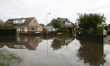
Tower Insurance chief executive Paul Johnston has called for new ways to finance the relocation of homes exposed to climate risks, with increasingly detailed property assessments raising questions about insurance affordability and availability in vulnerable areas.
Johnston said New Zealand needed to move beyond debating who should pay for managed retreat and consider whether relocating properties away from high-risk locations could generate financial returns.
"There are creative solutions that I think that we can start thinking about now rather than just simply who pays," Johnston told Morning Report. His comments come as insurers increasingly use detailed natural hazard assessments to determine premiums and underwriting decisions.
Tower has introduced address-level pricing for earthquakes, floods, sea surge and landslips. Johnston said approximately 90% of customers received an average reduction of $70 in the natural hazards component of their premiums following the introduction of landslip and sea surge pricing in 2025.
However, properties with greater exposure can face higher premiums, with Tower allowing some increases to be phased in over up to four years.
"And that's because we could be that much more granular about the risks at all their properties,” Johnston said.
Natural hazard exposure is also affecting the availability of cover. In January, AA Insurance temporarily stopped accepting new home, business and landlord policies in Westport and surrounding communities after reaching its flood exposure limits. Existing customers were unaffected, with renewals continuing subject to standard underwriting criteria.
A June 2026 survey by the Insurance Brokers Association of New Zealand found that nine in 10 respondents were receiving more requests for natural hazard advice, while more than 60% said climate change and natural hazards were making cover harder to place.
Alongside these underwriting challenges, insurance costs have risen substantially in recent years. Stats NZ figures show overall insurance costs have increased by approximately a third over the past five years, while home insurance prices have climbed nearly 60%, with particularly sharp increases following the Auckland Anniversary floods and Cyclone Gabrielle in 2023.
Johnston attributed rising premiums to higher building and renovation costs, more expensive vehicle repairs and increasingly frequent severe weather events: "This year, we've had large weather storms almost every second weekend."
Despite these pressures, Johnston said Tower had reduced its prices by around 5% over the past 18 months through technology improvements and operational efficiencies. He also rejected concerns about widespread underinsurance, pointing to New Zealand's high insurance penetration rate.
However, the Reserve Bank of New Zealand's May 2026 Financial Stability Report warned that rising premiums and the potential withdrawal of cover from flood-prone areas could leave some households underinsured. Although relatively few homes face an immediate loss of cover, the central bank noted that these risks could affect property values in vulnerable locations.
The question of how to manage these properties remains unresolved. The government's National Adaptation Framework outlines measures to reduce climate risks, but does not settle how adaptation and relocation costs should be shared. The Insurance Council of New Zealand has similarly called for long-term adaptation funding.
Johnston did not provide details on how his proposed approach to relocation funding would work, but cited Auckland Council's Making Space for Water programme as an example of existing efforts to reduce flood risks.
"But we absolutely do need to be doing more as a country. We've got time, but we do need to start acting," Johnston said.