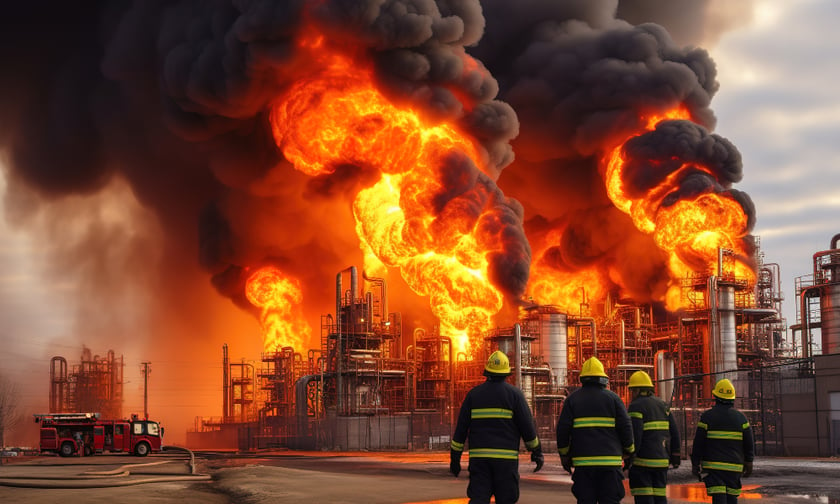
The Tasmania Fire Service has determined that the fire which gutted the Tungatinah Power Station in Tasmania's Central Highlands last week was accidental. The finding removes the most significant obstacle to what is shaping up as one of the largest single-risk commercial property claims in the Australian energy sector this year.
Rachel Watson, CEO of Hydro Tasmania, the state-owned generator that operates the station, has said publicly that the asset was fully insured. Neither the insurer, the placing broker nor the sum insured has been disclosed.
Matt Lowe, the Tasmania Fire Servic deputy chief officer, said fire investigators had determined the fire was accidental following extensive scene examinations.
“The preliminary investigation findings have identified several potential ignition sources which will be subject to further investigation over the coming weeks and months, however the fire has originated on the assembly bay floor, away from the main turbines," Lowe said in a media release this morning.
An accidental determination materially shortens the path to indemnity. A deliberate ignition finding would have engaged wilful act considerations and extended the adjustment process while investigators worked through liability questions.
The reference to multiple potential ignition sources, however, keeps a second question open. Where a loss of this scale is traced to a component failure, an electrical installation or maintenance work performed by a third party, insurers acquire a recovery target, and subrogated proceedings against a contractor or manufacturer become a realistic prospect. That is where the eventual net cost of this loss will be settled, and it will not be resolved this year.
Quantum is also unresolved. Watson has confirmed that the building has sustained significant damage and will need to be demolished and that the condition of the generating equipment cannot be established until safe access is available. The station dates to 1953 and is a steel-frame, clad structure of architectural note, which raises reinstatement questions that brokers handling large industrial risks will recognise – whether cover responds on a modern-equivalent basis, and whether the sum insured reflects current construction costs rather than a figure set several years ago. Those questions have been live across the market, as our recent reporting on a major fire claim testing business continuity cover set out.
The consequential loss exposure may prove more consequential than the property damage. Tungatinah generated 142 megawatts when operational, close to five per cent of Tasmania's electricity supply. Hydro Tasmania has brought the gas-fired Tamar Valley Power Station back online to cover the shortfall.
Substituting gas generation for hydro output carries a materially higher cost per megawatt hour. Where business interruption and increased cost of working extensions are in place, that differential is the kind of expense they exist to absorb. Industrial special risks wordings, which the Insurance Council of Australia has described in its submissions on commercial cover, engage business interruption only where there has been insured physical damage – a threshold plainly met here. The variable is the indemnity period, set against a rebuild that Premier Jeremy Rockliff told parliament would take at least a year and possibly longer.
For brokers, the loss arrives against a commercial property market where reinsurance costs in the fire and industrial special risks class have repeatedly exceeded net claims. It could also demonstrate how quickly a single asset failure converts into a nine-figure exposure spanning property, consequential loss and recovery.
Hydro Tasmania said assessment and recovery works would continue on site, which was returned to the company yesterday.