Another renewal season, another sharp intake of breath from insurance buyers. Plenty of comprehensive car insurance customers are again opening notices showing rises of around 10%, on top of similar increases a year ago. In some reported cases, a policy for the same car and driver now costs close to 60% more than it did in 2023.
The pain isn't just anecdotal – the facts back the premium pain claims. Motor premiums grew by more than 42% between 2019 and 2024 and by a further 8% in the 12 months to July 2025, according to ASIC's Report 838, Road testing transparency in car insurance premiums, published in August. That comfortably outstrips inflation over the same stretch.
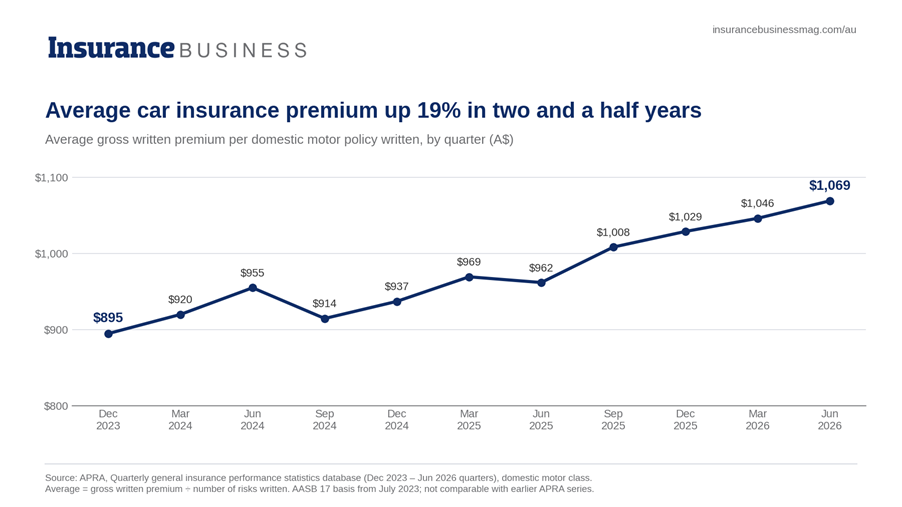
How big the bill looks depends on who's counting and reporting the numbers. Canstar's quote-based averages run roughly double the ICA's paid-premium figure, because they average quotes across a range of driver profiles, while the ICA and APRA numbers are built from premiums insurers actually wrote. APRA's per-policy figure also includes cheaper third-party cover. Every measure, though, points the same way – up at a scary rate of climb.
So where's the money going? Ask insurers and they'll hand you a list of invoices. Ask the regulator and it'll hand you a renewal letter that, in its view, doesn't explain much at all.
The industry's case starts in the panel shop. The Insurance Council of Australia (ICA) says the average motor claim has risen 32% over the past four years to $6,266, pushed up by dearer replacement vehicles, pricier parts, higher labour rates and cars sitting in workshops for longer.
That matches the longer view the ICA laid out in its Motor Insurance Policy Paper – A Roadmap for Reducing Rising Premiums last year. Average claims costs climbed by roughly 42% between 2019 and 2024, almost exactly matching premium growth. Repairs now make up around 60% of what insurers pay out, and repair costs alone rose 26% from 2022.
Part of the problem is what modern cars are made of. A nudge that once meant a new bumper can now mean recalibrating radar sensors, cameras and driver-assistance systems, which takes specialist tools and specialist staff. Write-offs, which account for about a quarter of claims costs, have become more expensive too, with the ICA citing new car prices up as much as 39% since 2019 and used car values about 32% higher. The industry body has pushed for wider access to repair data and parts, as Insurance Business reported when the roadmap was published.
Read next: ASIC cracks down on car insurance: what it means for brokers
Then there's the people problem. Fewer qualified technicians means longer queues, and longer queues mean insurers pay for hire cars for longer. The ICA's roadmap put the rise in rental car costs at 70% since 2019.
The automotive trades have sat on the national shortage list for years. The Australian Automotive Aftermarket Association has forecast a national shortfall of around 40,000 technicians by 2030, with apprenticeship completion rates still below 40%. The Motor Trades Association of Australia's 2024 member survey found automotive businesses were already receiving just 8.2 applicants per vacancy, against a national average of 17.7, and the association says that number has fallen sharply since.
Canberra points to its Free TAFE program, which it has legislated to make permanent. The ICA wants more targeted action: regulating the credit hire industry, tackling repair workforce shortages and requiring carmakers to make spare parts available locally.
Credit hire is a particular bugbear. These firms supply replacement vehicles to not-at-fault drivers and then recover the bill from the at-fault driver's insurer, often at rates well above a standard rental. The ICA is seriously unamused and has called for a mandatory code of conduct to rein them in.
Read next: Insurers push premium rises as ASIC scrutiny intensifies
ASIC doesn't dispute that costs have risen. Its complaint is that customers can't see any of it, and with car insurance the most complained-about insurance product in 2024-25, that matters. The regulator reviewed eight brands across five insurers – AAI (AAMI and Suncorp), Allianz (Allianz and TIO), IAG (NRMA and RACV), RAC and Youi – covering about 72% of the market, and surveyed more than 2,000 consumers.
None of those insurers explained, in quote or renewal documents, the key factors behind an individual premium or why it had moved from the year before. Nearly three in four consumers (73%) recalled being given only generic reasons for a price rise, according to ASIC.
Commissioner Alan Kirkland said "Consumers should not have to guess why premiums have changed." ASIC wants renewal notices to spell out the main rating factors, show how excess, cover options and payment method affect price, and state the dollar cost of paying monthly. Paying by instalments can cost 10–20% more than paying annually with many insurers, yet 54% of consumers didn't know or missed it in the fine print.
Federal assistant treasurer Daniel Mulino has said the government is weighing premium transparency in the motor market, after committing $2.4m to transparency reforms that, for now, target home and contents cover.
The enforcement backdrop is already active, ASIC is suing RACQ Insurance in the Federal Court, alleging more than 570,000 renewal documents carried misleading "last period premium" figures between 2019 and 2024. RACQ is defending the case.
Read next: ASIC takes RACQ to court alleging misleading insurance renewal comparisons
Are customers too loyal (or lazy)? ASIC found 67% of consumers renewed with the same insurer, and 40% of those didn't call or compare quotes first. Of those who did pick up the phone, 31% got a lower premium without changing their cover.
If a third of the people who ask get a discount, the renewal price isn't the only price on offer. Canstar's 2025 ratings research put the potential saving at $692 a year for a driver paying the average premium who moves to one of its top-rated policies.
Insurers would counter that the margin is thinner than it looks. The ICA, citing APRA data, says motor claims and expenses rose from 89% of premiums collected in June 2019 to 94% in June 2024. AAMI says premiums are recalculated from scratch each year using current claims frequency, repair costs and local risk data, so a customer's bill can rise even when nothing in their own life has changed.
Domestic motor posted an insurance service result of $472m in the March 2026 quarter, its best since APRA's current dataset began, as Insurance Business reported. But net claims incurred have climbed 22% in two years, from $2.34bn in the March 2024 quarter to $2.86bn in March 2026, and the December 2025 quarter set a record at $2.88bn, according to the same APRA series. Premium rises are currently outrunning claims; the gap isn't wide.
For brokers, ASIC's findings are close to a business case. Clients who never question a renewal are, on the regulator's own numbers, leaving money on the table. Re-quoting motor cover at renewal, checking sum insured and kilometre estimates, and flagging the cost of monthly payments are all things a broker can do that a standard renewal letter currently doesn't.
It also cuts the other way. Brokers who repeat insurer-supplied comparison figures in their own advice will want to be confident those figures are right. As the RACQ case shows, a misleading number doesn't get any less misleading by being passed along.
Premium relief, if it comes, depends on the cost side moving: more technicians, cheaper and faster parts, and a lid on credit hire. Until then, the most useful thing in the system may be a clearer renewal notice – and a customer willing to pick up the phone.