Inflation picked up again in October, and the price of insurance rose even more than the CPI.
The consumer price index rose 4.9% in the 12 months to October, up from 4.3% in September, according to figures released by the Australian Bureau of Statistics on Wednesday. Markets had expected 4.8%. Trimmed mean inflation, the measure the Reserve Bank watches most closely, edged up to 3.8% from 3.6%.
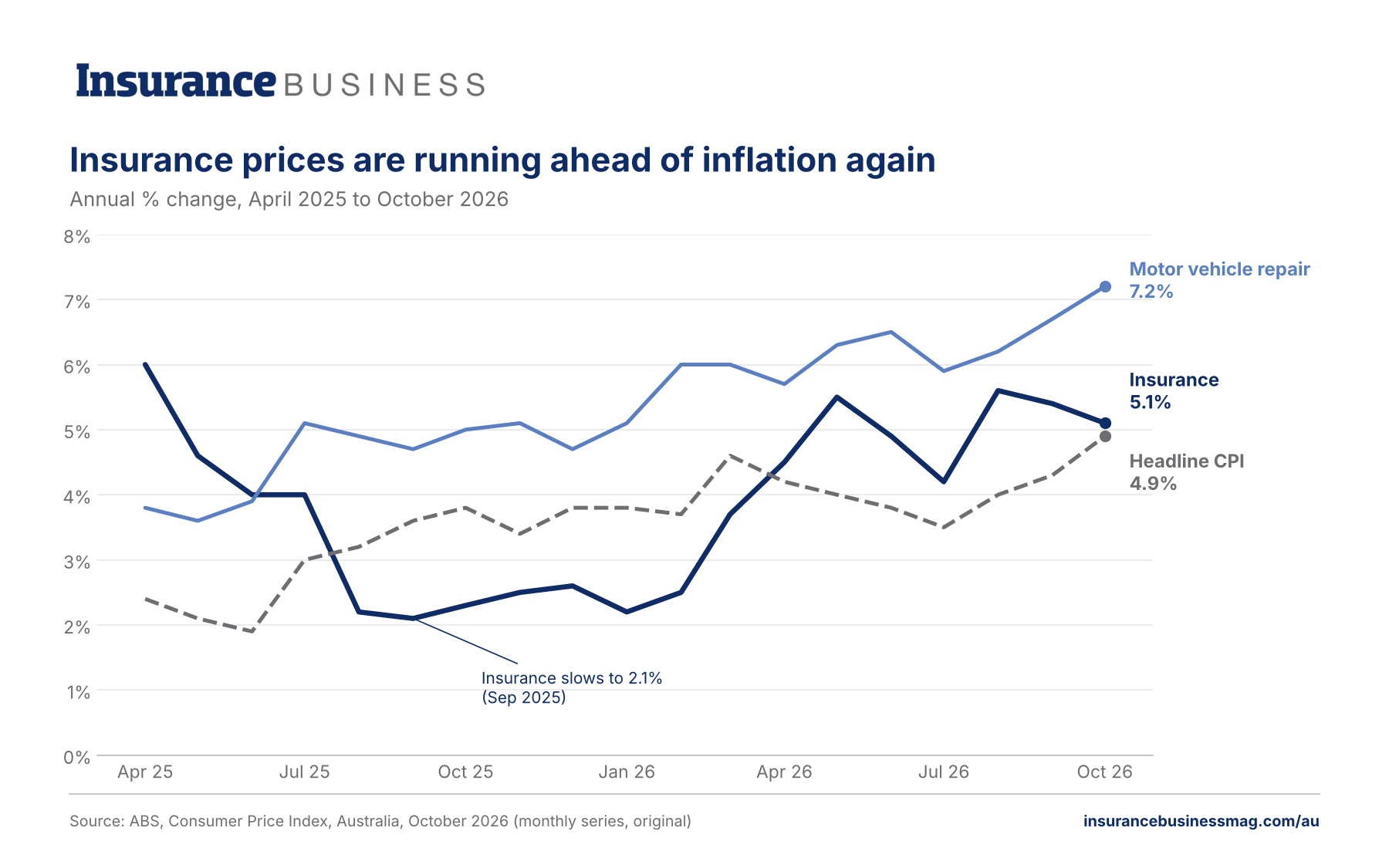
Most coverage will focus on the headline rate, but brokers should look further into the detailed CPI tables. The insurance expenditure class rose 5.1% over the year, more than double the 2.3% pace recorded in October 2025, and climbed another 0.3% in the month.
Annual insurance inflation has held at 4.2% or above every month since April, peaking at 5.6% in August. From August 2025 to February this year it had sat between 2.1% and 2.6%, which suggested the hard market might be easing for households.
Pay packets are not keeping pace. The ABS wage price index, released last week, rose 3.5% in the year to the September quarter. Insurance prices rose 5.4% in the year to September.
The ABS did not single out insurance in its commentary. Rachael McCririck, the bureau's head of price statistics, said "housing was the largest contributor to annual inflation in October", with the housing group up 6.4%. Transport came next at 10.6%, driven by fuel.
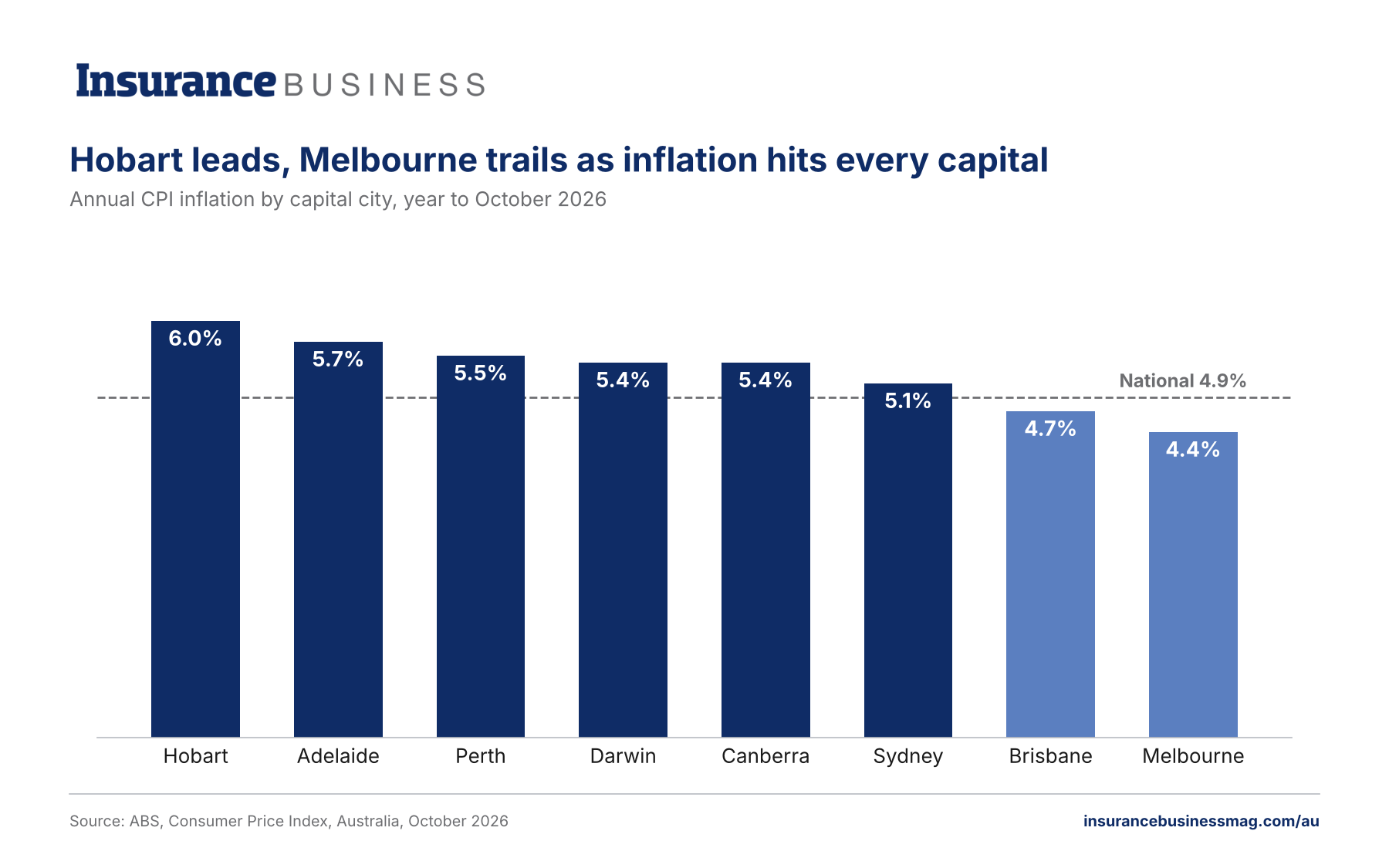
Every capital city recorded annual inflation above 4%. Hobart was highest at 6.0%, followed by Adelaide at 5.7% and Perth at 5.5%, while Melbourne was lowest at 4.4%.
For motor portfolios, the line to watch is maintenance and repair of motor vehicles. It rose 7.2% over the year to October, the fastest annual rate in the ABS monthly series, which carries annual comparisons back to April 2025. Spare parts and accessories rose just 1.7%, which points the finger at labour and workshop time rather than the parts themselves.
Insurers have been pointing to the same problem for two years. The Insurance Council of Australia has found repair costs are up 26% since 2022 and now make up about 60% of total motor claim costs, as Insurance Business reported in its look at why motor claims costs keep climbing. Domestic motor posted a record quarterly underwriting result in March, but net claims incurred were still up 22% over two years.
Read next: IAG joins global insurer push to cut the cost of repairing cars
Automotive fuel prices jumped 6.3% in October alone and are now 32.5% higher than a year ago, which the ABS put down to higher world oil prices. Fuel was excluded from the trimmed mean this month, a key reason for the gap between headline and underlying inflation. Dearer fuel tends to filter into towing, freight on imported parts and hire car bills, so claims managers are unlikely to see the full effect for a few months.
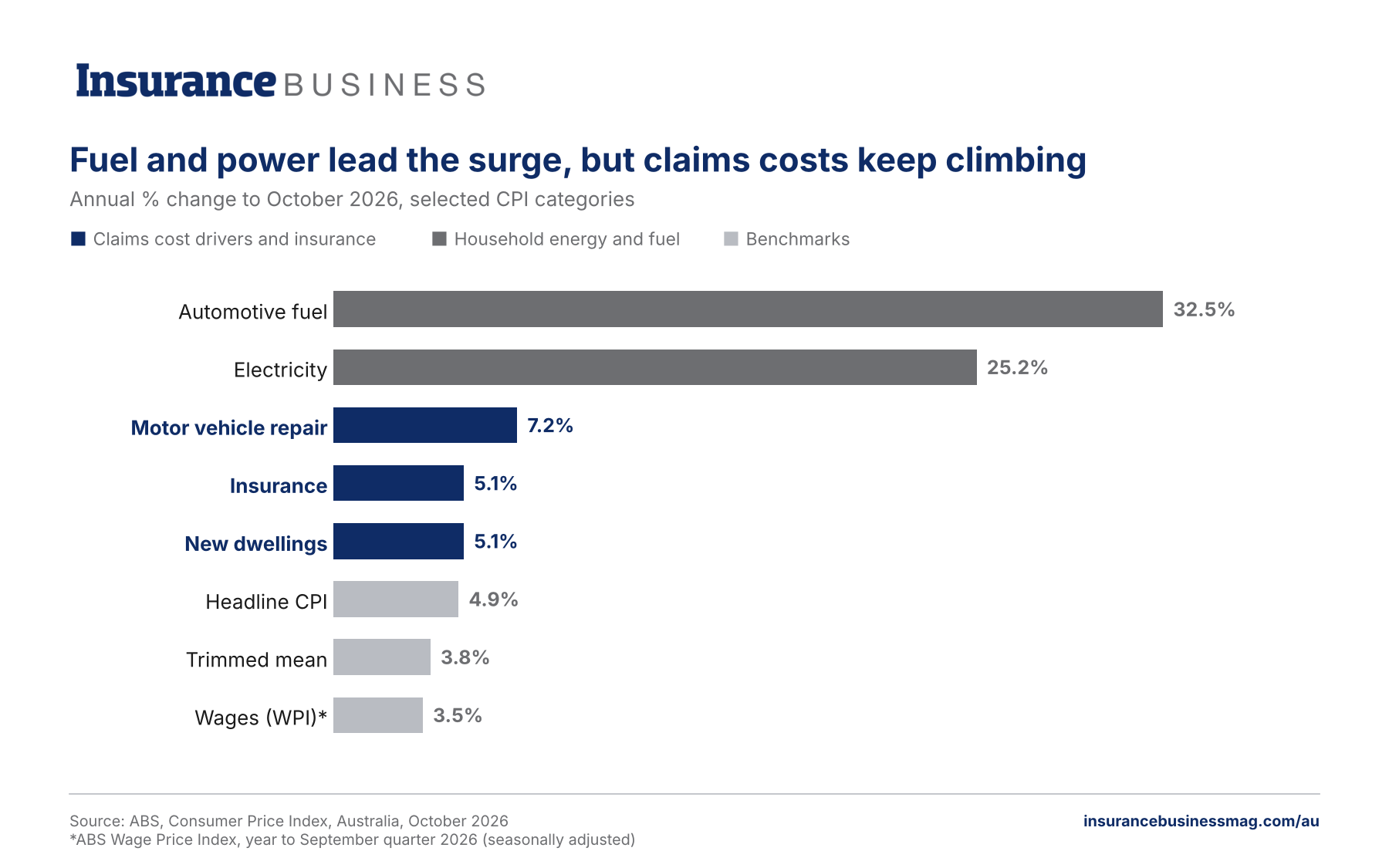
On the property side, new dwelling prices rose 5.1% over the year, up from 4.7% in September. The ABS said builders were passing on higher costs for materials and labour. Maintenance and repair of the dwelling was more subdued at 2.8%.
Over five years the gap is wider. Insurance Council analysis found building costs rose about 30% in the five years to March 2026, against CPI growth of roughly 24%, and by around 45% for a standard home in Queensland and northern Australia. Brokers reviewing sums insured this renewal season are working against that gap, and falling house prices are making the conversation harder.
"The risk for homeowners right now is that a falling property value gets mistaken for a falling rebuild cost," Melissa Jolly, managing director of Pinnacle Insurance Brokers in Perth, told Insurance Business in October.
Read next: Home insurance premiums surge at double the decade-long average
The Reserve Bank lifted the cash rate to 4.85% on 3 November, its fifth increase this year and the highest setting since 2008. The board split six to three, and its November Statement on Monetary Policy noted markets were already pricing in about one and a half more rises by mid-2027.
A hotter-than-expected October print makes a quick turn in rates harder to argue for, even with unemployment rising. CommBank economists had tipped a hold in December after the split vote, but conceded the risks still leaned towards a higher cash rate.
Electricity prices are up 25.2% over the year, which the ABS linked to the expiry of Commonwealth energy rebates. Combine that with higher mortgage repayments and fuel, and the insurance renewal becomes one more bill competing for a shrinking pool of spare cash.
After September's rate rise, one broker warned that clients under cashflow pressure may strip back cover, often in the places that carry the biggest exposures. Raising excesses, dropping optional covers or trimming sums insured can all look sensible on a quote and painful after a loss.
Read next: Rate hikes, oil shocks and 2026: Brokers brace for a real world stress test
For insurers, higher rates offer some consolation through better returns on fixed-income portfolios. That lifts investment income but does nothing to reduce the cost of claims.
Going into storm season, sums insured that have only been indexed to CPI are likely to fall short, because building costs have risen faster. Motor clients whose pay is growing more slowly than their premiums will push back at renewal. Where a client chooses to carry more of the risk, the advice should be on file. The RBA board meets once more before Christmas, in early December.