Publicly available policy documents from two of Australia's largest commercial insurers show broad asbestos exclusions that would leave contractors uninsured for bodily injury, property damage and contamination claims arising from accidentally disturbed asbestos - even where the contractor had no intention of carrying out asbestos work. QBE lists asbestos-related claims among the matters not covered by its general liability insurance. Zurich excludes liability arising directly or indirectly from asbestos or materials containing it, and its defence cost provision applies only where the insured is entitled to indemnity - meaning an excluded asbestos claim could also fall outside defence cost protection, removing the coverage that general liability typically provides even for excluded claims.
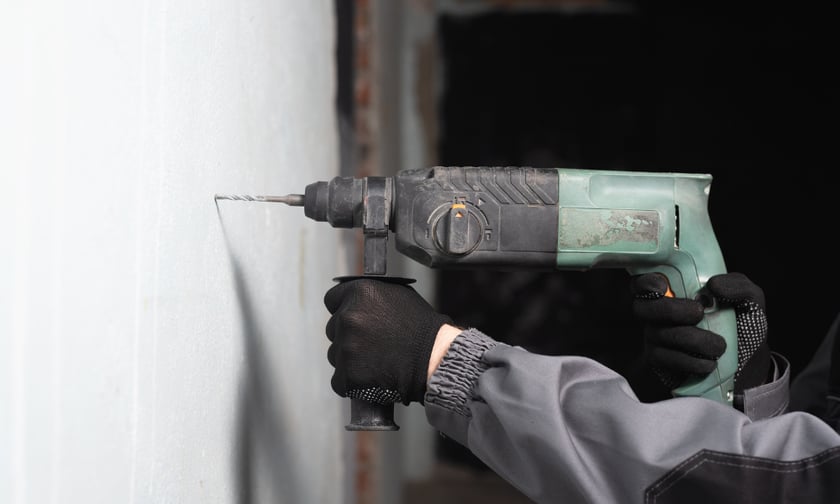
Edge Underwriting, which specialises in asbestos liability cover, said the wordings showed why brokers should not assume general liability cover would respond when asbestos was accidentally disturbed. The observation has direct relevance for the trades most commonly encountering asbestos during otherwise routine work on existing buildings - electricians, plumbers, builders, roofers, ventilation contractors and maintenance providers who drill, cut, remove pipes or open walls and ceilings on properties where hidden or unidentified asbestos-containing materials may be present.
Around six million tonnes of asbestos remain in Australia's built environment, according to the Asbestos and Silica Safety and Eradication Agency, with asbestos cement pipes and domestic and commercial sheeting accounting for approximately 95% of the remaining material. That volume makes incidental contractor encounter not a marginal risk but a routine one across renovation, maintenance and infrastructure work on pre-2004 buildings.
The long-tail nature of the exposure is reflected in national health data. Australia recorded 684 mesothelioma diagnoses in 2024 and 688 deaths in 2023, according to the Australian Institute of Health and Welfare. Those figures do not show how many claims were made against contractors, but they demonstrate the severity and delayed emergence of asbestos-related bodily injury - and they are the backdrop against which the policy trigger question becomes most commercially consequential.
Property and contamination claims can arise much sooner. An accidental release of asbestos fibres can lead to claims for testing, decontamination, temporary relocation, loss of use and business interruption - costs that arrive well within a single policy period rather than years after the exposure event.
The policy trigger is particularly important given the latency of asbestos-related bodily injury claims. Claims-made cover requires a claim to be made and reported during the policy period, subject to the retroactive date and other conditions. Occurrence-based cover looks at when the causative event took place. For contractors, continuity of cover and timely notification are therefore critical - changing insurers, accepting a later retroactive date or failing to report a known incident could each affect whether a later claim is covered, even where the underlying event falls within an earlier policy period.
Whether property and contamination costs are covered will depend on the policy's asbestos and pollution exclusions, property-in-care provisions and any specialist endorsements. The underwriting terms available to a contractor will also reflect risk management factors - work procedures, protective equipment, staff training, waste controls, subcontractor arrangements and claims history all affect how insurers assess the risk.
Regulatory duties add a further exposure dimension. Under the model work health and safety framework, those managing or controlling a workplace must generally maintain an asbestos register for buildings, structures or plant built or installed before 2004 - Queensland uses a pre-1990 threshold. The register must be accessible to workers and contractors, but some materials may only be presumed to contain asbestos because they cannot be inspected or tested, meaning the register itself may not fully map the exposure a contractor faces on site.
For contractors whose normal operations do not involve asbestos work, specialist incidental asbestos liability insurance is available in the Australian market, with public and products liability limits and defence costs as standard features. For licensed asbestos removal contractors, claims-made and occurrence options are available at higher limits. Accidental and deliberate asbestos exposures can both be insured but are not treated as the same risk - terms differ depending on whether the insured is a general contractor, demolition business or licensed removalist, and the distinction between incidental and intentional asbestos work is the primary underwriting differentiator.
The central insurance question for brokers with contractor clients working on existing buildings is whether accidental asbestos exposure has been expressly covered rather than left to a general liability policy wording that, as the QBE and Zurich examples show, may exclude it entirely.