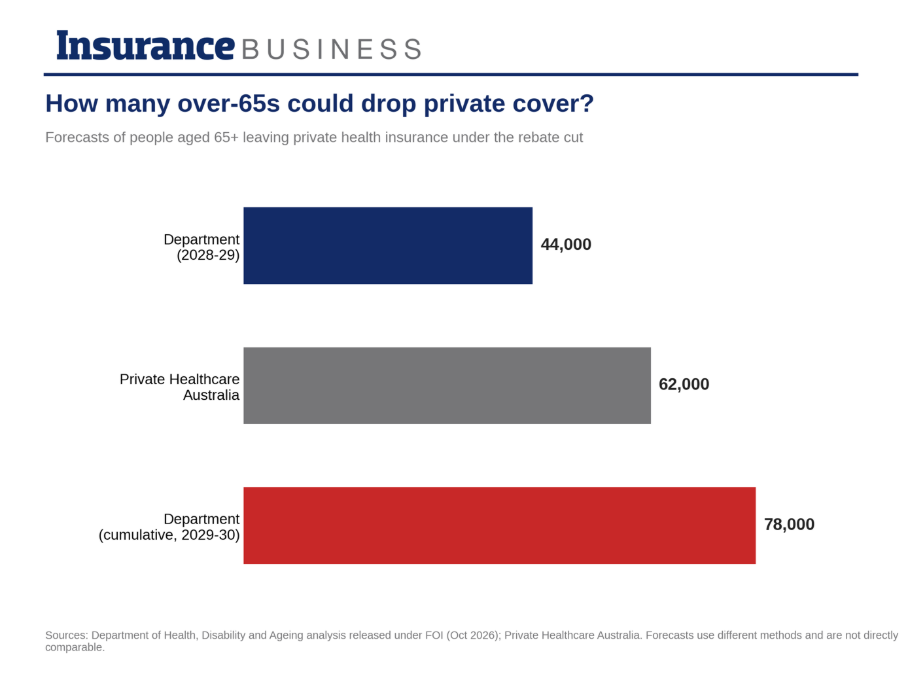
The federal government has spent months defending its plan to trim the private health insurance rebate for older Australians with a single number: 44,000. That is how many people aged 65 and over its published impact analysis says will give up their cover.
It turns out the department's analysis goes further. Documents released under freedom of information laws, first reported by the ABC, show the 44,000 figure applies to 2028-29 only. By the following year, the cumulative total is forecast to reach about 78,000.
The department has said the smaller number reflects the policy's initial effect at a single point in time. It also cautioned that the estimates are uncertain because they rely on historical data and survey responses that may not predict how people behave under new rules.
The Opposition was less forgiving. Shadow health minister Anne Ruston accused Health Minister Mark Butler of either not reading his own briefs or "deliberately misleading older Australians".
Read next: Senate committee backs rebate cut as health funds urge senators to reject it
Under the Private Health Insurance Amendment (Modernising the Private Health Insurance Rebate) Bill 2026, the extra rebate older policyholders receive would go from 1 April 2027. At the base income tier, people under 65 get 24.118%, those aged 65 to 69 get 28.139%, and those 70 and over get 32.158%. All three would move to 24.118%, according to the Department of Health, Disability and Ageing.
The government expects to save about $3 billion over four years and has earmarked the money for aged care beds, home care packages and other services for older people. The department puts the average extra cost for affected policyholders at $252 a year.
The department's figures show more than 3.2 million older Australians would be affected, and about 2 million of them live on less than $37,000 a year. Separate Parliamentary Budget Office analysis suggests about $1.6 billion of the savings would come from pensioners.
A government spokesperson said the changes would make the rebate fairer and argued the total number of people with private health insurance would keep rising. Every dollar saved, the spokesperson said, would be reinvested in aged care.
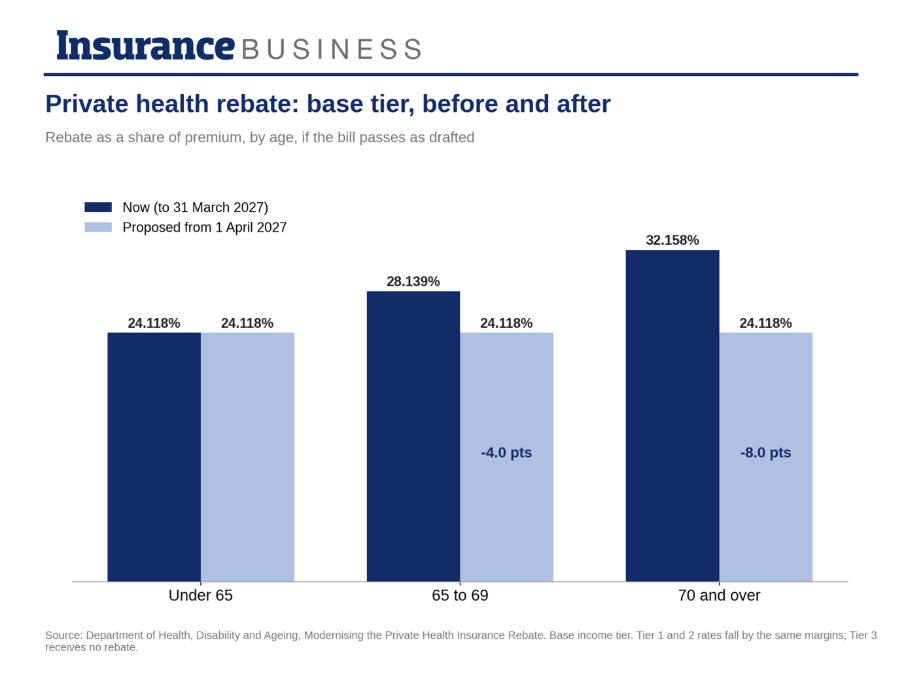
The department's average figure hides a wide spread. A base-tier member aged 70 or over loses 8 percentage points of rebate, and one aged 65 to 69 loses about 4.
The biggest hit lands on Gold hospital cover, the most expensive product. Private Healthcare Australia estimates that for someone aged 70 or over on Gold, the rebate cut combined with next year's premium rise could add about $807 a year, or $1,614 for a couple, Insurance Business reported. Members Health puts the effective premium increase for affected members at about 9%, and closer to 12% for some.
The 78,000 figure lands in an argument already full of competing forecasts. Private Healthcare Australia, the peak body for health funds, has projected 62,000 people would drop cover if the bill passes as drafted. Catholic Health Australia modelling suggests the bigger shift will be downgrading, with about one in five affected over-65s changing their level of cover within three years.
Even work commissioned by the government points to costs landing elsewhere. Actuarial analysis by Finity Consulting found removing the higher rebates would cut rebate spending by around $482 million but add about $547 million in costs to public hospitals.
Not everyone is worried. Health economists, including Stephen Duckett, a former secretary of the federal health department, have backed the change and argued the effect on the public system would be small. The Australia Institute has also argued the money is better spent on services that cut hospital demand.
Read next: PHI rebate forecasts diverge on older Australians leaving cover
The bill passed the House of Representatives on 16 September, and a Senate committee recommended on 7 October that it be passed. Getting it through the Senate is another matter.
The Coalition has said it will vote the bill down, which leaves the government needing the Greens. Greens health spokesperson Jordon Steele-John has said the party has "serious concerns" about the bill as it stands, and the Greens are understood to be weighing amendments, including an exemption for pensioners. Independent MP Monique Ryan has gone further, urging the Greens to block the bill and moving her own amendment in the House to protect pensioners.
The states and territories, aged care advocates and health funds have all raised concerns that older, lower-income members will cut or cancel cover and push more demand into public hospitals.
Members Health chief executive Matthew Koce said the reform would put "a greater burden on older Australians at precisely the stage of life when they need healthcare most". More than 160 of the 171 submissions to the Senate inquiry opposed the bill.
Read next: Private health insurance reform triggers a cover conversation brokers are missing
If the bill passes as drafted, older members will see the rebate cut and the annual premium increase on the same date, 1 April 2027. Funds are expected to lodge their 2027 premium applications by mid-November, very likely before the Senate votes, so they must price for the change without knowing whether it will happen.
For brokers and advisers with older clients, the risk is less about mass cancellations and more about quiet downgrades. A move from Gold to Silver hospital cover can remove joint replacements and cataract surgery, the procedures many of these clients are most likely to need. Clients comparing products can use the government's PrivateHealth.gov.au comparison site.
PHA chief executive Dr Rachel David has warned that older Australians with chronic conditions are the ones least able to absorb the extra cost. "It is economically counterproductive to reduce the rebate and push high-needs patients out of private cover," she said.