A Sydney couple who spent more than $760,000 on a home renovation have been awarded judgment totalling more than $876,000 after a court found the building company they hired was unlicensed, uninsured, and delivered work riddled with defects.
The NSW District Court handed down its decision on September 22, 2026, in proceedings brought by the homeowners against Platinumhomeland Pty Ltd and its director. The company had been engaged under two contracts - one for internal renovations at $642,906 and another for external landscaping works at $259,078 - to overhaul the couple's Rose Bay property.
Neither the company nor its director held a valid contractor licence under the Home Building Act 1989 (NSW). No home warranty insurance through the Home Building Compensation Fund was obtained. No construction certificate was secured before work began.
The couple first met the director through friends in July 2024. He told them he was the director of the company and that they would be dealing with him personally. He said the work was "very achievable," that his quality was "to the highest of standards," and that the project would be finished by late November 2024 - in time for the family to be home before Christmas. He took the couple to inspect properties he said he had previously renovated. At no stage did he disclose that neither he nor the company was licensed.
Work started in late July 2024 under the internal contract. By early December, the couple moved back in on the director's assurance that any remaining items were minor. What they found was far from minor.
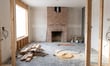
Kitchen cabinet doors were misaligned and soft-closing mechanisms did not work. Floorboards had been laid with gaps exceeding 2mm. Painting was patchy, with visible brush strokes and bare areas. Bathroom waterproofing was inadequate or absent, tiles were uneven, and water pooled on the floor. Glass balustrades specified in the contract were never installed. Internal doors, promised as solid timber at $1,000 each, were hollow and worth about $50. The garage was left incomplete. External decking and landscaping had either not started or been abandoned, with debris scattered across the backyard.
The couple raised defects with the director repeatedly. In January 2025, he conceded that a list of problems still needed fixing - from a missing water supply to their daughter's toilet to a steam oven with no water connection. He then asked for a further 30% deposit on the landscaping contract, despite limited progress on the external works.
When the couple pushed back on further payments, the director sent a WeChat message on or about February 26, 2025, telling them the arrangement was over. He left the group chat the couple had used to communicate with him throughout the project and never responded to any further contact.
An independent building expert inspected the premises in July 2025 and identified 30 categories of defective work across the house, including non-compliant balustrades, missing window flashing, defective stair riser heights, water-damaged joinery, inadequate shower step-downs, and imported cabinetry that could not be matched within Australia for repair purposes. The expert's Scott Schedule put the total rectification cost - including preliminaries, cost escalation, a 10% contingency, a 20% builder's margin, GST, and HBCF insurance at a 2% premium - at $706,431.
That 10% contingency reflected the elevated risk profile of fixing work done by an unlicensed, uninsured builder with poor documentation and widespread code non-compliance. The expert considered the standard 2.5% contingency rate used for new residential builds inadequate given the circumstances.
The couple commenced proceedings in NCAT before the claim was transferred to the District Court after exceeding NCAT's $500,000 jurisdictional limit. The defendants' lawyers filed a defence on or about February 19, 2026, and on the same date filed a notice of intention to cease acting. They formally ceased acting on March 2, 2026. The defendants took no further part in the proceedings. Their defence was struck out in May 2026, and judgment on liability was entered against them.
At the damages assessment hearing on September 8, 2026, the court accepted the expert evidence in full. It awarded rectification damages of $706,431 jointly and severally against the company and its director, plus $20,790 for the expert's fees. The court also ordered the company to repay $41,568 in overpayments - the result of invoices that charged GST on top of the already GST-inclusive internal works contract price.
Pre-judgment interest of $101,918 on the rectification and incidental expenses, and $5,912 on the overpayment, brought the combined judgment to more than $876,000. The court calculated interest from December 4, 2024 - the date the couple moved back in and practical completion occurred - rather than from the contract date as the homeowners had sought.
On costs, the court found that a Calderbank offer of $500,000 made by the couple in November 2025 was reasonable and should have been accepted. The final judgment exceeded it by more than $200,000. The defendants were ordered to pay ordinary costs up to November 11, 2025, and indemnity costs from the following day.
The court's reasoning on the measure of damages drew on the High Court's approach in Bellgrove v Eldridge and recent NSW Court of Appeal authority. Where the property is a family home, the court noted, awarding only the diminution in value - typically the lower figure - would have undercut the bargain the homeowners contracted for. Rectification costs were the appropriate measure.
On the Design and Building Practitioners Act 2020 (NSW), the court found the director personally owed the extended duty of care under section 37 as a person who carried out construction work, following the broader reading of that provision endorsed in Boulus Constructions. The duty was non-delegable, and the High Court's 2024 decision in Pafburn confirmed that apportionment of liability between persons subject to the duty is not available. The company and its director were held jointly and severally liable.