Storm surge cover is included in only 64% of home building policies and 66% of home contents policies reinsured through the Cyclone Reinsurance Pool, according to the Australian Reinsurance Pool Corporation's (ARPC) latest quarterly statistics, published on October 6, 2026.
The figures cover the pool as a whole. The pool operates Australia-wide, reinsuring cyclone and cyclone-related flood damage on about 3.05 million home buildings, while targeting its support at cyclone-prone areas. Many of the properties without storm surge cover will be inland, where the peril is not a practical risk. For clients on the coast, though, the figure is a prompt to check whether their policy includes it.
Wind cover is universal across the pool, and every home property reinsured through it carries it. Riverine flood cover is also high, at 86% of home building policies and 87% of home contents policies, broadly stable at just under 90% since the pool began in July 2022.
Storm surge cover has grown more slowly. ARPC says the proportion of home policies including it has risen by about 10 percentage points since the pool commenced.
For coastal properties, storm surge can be the main cause of structural damage when a cyclone makes landfall. A policy with wind cover but no storm surge cover will not respond to that loss. ARPC's data does not show how many coastal policies lack surge cover, or whether the gap reflects insurers not offering it or policyholders choosing not to buy it. Both are questions brokers can answer for their own clients.
Read next: Wagga Wagga's flood levee didn't lower premiums. Now insurers must explain why
The pool has received 133,078 claims to date, with a total net incurred value of about $1.65 billion. As at July 31, 2026, ARPC had paid about $1.37 billion, leaving roughly $280 million in net incurred claims still to be settled.
Tropical Cyclone Alfred, which struck during the 2024-25 season, remains the largest single event the pool has recorded. ARPC continued to receive and pay claims from both Alfred and Tropical Cyclone Jasper during the June quarter.
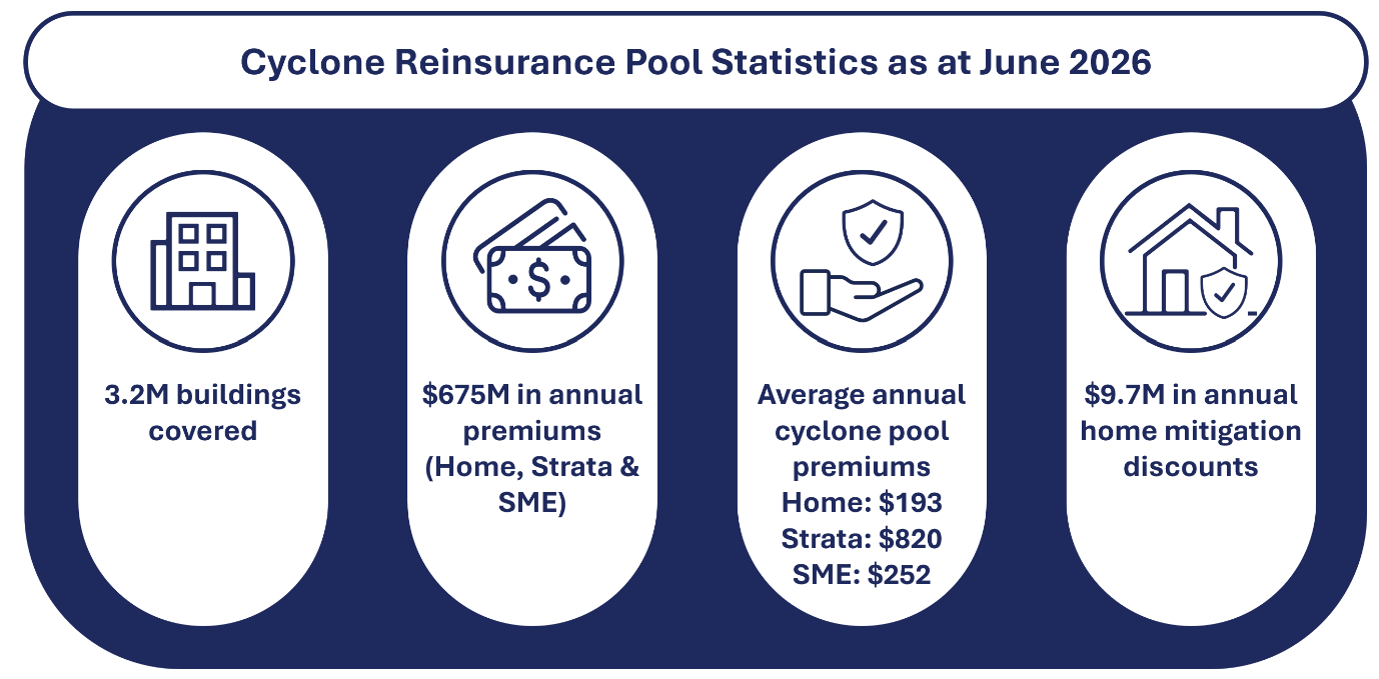
Mitigation discounts applied to in-force home premiums reached $9.7 million as at June 30, 2026, up from $9 million at December 31, 2025. Eligible measures include roller door bracing, window protection, roof tie-down upgrades and roof replacement.
The pool's total annual premiums are about $675 million across home, strata and SME risks, so the discounts represent about 1.4% of its premium base.
The Australian Competition and Consumer Commission's (ACCC) fifth and final insurance monitoring report, released in June 2026, noted that some insurers have not yet implemented mitigation discount frameworks. Clients who have completed eligible upgrades may therefore not be receiving any pricing benefit, depending on which insurer holds their policy.
ARPC has extended mitigation discounts to strata and SME properties, and says take-up for those segments will appear in future reports as insurers begin collecting the information.
National Insurance Brokers Association (NIBA) CEO Richard Klipin has consistently linked mitigation to the wider affordability challenge. "A proactive approach to disaster mitigation, focused on long-term investments at both community and household levels, will reduce the impact of natural disasters, enhance resilience, and alleviate the financial pressures that increase insurance premiums," Klipin said in October 2025.
The ACCC's final report found that, within two years of insurers joining the pool, average home insurance premiums in higher cyclone risk areas fell 14% and small business premiums fell 31% against pre-pool prices.
Those savings are concentrated where the risk is highest. The ACCC found the pool directly benefits around 2% of policies nationally, and premiums for the rest of the market have continued to rise.
NIBA has previously highlighted the role brokers play in cyclone-prone regions. "Insurance brokers play a critical role in supporting households and businesses, particularly in high-risk regions. The higher use of brokers in northern Australia reflects the genuine difficulties many face in obtaining insurance protection in cyclone-prone areas," the association said in July 2025.
The Australia Institute's 2025 polling found about 1.4 million homes across Australia were either uninsured or underinsured.
The pool's average annual premiums, the reinsurance premiums insurers pay ARPC rather than what policyholders pay, are about $193 for home risks, $820 for strata and $252 for SME. The pool covers about 3.2 million buildings, with more than $2.5 trillion in aggregate building sums insured.
Read next: Reinsurers post near-record returns, but the numbers have a catch
For clients in coastal or cyclone-exposed areas, confirm at renewal whether storm surge cover is included. Wind cover alone will not respond to inundation from storm surge, and if the client's insurer does not offer surge cover, it may be worth testing the market.
For clients who have upgraded roofing, braced roller doors or added window protection, confirm whether their insurer has a mitigation discount framework in place. The ACCC has flagged this as uneven across the market.
For clients affected by Alfred or Jasper, check where their claims stand. With about $280 million in net incurred claims still outstanding across the pool, some will not yet be settled.