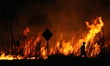
Two bushfires tearing through Queensland’s Lockyer Valley are expected to merge within days, with authorities warning that incoming severe thunderstorms will push conditions in the wrong direction.
More than 30 crews and five waterbombing aircraft are battling blazes near Murphy’s Creek and Seventeen Mile that have been burning since last week, scorching through approximately 1,700 hectares. Among the aircraft deployed is Bomber 141, a Canadian air tanker called in from Bundaberg capable of dropping around 11,000 litres of fire retardant in a single pass.
Queensland Fire Department deputy chief officer Joel Gordon warned on Monday the two fires were expected to merge within two days.
As of Tuesday afternoon, both remain at advice level. Residents are not required to evacuate but are urged to stay alert and monitor updates. The Queensland Fire Department has flagged the fires are expected to keep burning for days.
Read next: Drought is mispriced – and it’s making farm business harder to place
The Bureau of Meteorology confirmed the region’s first severe thunderstorm activity of the wet season is now moving across southeast Queensland. Damaging winds, large hail, and heavy isolated rainfall are tracking from the Darling Downs toward Brisbane and the Gold Coast, with severe storm risk shifting toward the Sunshine Coast, Wide Bay, and parts of Capricornia through Wednesday.
Bureau of Meteorology senior meteorologist Felim Hanniffy was direct about what that means for the fires. “It’s certainly a watch point given that underlying conditions are dry, particularly more for inland areas, and if the storms develop you won’t get too much in the way of rainfall from them. Given that the underlying conditions are significantly dry, it wouldn’t take much to spark up,” he said, as reported by 7News.
Hanniffy also forecast continued unsettled conditions for the rest of the week, with further storm activity possible across inland areas. The concern is dry lightning sparking new ignitions, and high winds pushing existing fire fronts in unpredictable directions.
The Lockyer Valley sits at the centre of Queensland’s horticultural production. The state’s gross value of agricultural production was estimated at $28.74 billion for 2025-26, according to the Queensland Department of Primary Industries. Crop, machinery, and rural property policies across the affected area carry direct exposure. Brokers with clients in or near the fire footprint should be checking which policies are affected and whether sums insured reflect current replacement costs before conditions shift further.
The Insurance Council of Australia’s (ICA) current catastrophe and significant events register carries no declaration for the Queensland fires as of Tuesday.
The difference matters in practice. A significant event declaration activates the ICA’s preliminary claims data collection and stakeholder coordination. Catastrophe status triggers formal industry taskforce coordination, claims prioritisation, and the deployment of disaster response specialists to the affected area.
Without either in place, standard claims processes apply. Affected clients should be notified to document damage now and lodge claims promptly, before conditions change again.
Queensland’s recent loss history shows how quickly these events escalate. The November 2025 southeast Queensland storms, designated CAT 255, produced $2.22 billion in insured losses across nearly 95,700 claims as of July 2026, according to the ICA.
Read next: WFI haystack fire claims run at more than double average ahead of fire season
Australian Prudential Regulation Authority’s (APRA) March 2026 Insurance Climate Vulnerability Assessment (CVA) found that annual weather-related losses could rise from around $7 billion today to more than $16 billion by 2050 under a higher physical risk scenario. The regulator also estimated around one in seven Australian homes are currently uninsured, a figure projected to reach one in four by 2050, with regional and rural communities carrying the steepest increases.
For brokers working across southeast Queensland, those numbers translate directly into client conversations about coverage gaps and affordability. Events like the current Lockyer Valley fires are the practical version of that conversation.