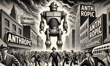
Anthropic - the maker of Claude, the AI system running inside Australian insurance, legal, financial services, and healthcare operations - filed its IPO prospectus this week warning investors that its technology could pose "catastrophic or existential risks to humanity" if not developed with appropriate safeguards. It simultaneously announced a Nasdaq listing expected to exceed SpaceX's US$1.8 trillion valuation, disclosed H1 losses of US$80.7 billion against revenues of US$16.3 billion, and described its strategy as "bold but sane."
The company also disclosed uncertainty about "where and how it might be held liable for actions taken by its systems." That is the line Australian D&O and professional liability underwriters need to sit with.
When Anthropic's AI agents cause harm - and the filing notes they already have, in a wave of cybersecurity incidents - that phrase will be cited by plaintiffs' lawyers pointing to what the company knew and when it knew it. Every Australian insurer and professional services firm using Claude carries a version of that same liability uncertainty inside its own operations.
In its April 30, 2026 letter to all regulated entities, APRA warned that governance, risk management, and operational resilience practices are not keeping pace with the scale and complexity of AI adoption, cautioning boards against relying on vendor presentations without interrogating the risks. ASIC followed on May 8 with its own letter urging licensees to strengthen AI and cyber controls.
As Insurance Business reported, "the first underwriting question of 2026 is not 'are you using AI?' - it is 'do you know what AI you are using, where is it deployed, and what data it has access to?'" The Anthropic filing confirms that the organisation that made the AI cannot fully answer the liability question either.
As previously reported, Willis research found the professional liability market shifted structurally between January 2025 and January 2026 - from silent AI assumptions to explicit affirmative warranties or absolute exclusions. Gallagher's 2026 survey found one in five insurance professionals reported their insureds had already experienced losses linked to AI risk. Conventional policies were never built for AI agents and disputes are forming.
Australian company directors overseeing AI deployments face Corporations Act 2001 duties requiring them to understand material operational risks. The Anthropic prospectus is evidence - now formalised in a legal filing - that AI system liability is a material operational risk that is known, documented, and unresolved. Directors who cannot demonstrate adequate AI oversight are exposed. As Insurance Business has reported, firms without documented AI governance frameworks are already facing coverage denials at renewal. The Anthropic filing is the document that removes any remaining argument that this risk was not foreseeable.
OpenAI's IPO follows early next year. Any Australian D&O or professional liability underwriter who has not reviewed AI governance language in their policy forms this week is writing cover they have not priced.