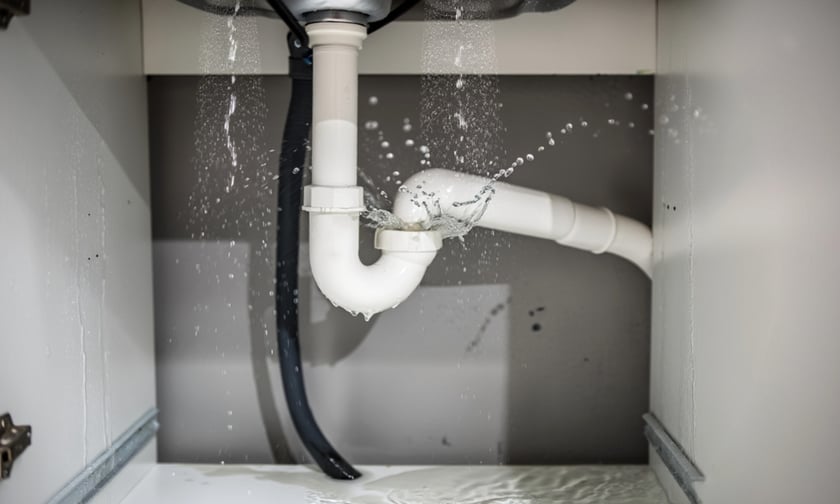
In a decision handed down on April 29, 2026, the Court dismissed an application by property owner Cathy O'Connell for leave to appeal a County Court ruling that refused to add Chubb Insurance Australia Limited, Insurance Australia Limited (trading as WFI), and Protecsure Pty Ltd as defendants in her defective plumbing dispute.
O'Connell owns two properties in Windsor, Victoria, where underground plumbing was identified as a primary cause of construction defects. Three plumbers - JD Fenton Plumbing and Drainage Pty Ltd, Nix Plumbing, and Ward Trevaskis - held liability policies with Chubb, Berkley Insurance Company (through its underwriting agent Protecsure), and WFI respectively, as required under the Licensed Plumbers General Insurance Order 2002, made under the Building Act 1993.
After the plumbers were joined as third parties to the proceeding, they did make claims on their policies. Chubb granted coverage to JD Fenton. Berkley granted indemnity to Nix. WFI, however, denied Trevaskis's claim - first, on the basis that a compliance certificate Trevaskis had issued was invalid or void because he did not perform his statutory obligations to carry out and/or supervise the work, and second, because the defective plumbing works had been performed by JD Fenton, not Trevaskis.
Despite two of the three insurers having already accepted their insured plumbers' claims, O'Connell pressed ahead with her joinder application. She argued that clause 9 of Schedule 2 of the Ministerial Order entitled her to enforce the plumbers' policies directly against the insurers, because the plumbers had "refused" to claim on their insurance when she asked them to do so in July 2023.
That request, the Court noted, came before any claim had been made against the plumbers and over a year before O'Connell even applied to join them as defendants.
Emerton P, Donaghue JA, and M Osborne AJA found that the "refusal" trigger under clause 9 does not arise simply because a plumber declines to lodge a claim before any liability has been established. The relevant refusal, the Court held, is one that occurs after a plumber has actually been found liable - a refusal to enforce the indemnity, not a refusal to pre-emptively claim.
O'Connell also labelled the policies "junk insurance," alleging the insurers had "illegally" capped indemnity at $50,000. The Court confirmed that a $50,000 limit for the types of liabilities covered under clauses 10(a), 10(b), and 11 of Part 2 of the Ministerial Order meets the statutory minimum. Whether those minimums are adequate, the Court said, is not a question for the courts.
Protecsure's joinder was separately dismissed. It is not an insurer but an underwriting agency acting as agent for Berkley Insurance Company.
For the insurance industry, the takeaway is straightforward. Liability insurance remains an indemnity product. Insurers are not obliged to pay until the insured's liability to the claimant has been established. The Ministerial Order does not create a separate track for third parties to extract payment outside the litigation process.
O'Connell, was ordered to pay the indemnity costs of Chubb and Protecsure and the standard costs of WFI.