What happened: The Federal Court ruled that a professional-service exclusion barred a construction company's $1 million claim against Lloyd's underwriters after a roof collapse
Who's involved: Rosenlund Constructions (claimant), Lloyd's underwriters (respondent), a deregistered demolition subcontractor and its consulting engineers
What's at stake: $1,007,881.45 in damages and costs from a default judgment, plus the $20 million policy limit
Why it matters: Contractors with design obligations in their subcontracts may be treated as providers of professional advice - even when they outsource the engineering - triggering exclusions in their public liability policies
Where it stands: Decided on September 30, 2026. Costs to be determined on the papers
A worker on the demolition crew told two separate managers the roof of the Sydney Entertainment Centre was going to come down. Both told him it had been engineered and to follow the documented plan.
Fifteen days later, the roof collapsed onto his colleague's excavator.
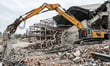
The machine - a 1996 Hitachi EX 700 fitted with a four-section demolition boom - was destroyed beyond economic repair. Rosenlund Constructions, which owned the excavator, eventually won a default judgment of $1,007,881.45 against the demolition subcontractor, Hassarati, in the NSW District Court. But by August 2024, Hassarati had been deregistered.
That left one path to recovery: Hassarati's Lloyd's-underwritten public liability policy, which carried a $20 million limit. Under Australian law, when a company has been deregistered, a claimant can step into the company's shoes and recover directly from its insurer - provided the policy covered the liability before deregistration.
The Federal Court in Sydney heard the case on September 30, 2026, and delivered its decision the same day. Rosenlund lost.
The underlying project was the demolition of the old Sydney Entertainment Centre (later known as the Qantas Credit Union Arena) as part of a Lend Lease redevelopment. Hassarati held the demolition subcontract, worth $2,678,900 for the arena portion of a $5,502,800 total contract. That contract required Hassarati to engage a structural engineer - Grasso Consulting Engineers - to design the demolition methodology for the roof.
Grasso produced a colour-coded sequencing sketch showing how the roof beams should be cut and removed in stages. A Hassarati supervisor then modified the approach - reducing four cuts to three - and sent the revised sketch to Grasso for sign-off. Grasso certified it, confirming that bays could be demolished in any order while the roof's structural integrity held.
The problem came later. A Lend Lease site engineer prepared a new version of the demolition methodology document - known as Revision P - and dropped in his own digital sketch in place of the one Grasso had actually certified. His sketch coloured in an extra row of roof structure that Grasso's had left untouched, marking it for removal. That row was the ring beam providing lateral support to the entire roof.
No one at Hassarati caught the swap. The court found that Hassarati's supervisor carelessly allowed Revision P to go out without checking that it matched the engineer's approved design.
When Hassarati inducted the Rosenlund crew on March 4, 2016, Revision P was handed over as the demolition instructions. One crew member - the spotter who would later be standing beside the excavator during the collapse - pushed back hard. He told both the Hassarati safety supervisor and the Lend Lease site engineer that the methodology was wrong, that the roof should be craned off, and that there was plenty of room for a crane outside. Both times, he was told it had been engineered and to follow the plan. The Hassarati supervisor admitted he had no experience with high-reach excavators.
On March 19, 2016, the roof of the arena fell onto the cabin of the excavator while it was in operation.
Lloyd's underwriters accepted that the policy's coverage was triggered. They defended on a single ground: clause 7.13 of the policy, which excluded liability "caused by or arising out of the rendering of or failing to render professional advice or service." A carve-back in the clause restored cover where the advice or service was "not given for a fee."
Rosenlund argued that Hassarati was just the middleman - passing along Grasso's engineering advice, not providing professional services of its own. The court disagreed. Justice Jackman found that the subcontract imposed independent design obligations on Hassarati: it warranted Grasso's designs as its own, had to ensure they were fit for purpose, was wholly responsible for the work as if the designs were Hassarati's, and was required to apply "professional skill, care and diligence." Deciding to hand Revision P to the crew and then overruling their safety objections was itself an act of professional judgment - not a clerical task.
The court also rejected the argument that reading the exclusion this way would gut the policy. Hassarati's business included plenty of manual demolition work that fell outside the exclusion, leaving real scope for the policy to operate on other claims.
On the fee question, Rosenlund pointed out that no separate line item in the contract was charged for professional services. The court held that did not matter - Hassarati was paid for the contract as a whole, and the professional components were wrapped into that price. The carve-back did not apply.
In an unusual passage, The Justice used the decision to publicly criticise delays in a key precedent he relied on - a Full Federal Court case where the judges took more than 21 months to deliver judgment after a one-day hearing, without explanation or apology. He wrote that judges are well placed to hold other judges accountable, that the legal profession cannot realistically do so, and that "the standards one walks past are the standards one accepts."
The remark does not affect the coverage outcome, but it is a rare instance of a sitting Federal Court judge putting judicial delay on the record as a matter of principle.
Claims and coverage teams reviewing contractors' public liability policies will want to look closely at design obligations embedded in subcontracts: even where the engineering is outsourced, the contractor's warranty and supervisory obligations can bring its conduct within a professional-service exclusion.