What happened: The NSW Supreme Court upheld a ruling that shifted the bulk of a strata building's insurance costs onto the commercial owners corporation after a hotel tenant's strip club drove premiums to nearly five times the normal cost
Who's involved: PINN 386 Pty Ltd (hotelier/lessee), the residential and commercial owners corporations for Sydney's Citadel Complex
What's at stake: Annual building insurance premiums of $330,000 - nearly five times the $67,000 they would have cost without the strip club - with the residential owners' share cut from 90% to as low as 16.5%
Why it matters: The court confirmed that the statutory formula for splitting strata insurance premiums overrides any cost-sharing arrangement in a strata management statement - a first-of-its-kind ruling in NSW
Where it stands: Decided. All four appeal grounds rejected. The hotelier must pay the residential owners' costs
A Sydney apartment building's insurance premiums hit $330,000 in a single year - nearly five times what they would have cost without the strip club operating downstairs.
The ruling, handed down on September 24, 2026 by McNaughton J in the NSW Supreme Court, settles a question that had not previously been tested in the state's courts: whether the statutory mechanism for splitting building insurance premiums in the Strata Schemes Management Act 2015 applies to buildings made up entirely of strata schemes, or only to those where some parts sit outside any strata plan.
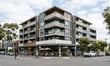
The Citadel Complex is a five-storey building on Parramatta Road in Sydney's inner west. It houses 92 residential lots in one strata scheme and 11 commercial lots - including a hotel with a bar, gaming and adult entertainment - in another.
Until 2022, the building was insured through CHU. On January 21, 2022, CHU refused to renew the policy, citing the presence of the strip club.
The building management committee found replacement cover with Breeze Underwriting - a policy listing an insured sum of $38,560,000 but capping liability at $10 million per event, at an annual premium of $546,580. The committee paid $330,376.80 in premiums before Breeze cancelled the policy for non-payment on March 27, 2023. A second policy, from is-Strata, followed in August 2023 at $254,268.36 per year.
Without the strip club, the evidence showed, the premiums would have been $67,142.36 and $76,734.38 respectively for each year. That evidence was uncontested.
Under the building's strata management statement - a binding cost-sharing agreement registered in 2002 between the two strata schemes - insurance was split 90% residential and 10% commercial.
The residential owners corporation applied to the NSW Civil and Administrative Tribunal seeking a different split, one that reflected the commercial tenant's effect on the premiums. The Tribunal reduced the residential share, though not by as much as the residential owners had sought.
The NCAT Appeal Panel went further. It determined the building's replacement value at $37,052,400, found the residential scheme represented 81% and the commercial scheme 19% of that value, then applied a use-based adjustment. The result: for 2022-2023, the residential owners would pay $54,445.74 - approximately 16.5% of the total premium - while the commercial scheme bore $275,931.06, or about 83.5%. For 2023-2024, the split landed at approximately 24.3% residential and 75.7% commercial.
The hotelier, PINN 386 Pty Ltd, which stood to absorb the commercial scheme's increased costs under its lease, appealed to the Supreme Court on four grounds.
PINN's central argument was what its own counsel called "surprisingly straightforward": that the premium-splitting power in s 162 of the Act was designed only for buildings with a mix of strata and non-strata ownership, not for buildings like the Citadel Complex where every part sits within a strata scheme. In such buildings, PINN argued, the strata management statement should govern how premiums are divided, and the Tribunal had no power to intervene.
The court disagreed. McNaughton J found the plain wording of s 160(2) - which imposes an insurance obligation on "each strata scheme for part of a building and any other person" - did not require a non-strata owner to exist. The word "any" made the non-strata owner optional, not mandatory. And since both owners corporations had an obligation to insure under that section, s 162's premium-splitting mechanism was available.
PINN also argued that neither the Breeze nor is-Strata policies qualified as a proper "damage policy" - the statutory term for the type of building insurance the Act requires. Breeze, because its $10 million cap covered less than a third of the building's $38,560,000 replacement value. And is-Strata, because the backing insurer, Everest International Reinsurance Ltd, was not an approved insurer under the Insurance Act 1973 (Cth). The court found these deficiencies did not strip the Tribunal of its power. What mattered was the obligation to insure, not whether a compliant policy happened to exist.
On the fourth ground - that the Tribunal's orders conflicted with the strata management statement, which set the 90/10 split - the court held that the Strata Schemes Development Act 2015 is clear: a strata management statement has no effect to the extent it is inconsistent with another Act. Since the strata management statement's 90/10 split conflicted with the statutory apportionment formula, that part of the statement carried no weight.
All four grounds failed. PINN was ordered to pay the residential owners corporation's costs.
Strata managers and brokers advising multi-scheme buildings in NSW now have a clear answer: the statutory formula in s 162 sets the floor for how insurance premiums are divided, and a strata management statement cannot contract out of it - even where the parties agreed to different proportions decades ago.