A Paris court has awarded Lewis Hamilton’s partner Kim Kardashian precisely one euro in damages, closing out the compensation stage of a case that began with an armed robbery almost ten years ago. It's a symbolic figure, and it was the exact amount she asked for. But the real money in this story was settled long ago, by an insurer, and that's the part that matters for the insurance industry.
Kardashian's insurer, AIG, paid out $6,116,067 for the jewellery stolen in the 2016 raid, then went after her former bodyguard to try to recover it. That claim and the subrogation fight that followed sit behind this week's headline, even though neither gets a mention in most of the coverage.
This week's ruling gave Kardashian the €1 (roughly $1.15, or under £1) she had requested. Her stylist Simone Harouche, who was present during the robbery, received the same token amount, also at her own request.
A former receptionist at the Hôtel de Pourtalès, where Kardashian was staying, fared rather better: he was awarded €109,516 (around $126,000, or roughly £93,000 at current exchange rates) after arguing he'd been traumatised by the raid, though well short of the €550,000 (around £467,000) he'd sought. The hotel itself received €50,000 (around £42,500). All sterling figures here are approximate and should be treated as indicative rather than exact.
Kardashian and Harouche said in a joint statement that the ruling was "not about the compensation, but about accountability and recognition," adding that they were grateful to the court and hoped to move forward.
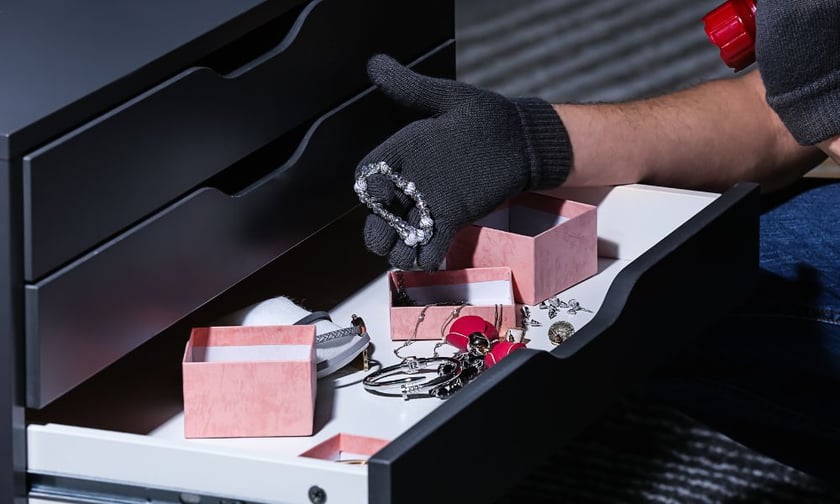
The case dates back to the early hours of 3 October 2016, during Paris Fashion Week, when armed men disguised as police officers forced their way into Kardashian's suite. They bound her with zip ties and tape and left with jewellery reported at the time to be worth more than $6 million, including a diamond ring she had worn to a Givenchy show hours earlier.
The gang, whose older members earned the nickname "les papys braqueurs" (the grandpa robbers) in the French press, were convicted last year, with eight defendants found guilty of armed robbery, kidnapping and gang association, among other charges. Because most had already spent time in pretrial detention, none returned to prison, and none appealed. This week's ruling dealt only with civil damages attached to that criminal case, compensation owed by the convicted robbers to their victims, rather than the insurance claim that ran alongside it.
Two years after the robbery, AIG filed a subrogation lawsuit in Delaware against Kardashian's former bodyguard, Pascal Duvier, and his security firm, seeking to recover the $6.1 million it had paid out. AIG alleged the team had "negligently, carelessly, and/or recklessly" handled security at the property, pointing to a broken gate lock, a faulty intercom and an untrained concierge, as Insurance Business reported at the time. It's a reminder of how far insurers will go to recover a large loss when they believe a third party bears some responsibility for it.
There's another footnote from 2016. Within weeks of the robbery, the celebrity gossip outlet MediaTakeOut.com alleged, without producing any evidence, that Kardashian had staged the whole thing to defraud her insurer. She sued the site for defamation; it later apologised, and she withdrew the suit within a fortnight, as Insurance Business reported at the time.
A criminal conviction now confirms she was the victim of a genuine armed robbery, and AIG's own claim treated the loss as real from the start. So that fraud accusation looks shakier than ever. But it's still a useful reminder for claims teams handling high-profile or high-value losses: unfounded fraud narratives can spread online long before any formal investigation gets a chance to establish the facts.
Set the celebrity headlines aside and the case touches on several live issues for brokers and insurers working in the high-net-worth (HNW) and specie space.
Valuations date quickly. Jewellery worth millions in 2016 could easily be valued very differently a decade on, particularly for pieces containing diamonds, gold or gemstones that have appreciated sharply. Brokers advising clients with serious jewellery collections may find it useful to revisit our jewellery insurance guide, which sets out how premiums, valuations and single-item cover typically work in the UK market.
High-value targets are getting harder to protect. The gang that targeted Kardashian reportedly built a detailed picture of her movements and jewellery before acting. That kind of reconnaissance has only become easier in the social media age.
As one specialist HNW broker recently told Insurance Business, wealthy clients often reveal far more about their movements and valuables than they realise through their own online activity – see our recent look at how social media is reshaping high-net-worth underwriting.
Aggregate value adds up fast. Insurers have flagged a marked rise in high-value jewellery theft claims in recent years. Aviva reported a 43% year-on-year jump in high-value jewellery theft claims across its private client book between 2022 and 2023, with losses ranging from muggings for luxury watches to burglars ripping safes out of walls.
It underlines why keeping valuations current, and cover levels realistic, matters just as much for clients with a modest jewellery box as for those with a multimillion-pound collection – a point echoed in our coverage of everyday contents quietly driving underinsurance in high net worth homes.
For Kardashian, the one-euro award looks like the final chapter of a case that has run for the best part of a decade: the robbery itself, a criminal trial, convictions, an insurer's subrogation claim, and now the resolution of civil damages. For the insurance sector, the underlying issues it raises, ageing valuations, well-prepared criminal gangs, subrogation strategy and the reputational noise around any high-value claim, are still live.