The Accident Compensation Corporation (ACC) is appointing three new directors to its board as it implements a turnaround plan aimed at improving rehabilitation outcomes, tightening claims management, and addressing long‑term scheme pressures. ACC board chair Jan Dawson said Minister for ACC Hon Scott Simpson has appointed Richard Keys, Lindsay Wright, and Michael Playford to the board. Their terms are scheduled to begin on May 11, 2026. “Together, they bring a wide range of experience and expertise, and their strong leadership will be invaluable in supporting our ambition for ACC to deliver its best-ever performance in the coming years,” Dawson said.
Dawson said the new directors will have a governance role in overseeing delivery of performance targets under ACC’s Turnaround Plan, which is being developed in line with the minister’s updated letter of expectations and ACC’s strategy for 2026-2029. “The plan lays out a clear pathway towards delivering better outcomes for injured New Zealanders by getting ACC back to basics – putting our clients first and supporting them to get back to work and independence as soon as possible. I look forward to working with Richard, Lindsay, and Michael as we continue the important work set out in our Turnaround Plan,” Dawson said.
The appointments introduce additional expertise in healthcare delivery, capital markets, and actuarial advice at board level. Keys has held senior executive and governance roles in the health and disability sector, including serving as chief executive of Abano Healthcare Group and as a director at Lumino The Dentists and Bay Audiology. His career spans clinical‑facing services, rehabilitation, and injury‑related care, alongside corporate finance and organisational oversight. He is a Fellow Chartered Accountant and a chartered member of the Institute of Directors and is currently a director of Southern Cross Central Lakes Trust Hospital and Axis Sports Medicine.
Read next: New ACC guidelines support earlier return to work after surgery
Wright has more than 30 years’ experience in financial services, including leadership positions managing large investment and funds management businesses and setting long‑term investment strategies. Her governance experience covers both public and private entities. She previously served on the boards of the Guardians of the New Zealand Superannuation Fund and Kiwibank and is currently a director of Spark New Zealand, Navigator Global Investments Limited, Milford Asset Management, and NZX Limited.
Playford has nearly three decades of actuarial experience, much of it focused on injury support schemes in New Zealand and Australia. He spent 15 years as a partner at PwC Australia, where he led the actuarial practice and advised on scheme design, financial sustainability, and legislative change. He also sits on the boards of Network Tasman Ltd and Nelmac and has experience in long‑term liability forecasting, risk management and performance monitoring.
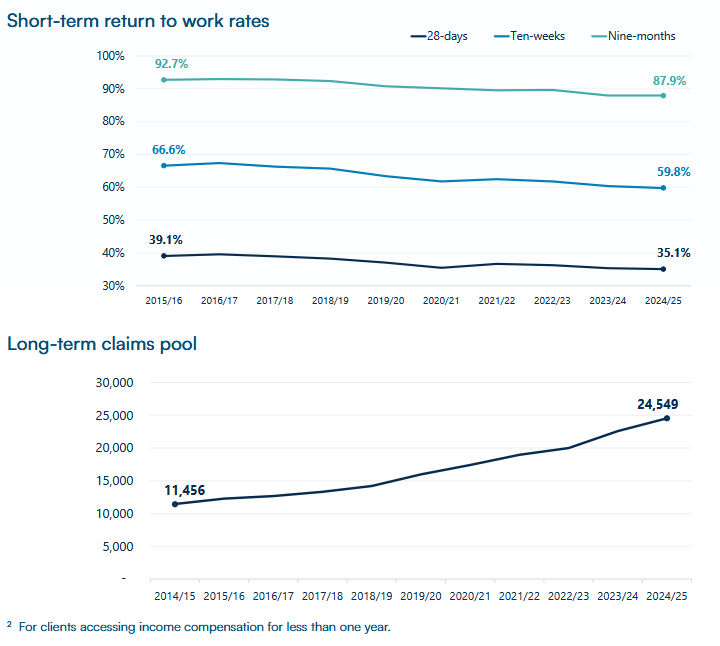
The board changes coincide with ACC’s response to a sustained shift in key scheme metrics. Over the past decade, the proportion of clients still receiving weekly compensation one year after injury has risen from about 5% to around 9%. During the same period, the number of people receiving weekly income compensation for more than one year has increased from roughly 12,300 to about 24,500. ACC data indicates that many of these long‑term claimants do not have serious injuries and could return to work or independence sooner if they receive the right kind of support.
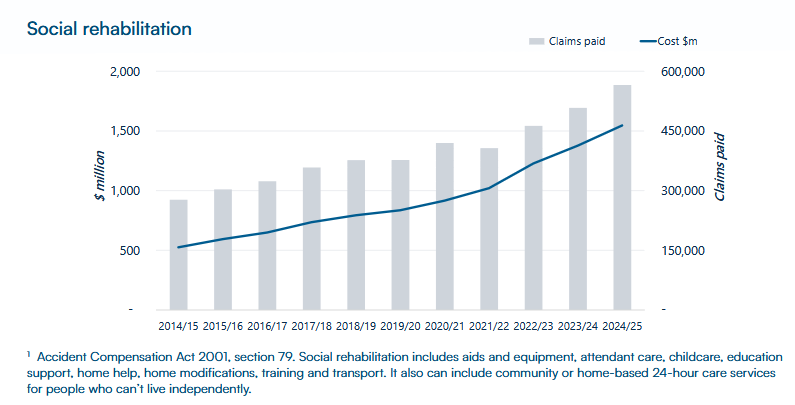
Spending on rehabilitation and treatment has also trended upward. ACC’s total spend on treatment and rehabilitation has grown from about $2.1 billion to $4.4 billion over 10 years, rising faster than population growth and inflation. Within that, social rehabilitation expenditure – non‑medical services intended to help restore independence – has increased from $514 million to $1.4 billion and now makes up around 39% of the scheme’s projected future liability, with much of the growth linked to clients without serious injuries.
Read next: ACC turnaround on track: long-term claims growth hits decade low
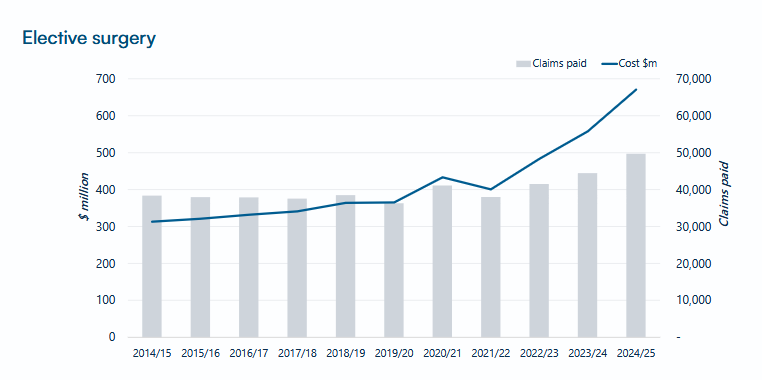
Elective surgery costs reached $671 million last year and have increased by about 35% over the past two years. A larger share of clients who receive elective surgery are also moving onto weekly compensation, contributing to the increase in both cost and liability. On the funding side, ACC now estimates its future claims liability at around $63.6 billion, which is roughly $33.3 billion higher than a decade ago. Assets held to meet these future costs are about $53.8 billion. If current patterns persist, ACC projects that the scheme could face a funding gap of about $26.3 billion by 2030.
In response, ACC’s Turnaround Plan is being structured around three priorities set by the Minister for ACC:
Under the first priority, ACC is revising how it makes decisions about social rehabilitation and elective surgery. The corporation has identified that, over recent years, a more generous application of legislation, court decisions, and changing societal expectations has led in some cases to support that is more extensive, more costly, or longer in duration than required, and not always directly linked to the injury. ACC has stated that this can delay recovery for some clients and add cost pressure to a fully funded scheme that must meet long‑term obligations from current levy and funding settings.
The second priority focuses on shortening income compensation durations and limiting growth in the long‑term claims pool. The average time clients receive weekly income compensation has increased from 64.8 to 74.7 days over the decade, and the long‑term claims pool has grown by 114%. Around 65% of these long‑term claims involve non‑serious injuries, such as sprains and fractures. Weekly compensation payments totalled $2.9 billion last year and now account for about 26% of ACC’s estimated future liability. Planned measures include earlier contact with clients at risk of delayed recovery, closer collaboration with health providers, and targeted support to avoid unnecessary transition into long‑term claims.
The third priority involves changes to ACC’s operating model, strategy, and internal culture. An external review by Finity reported that ACC needed to “get back to the basics” of efficient and effective claims management, noting a loss of focus on core scheme functions. A separate culture review pointed to the need for a clearer strategy aligned to ACC’s statutory purpose. In response, ACC has outlined intentions to adjust how it purchases and monitors health services, increase the use of digital tools and automation in claims processes, and develop more integrated performance reporting across the organisation.