Britain's population grew by roughly 228,000 in the year to mid-2025, reaching an estimated 69.5 million, according to the Office for National Statistics. Growth of 0.3% was the weakest since mid-2020. Births fell, deaths rose and net migration supplied most of the increase.
The pace is unlikely to pick up soon. The ONS's 2024-based national population projections, published in April, treat mid-2025 as the last year in which births narrowly outnumbered deaths. From mid-2026 the UK is projected to record more deaths than births every year, about 450,000 more over the decade to 2034.
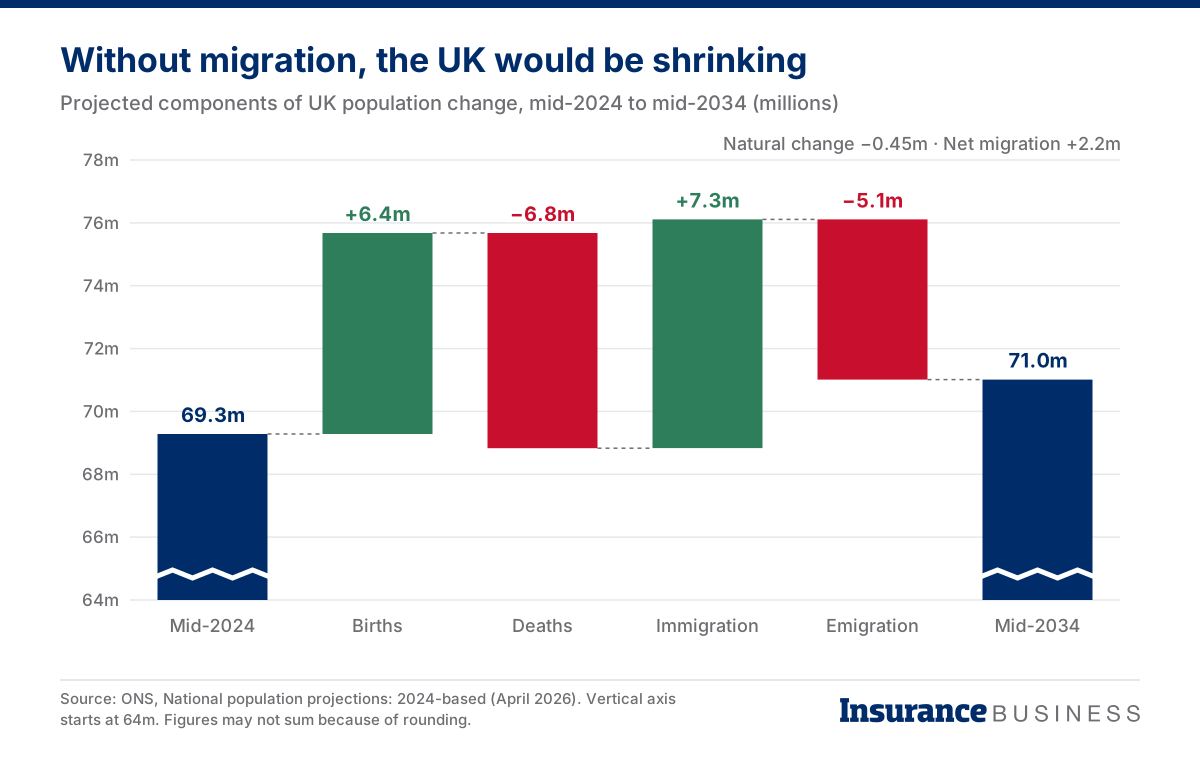
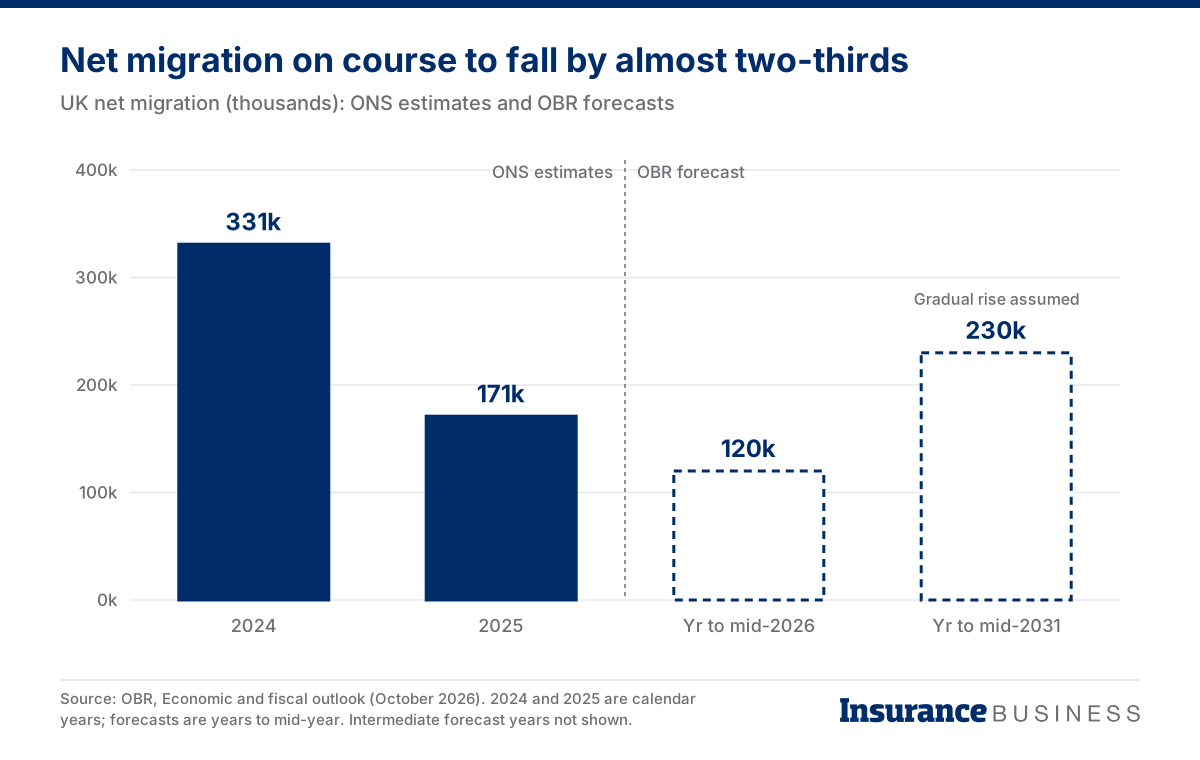
That leaves migration as the only source of growth, and migration is falling. The Office for Budget Responsibility's October economic and fiscal outlook puts net migration at 331,000 in 2024 and 171,000 in 2025, and forecasts around 120,000 in the year to mid-2026. The OBR points to visa restrictions introduced since 2023 and higher emigration, especially among students.
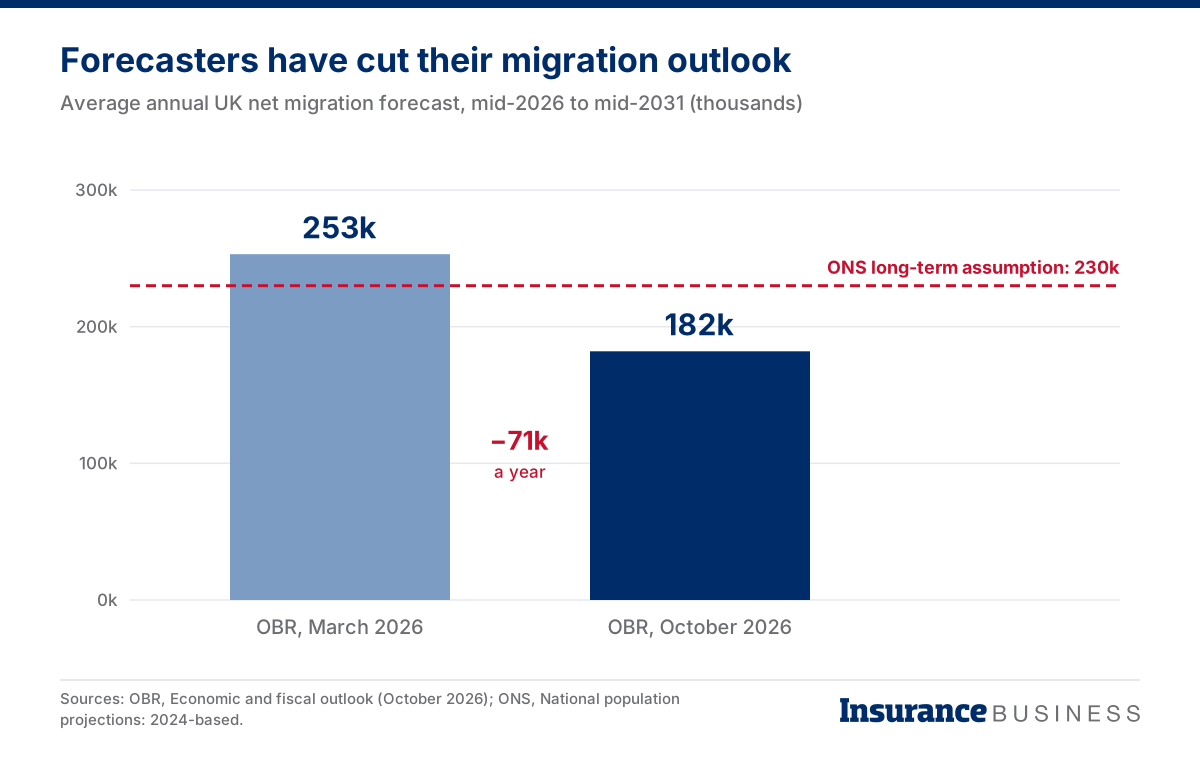
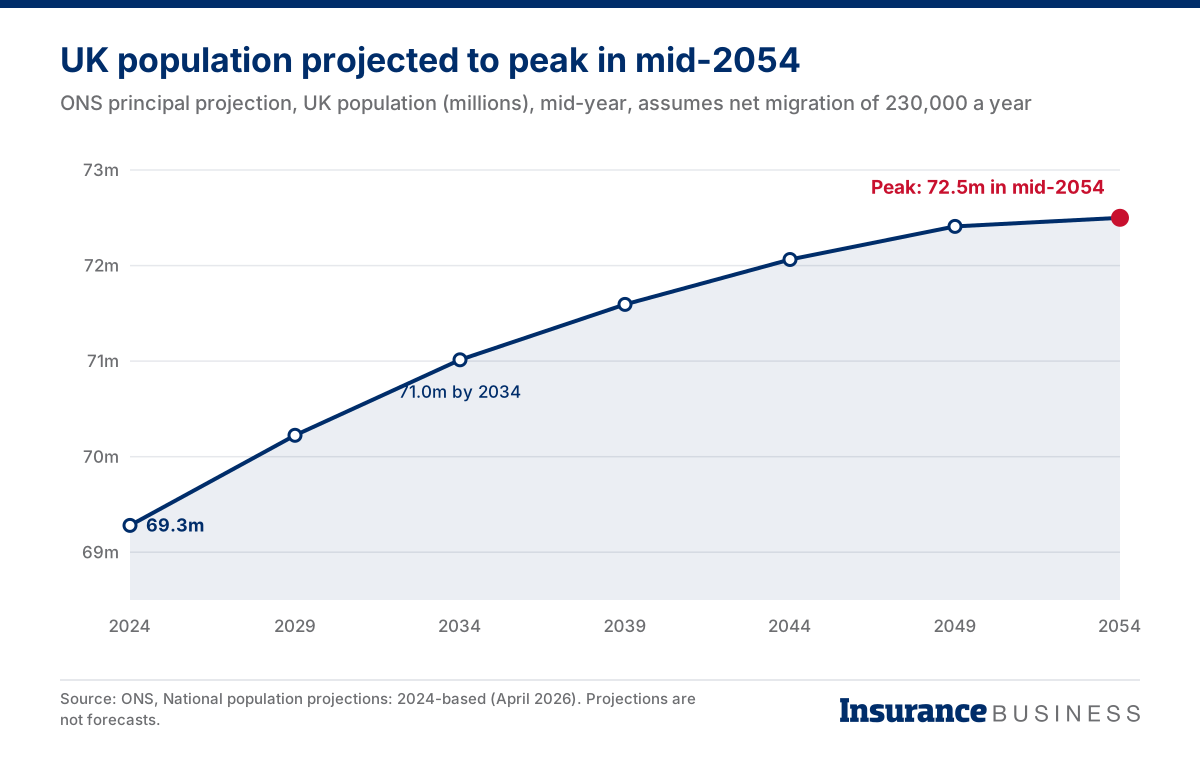
Over the five years to mid-2031, the OBR now expects net migration to average 182,000 a year. In March it was expecting 253,000. The ONS central projection, under which the population peaks at 72.5 million in mid-2054, assumes 230,000 a year from mid-2027. If arrivals stay below that level for long, the peak will come earlier and be lower.
Read next: UK's booming centenarian population is outpacing the insurance industry's care funding plans
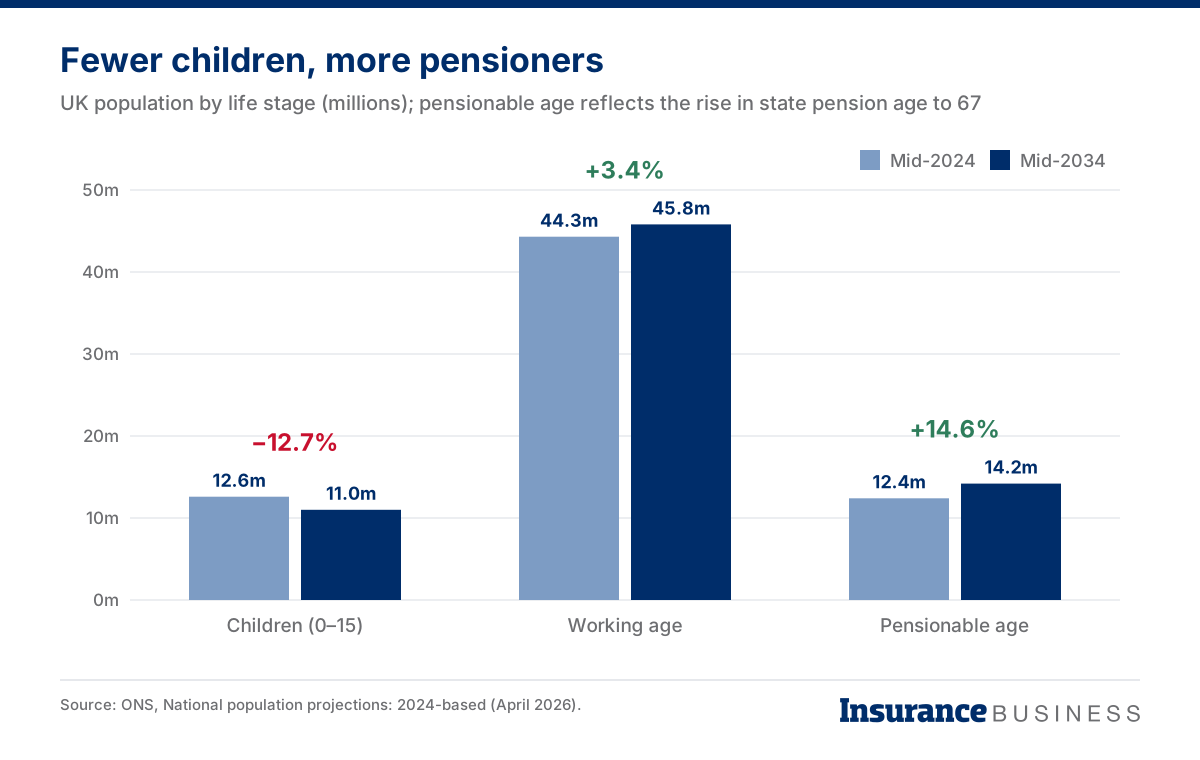
The ONS projects that the number of children aged 0 to 15 will fall by 1.6 million to 11.0 million by mid-2034, a drop of 12.7%. Over the same decade, the number of people over state pension age is expected to rise by 1.8 million to 14.2 million. By mid-2049, the number aged 85 and over is projected to double to 3.6 million.
The old-age dependency ratio, which counts people of pensionable age for every 1,000 of working age, rises from 280 in mid-2024 to 310 by mid-2034 and 329 by mid-2049.
Longevity is still improving, too. The Government Actuary's Department's technical bulletin on the projections puts cohort life expectancy at birth in 2026 at 87.2 years for boys and 90.5 years for girls.
Life and pensions. More people reaching retirement, and living longer once there, supports demand for annuities and drawdown. It also keeps defined benefit schemes queuing to hand risk to insurers, a market WTW expects to reach around £70bn of deals this year. IB UK has reported that the number of UK centenarians has nearly doubled in twenty years, and Broadstone's head of life and health, Cara Spinks, has warned that the harder question is how later-life health and care will be paid for.
Read next: Latest CMI mortality model signals further rise in UK life expectancy
Protection. Term life, mortgage protection and income protection are usually bought around life events such as a first home or a first child. With fewer young adults coming through, there will be fewer of those events each year. Protection writers looking for growth will have to rely more on selling to customers they already have.
Personal lines and regional markets. The same applies to motor and home: fewer young people means fewer new drivers and first-time buyers. The picture also varies across the UK. The ONS projects Northern Ireland's population will peak in mid-2031, Scotland's in mid-2033 and Wales's in mid-2035, while England's keeps growing until mid-2056. Brokers and regional insurers outside England could see their local markets level off within a decade.
Care. At Labour's conference in September, Prime Minister Andy Burnham said the state pension triple lock would change from April 2030, with the savings used to help fund a National Care Service in England. The service, free at the point of use, would be delivered in the next Parliament if Labour wins the election. If it goes ahead, providers of long-term care and care-funding products will need to work out where they fit alongside the state offer.
Insurance has its own ageing workforce to manage, and lower migration shrinks the pool of overseas recruits. A survey by the CII New Generation Programme Broking Group found that 84% of insurance professionals expect retirements to weaken their firms' technical and client-facing capability. Only 11% said their organisation had a formal knowledge-transfer programme.
Official policy is to keep people working longer. Under the Pensions Act 2014, the state pension age rises from 66 to 67 between 2026 and 2028. For group risk and income protection providers, that means more members in their sixties, with more complex health needs, and more employers questioning whether their benefits packages still fit their workforce.
Read next: UK insurers' junior hiring crisis may be about the office, not the algorithm
The public finances add pressure. The Institute for Fiscal Studies estimates that a single downgrade to projected net migration earlier this year cut around £5bn from the OBR's forecast tax receipts for 2030. A government facing a slower-growing tax base and a rising pension bill may look again at the tax reliefs and allowances that pensions and protection products rely on.
The ONS stresses that its projections follow past trends and do not account for future policy changes. The OBR expects net migration to climb back to 230,000 by the year to mid-2031, and changes to immigration policy or a recovery in the birth rate could alter the outlook again.
On current numbers, though, insurers are planning for a customer base that will grow slowly and age quickly.
Read next: Mortality at record nine-month low as COVID-19 deaths fall