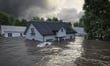
Residents of Exmouth are still out of their homes five months after Severe Tropical Cyclone Narelle, with at least one claim now referred to the Australian Financial Complaints Authority (AFCA) after the homeowner refused a settlement quote he says left damage off the report. The ABC News report follows this week's Australian Securities and Investments Commission (ASIC) home insurance cash settlement review. Western Australia is now where those findings are meeting a live catastrophe response.
The ABC reported that Exmouth resident Darryl Byatt and his family have been living in a renovated shed since the category four system tore the roof and verandah off their home in March 2026.
"We had concerns the insurance might take a little bit of time to process, we just did not expect five months," Byatt told the broadcaster.
He said he could not get a definitive answer on why items were missing from the builder's report. "It just seems to be an extreme lack of follow-up and communication."
ASIC's review found that at least 63% of the home insurance claims it examined included a full or partial cash settlement, across both the Cyclone Jasper catastrophe period and a normal operating period. Two of the five insurers reviewed used cash in more than 80% of Cyclone Jasper claims. The regulator did not identify which two.
Three findings from that review bear directly on what Exmouth residents describe.
The first is quoting practice. ASIC found insurers relied on a single quote in 52% of Cyclone Jasper claims, and that 73% of those single-quote claims used the insurer's own preferred supplier — suppliers who, as ASIC notes, generally discount in exchange for repeat business. As Insurance Business reported in its analysis of how insurers priced cash settlements at discounts clients could not access, no insurer in the review had a consistent policy of applying a contingency to close that gap.
Read next: Insurers price cash settlements at discounts clients can't access
The second is maintenance. According to insurers' own data, maintenance exclusions were the underlying reason for a quarter of Cyclone Jasper cash settlements, and half the individual files ASIC reviewed involved a cash settlement because the insurer assessed the consumer as not having adequately maintained the property.
The third is the gap between what insurers say and what they do. All five insurers told ASIC they preferred to manage repairs rather than settle with cash, a contradiction examined in Insurance Business's reporting on how cash settlement data contradicts insurers' stated repair preference.
"For many homeowners, accepting a cash settlement, instead of the insurer managing repairs, can mean taking on the responsibility of finding tradespeople, overseeing repairs, dealing with unexpected costs and navigating issues that would otherwise be handled by the insurer," ASIC commissioner Alan Kirkland said.
Exmouth sits roughly 1,250 kilometres north of Perth. Regional Alliance West lawyer Dempsey Morgan, who travelled to the town to advise residents, told the ABC that some insurers engaged builders from outside the town to assess damage and quote the work.
"Those quotes have come back higher than what the properties were insured for and that is leading to cash settlements," Morgan told the broadcaster.
Morgan added that once a cash settlement is accepted, there is limited funding available for alternative accommodation while works are completed.
Read next: Cash settlements must reflect market prices, ASIC tells insurers
That sequence is worth brokers' attention. A managed-repair preference depends on a repairer network that can actually mobilise, and a national panel is hardest to deliver 1,250 kilometres from the nearest capital. Where the scope comes back above the sum insured, cash becomes the default outcome and the client absorbs both the shortfall and the coordination.
More than 1,100 claims were lodged from Exmouth after the cyclone, more than 600 of them household claims, according to figures the Insurance Council of Australia's director of extreme weather response, Liam Walter, gave the ABC. Walter said properties with extensive damage could expect a five-month wait, and in some cases up to a year for repairs to complete.
"If things are not making sense or if requests are not being heard, then that complaints process is a really critical lever that customers have to kick their claim into a different path of review," Walter told the ABC.
Shire of Exmouth president Matt Niikkula said claim volume did not lower the bar. "Our expectation is they will look after each and every claim and make sure our community is not left in the dark," he told the broadcaster.
ASIC's better-practice example is the one to raise. One insurer identified uncovered roof rust, then offered to quote both insured and uninsured works and manage all repairs through its builder, provided the consumer paid for the maintenance component. One builder, one process - the alternative to leaving a client coordinating two scopes.
Where an insurer cites remote-location costs or pre-existing damage as the reason for cash, the questions are whether more than one quote was obtained, whether any contingency was applied to a preferred-supplier figure, and whether the insurer will coordinate the combined scope. Those questions are cheaper to ask before a client signs than after, as claims specialists have argued in urging brokers to pump the brakes on tempting settlement offers.
Byatt's insurer has since returned to him proposing a re-assessment, telling him the builders had missed items. "We are not sure who missed what, we can't get any answers," he told the ABC.
Insurance Business is seeking comment from brokers in Western Australia handling Narelle claims on how cash settlement offers are landing against real rebuild costs in the region