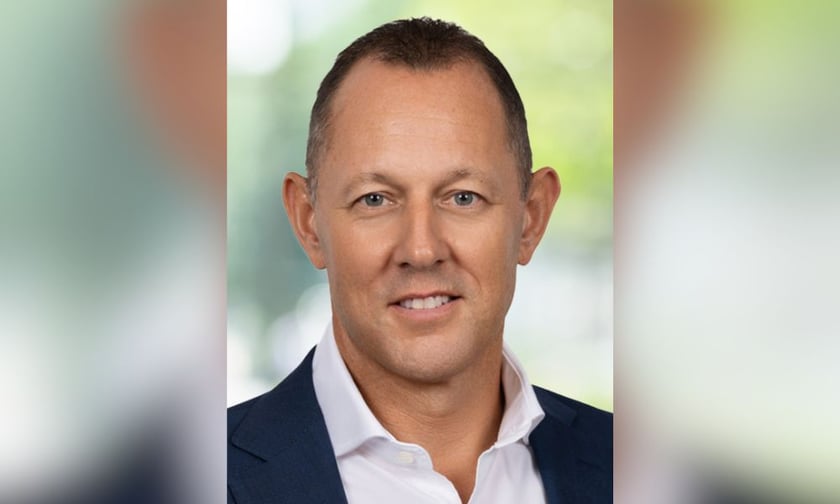
Digital platforms have made it faster than ever to get a property submission in front of an underwriter. Brendon Terry's (pictured) argument is that speed of transmission and quality of outcome are two different things and the second one can still depend on a phone call.
Terry is northern region branch manager and head of property at Arch Insurance Australia in Sydney. Asked what he looks for in a broker submission, he answered in two parts.
The first part is the document. Using an industrial special risks (ISR) slip as his example, he was specific about what a good one carries.
"For a good ISR slip, it's making sure it's a fully completed slip - with an asset schedule that has relevant construction information, fire and security protection details, a breakdown of the section 2 values by location and claims history," he said.
Section two of an ISR policy is the consequential loss section, covering business interruption. Terry's inclusion of a location-level breakdown is the notable item on that list, because it is the one most often supplied as a single group figure.
Then the second part, which he flags as the more important of the two.
"But more importantly for me - let's get on the phone together and walk through the risk profile," he said. "It allows us to better understand the risk and clarify any nuances in the program and that'll lead to a better overall outcome."
Two things in that sentence could be worth a broker's attention. Terry ranked the conversation above the paperwork, from the underwriting side of the desk. And the benefit he claims is not administrative - it is the outcome itself.
Terry is not making a case against platforms and he is explicit that they have delivered what they promised.
"We've had some great technological advances in terms of platform capabilities within different broker houses - the speed of information that comes through, with some enhancement from AI too," he said. "All of that is fantastic and has certainly made it easier in terms of collecting information."
Collecting information is the operative phrase. It describes a distinct exercise from understanding a risk and it is the one the market has spent a decade investing in.
The collection problem was worth solving. Qualitative research reported by US trade publication Digital Insurance in August 2026 described agents and brokers moving between seven and 10 separate applications to assemble a single report, frequently re-entering identical information across systems.
Whether that technology has moved into judgement work is less settled. A 2025 Bain & Company assessment, cited in Insurance Business's earlier reporting on artificial intelligence in Australian and New Zealand underwriting, found many insurers globally still in early-stage experimentation, with only a small fraction having scaled artificial intelligence broadly. Most brokers and underwriters in this market are working in the gap between pilot and deployment.
Terry's position is that closing that gap would not remove the need for the conversation.
"But I still think the crux of a good outcome is where broker and underwriter can get together and work through what the client, and each other really need in place, which will ultimately form a better solution for all concerned," he said. "That communication piece, regardless of technological advances, will always remain critical to getting the best outcome possible."
Note what he is claiming there. Not that the technology is inadequate but that the conversation is doing something the technology is not attempting.
There is a market condition that gives this some edge. In softer conditions, underwriters compete harder and the pressure to return an incomplete file eases. Selina Fowler, senior casualty underwriter at CFC, made that point at last month's Underwriting Agencies Council Market Exchange in Adelaide, telling Insurance Business that submission quality tends to slide in a soft market because underwriters are hungry and will quote on minimal information.
Fowler's observation and Terry's advice point the same way from opposite directions. A market that will quote on less is not a market that will price it better.
Asked whether younger brokers communicate differently from his own generation, Terry did not dispute the premise. He contested the assumption underneath it.
"But as someone who has been in the market many years, I'd still say: let's pick up the phone - it can be just as fast."
He was not arguing the call is better. He was arguing it is not slower - which removes the main reason brokers reach for the platform instead.
So on Terry's account, the reason a broker should call him is not to chase a missing field or confirm receipt. Those are transmission tasks and the platform handles them well. It is to explain the parts of a risk that a schedule records but cannot account for, to someone whose reading of that risk determines what the client is offered.
The submission gets a quote. Terry's contention is that the conversation is what shapes it.