The chair of the Insurance Council of Australia has told the industry’s biggest annual gathering that some Australian homes will never be made resilient enough to insure affordably, and that governments need to start talking seriously about moving people out of harm’s way.
Opening the ICA’s 2026 annual conference in Sydney on Thursday, Steve Johnston, who is also chief executive of Suncorp, blamed more than a century of fragmented state and local planning decisions for letting Australians buy and build where they never should have. By his estimate, about one in ten homes is now at high risk from extreme weather, often with little or no structural protection.
For those properties, he said, industry and government had to be ready for “the difficult conversation about relocation”, borrowing the New Zealand term “managed retreat”. He also warned that the push to fix housing supply must not repeat the planning mistakes of the past.
It was a pointed opener from a chair who has spent much of the past year steering the rewrite of the General Insurance Code of Practice. That document finally reached the regulator a fortnight ago.
The ICA lodged the redrafted code with ASIC on 22 October, after two delays to the timetable. Johnston called it the biggest step change in the code’s history. For the first time, its commitments will be contractually enforceable, alongside stronger protections for customers in hardship or experiencing vulnerability, tougher claims-handling standards and more transparency.
One change will matter directly to claims teams. The redraft would require insurers to accept home and motor claims in full if no decision has been made within 12 months because of delays within the insurer’s control.
Johnston conceded the final version “may not tick every box” for the many groups consulted, but asked the room to back it. He thanked IAG’s Julie Batch for leading the industry’s engagement with stakeholders, and noted that the ICA board, which endorsed the code in full, now includes the chief executives of every major domestic insurer.
An approved code would sit inside the policy contract, so its obligations could be argued directly through AFCA or the courts, and the wording of the policies brokers place moves to the centre of any dispute. The pressure behind the change is plain in the complaints data: AFCA received 36,022 general insurance complaints in 2025–26, the fifth straight annual rise, and claim delays were again the most common grievance.
ASIC will now assess the code under its approval process, and the ICA expects a transition period before it applies to new and renewed policies.
Read next: Draft Code would make insurer promises enforceable in court as ASIC lodgement slips twice
Johnston welcomed Treasury’s work on helping households understand what drives their home and contents premiums. He said it was only fair that customers want to know why their price has moved and what they can do about it.
His argument was that a well-explained premium works as a risk signal. Show homeowners how their risk is priced and the case for a stronger roof or better drainage becomes obvious. He went further: as pricing becomes hyper-personalised and traditional risk pooling comes under strain, customers will expect any money they spend on resilience to show up in their premium, and insurers need to be ready to deliver that.
Some of that is already happening. Government and insurers agreed Guiding Principles for Resilience Investment through the Hazards Insurance Partnership in March. Insurers taking part in the Resilience Ratings Scheme are already cutting the bushfire component of premiums by up to 60% for verified home improvements. A June communique from the partnership pointed to the 2026–27 Budget’s focus on price transparency.
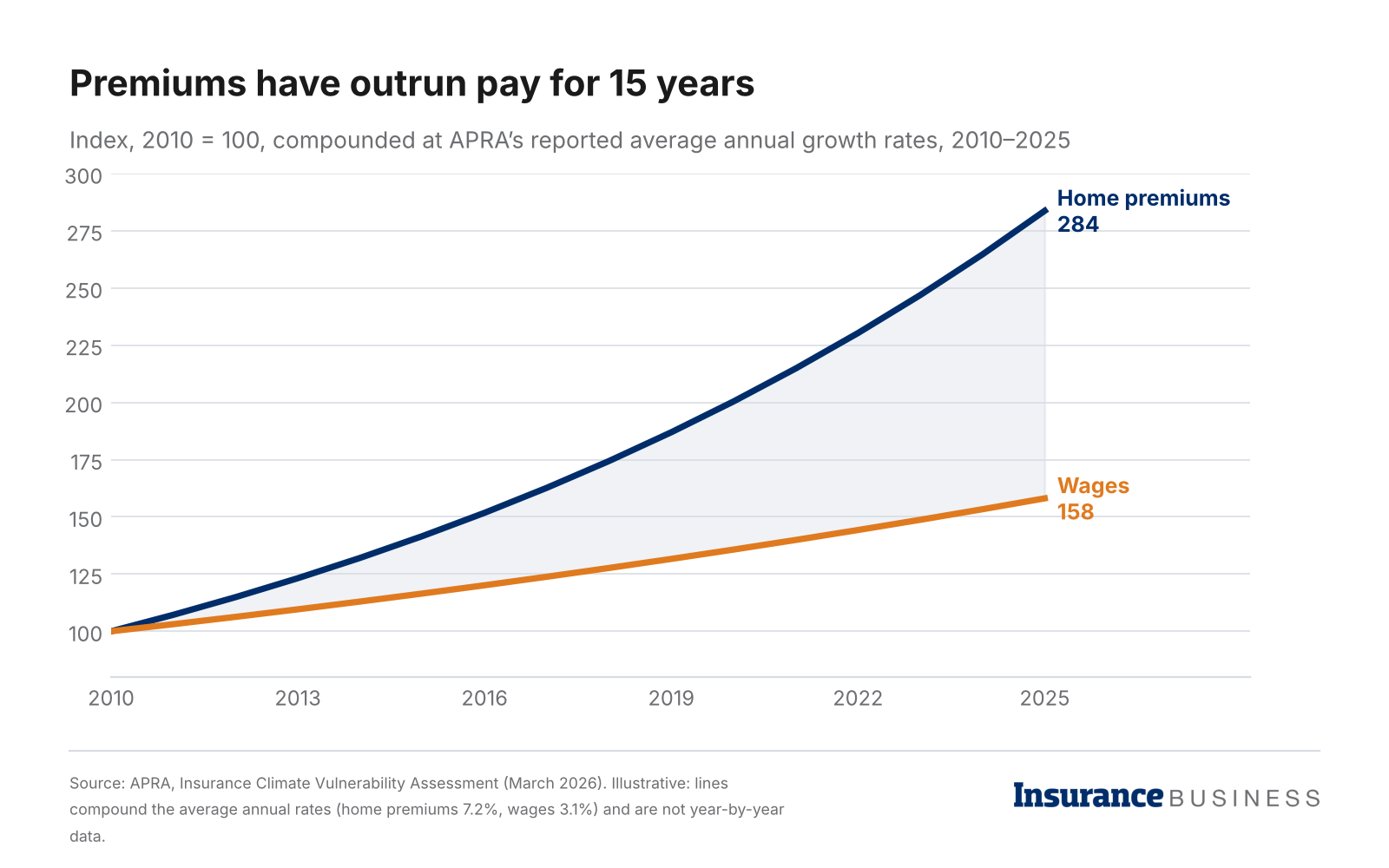
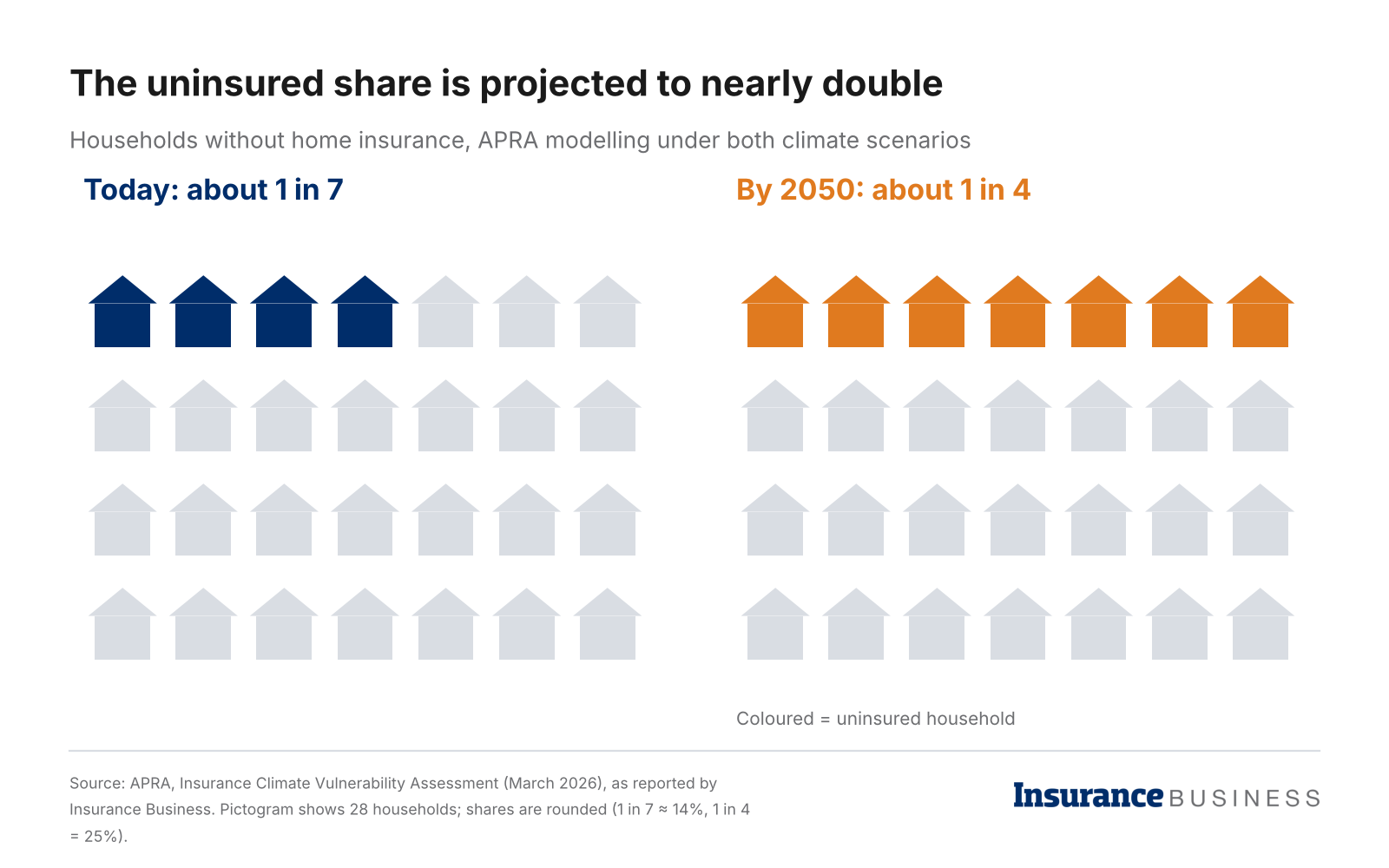
And affordability is adding to the urgency. APRA’s climate vulnerability assessment found home premiums rose an average of 7.2% a year between 2010 and 2025, against wage growth of 3.1%. It projects that the share of households without home insurance could climb from about one in seven to one in four by 2050.
Read next: Australia’s insurers begin pricing resilience. Brokers need to keep up
On mitigation, Johnston struck a more upbeat note. Years of lobbying have put resilience spending on the national agenda and funding is starting to flow. The bottleneck now, he said, is a shortage of design-ready projects big enough to move the dial, such as levees, water storage and modern urban stormwater systems.
He called for a long-term national plan backed by Commonwealth resources and coordination, with the aim of insurance that serves the whole population, “not just 70 or 80 per cent of it”. He also renewed the ICA’s long-running push against taxes on insurance that land hardest on the most exposed policyholders.
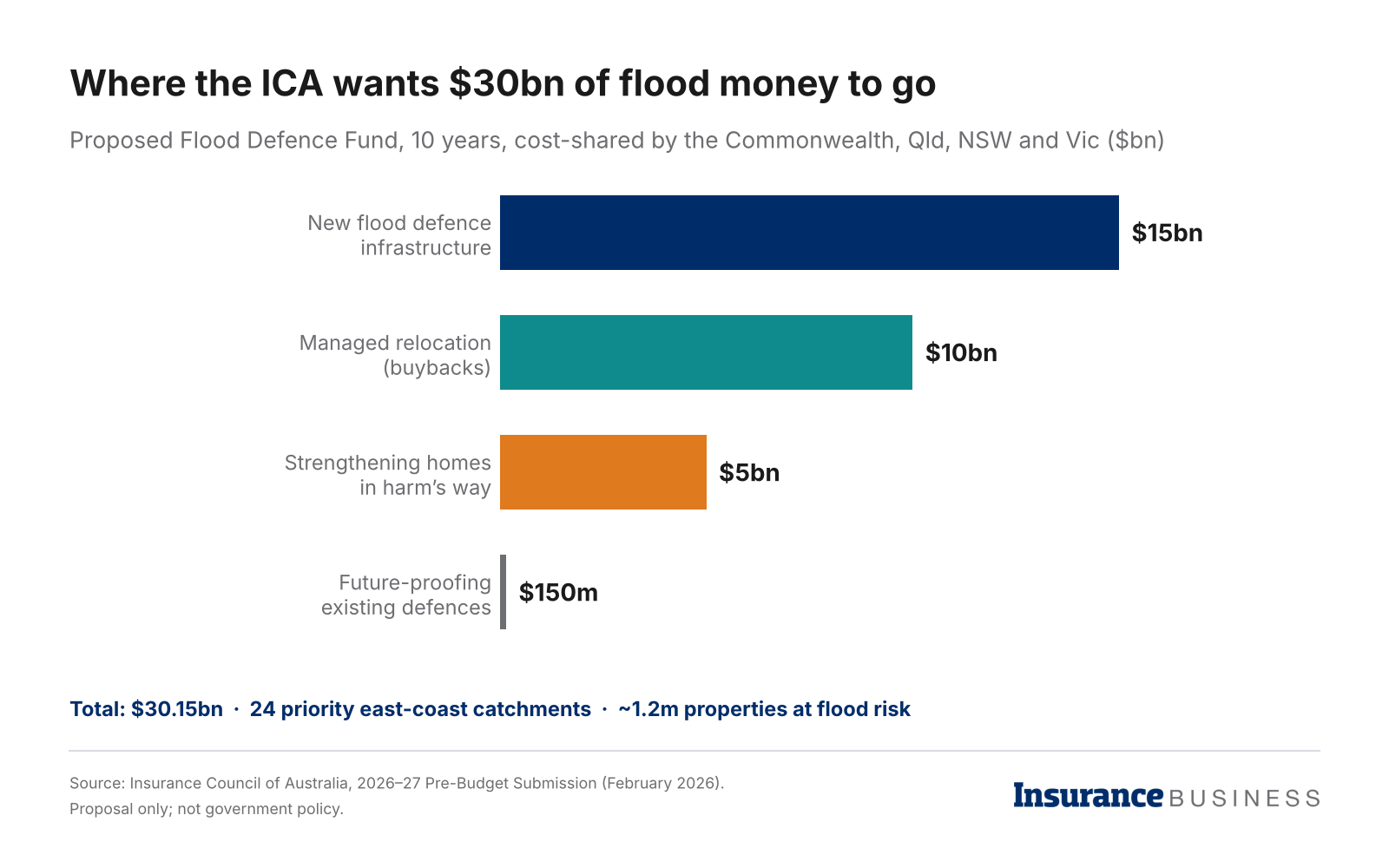
The ICA’s 2026–27 pre-budget submission proposes a $30.15bn, ten-year Flood Defence Fund, cost-shared with the Queensland, NSW and Victorian governments. It includes $15bn for new flood defences and $10bn for buybacks, which is managed retreat by another name.
The Climate Council’s 2025 analysis put 4.4% of properties at high risk and a further 10.4% at moderate risk, so the answer depends heavily on where the line is drawn.
Read next: Insurers flag funding gap for council flood defences nationwide
Johnston acknowledged that no speech these days gets far without mentioning artificial intelligence, then set out the industry’s position. AI is already helping insurers identify risk, assess damage faster and settle claims, which frees staff to spend more time with the customers who most need judgement and reassurance.
His warning concerned the regulatory perimeter. Customers may turn to AI-driven businesses for advice, or even insurance-like products, that sit outside the rules insurers must follow. That, he said, raises basic questions about how customers are protected, and the industry needs to work them through with government and regulators.
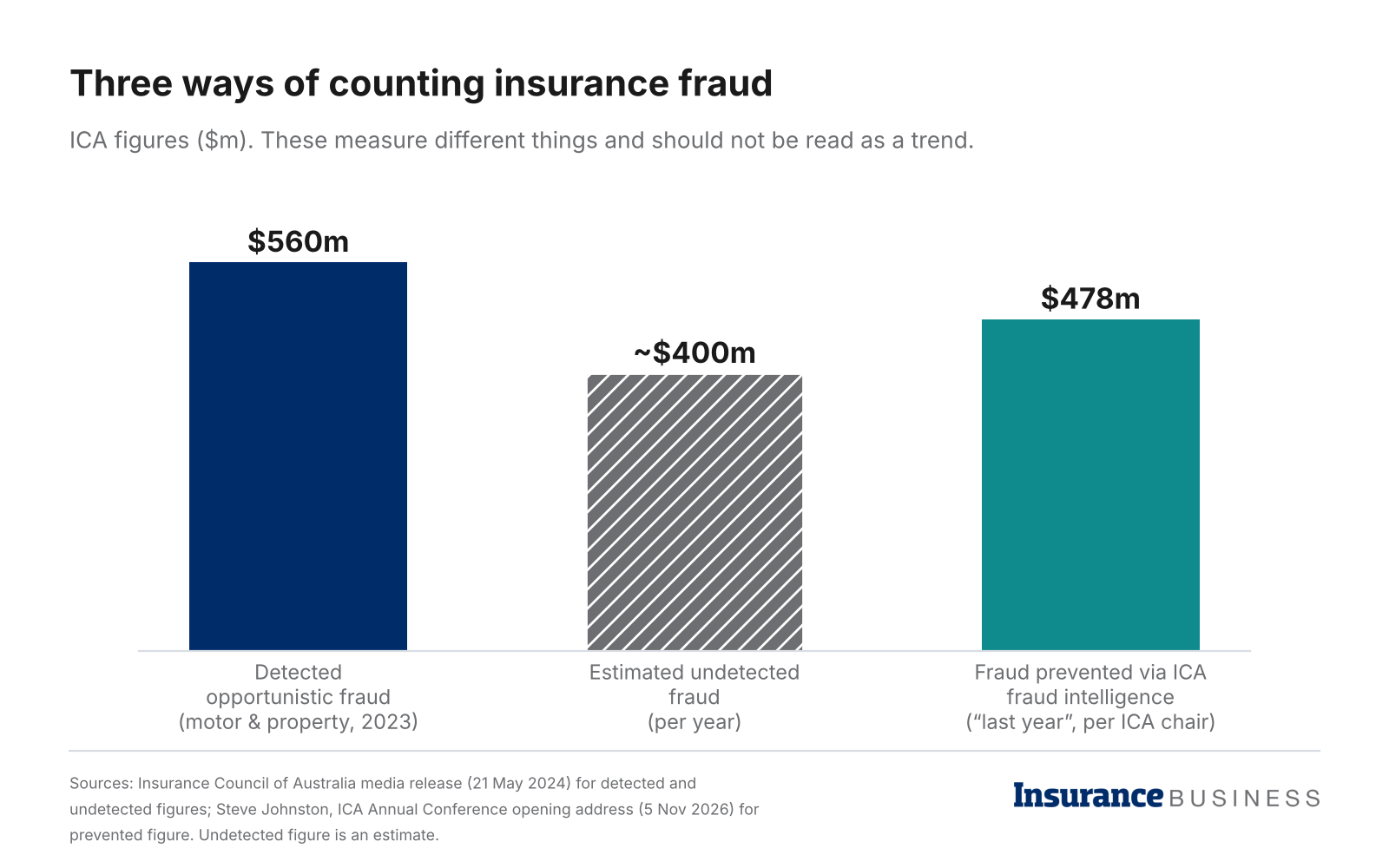
AI is also making organised fraud more sophisticated and helping criminal networks operate across borders. On the other side of the ledger, Johnston said the ICA’s fraud intelligence capability helped insurers prevent $478 million in fraud last year. The ICA set up its counter-fraud and scams unit in 2024, when it estimated that undetected fraud was costing the industry about $400 million a year.
Read next: Australian firms give AI power without full oversight
Johnston paid tribute to Sue Houghton, a former ICA president, who has just left QBE after a long career. QBE named her successor at Australia Pacific last month, and the new chief started on 1 November. Johnston also credited his predecessor, IAG’s Nick Hawkins, along with chief executive Andrew Hall and the board, with repairing the council’s standing among stakeholders.
Johnston joined Suncorp in 2006. Soon afterwards Cyclone Larry devastated north Queensland, which he described as his first real insight into what insurance does for a community. Twenty years on, his message to the room was that the industry cannot carry the risk alone, and that the next phase depends on governments building things, not just funding them.
The conference continued on Friday, with APRA member Suzanne Smith among the speakers.