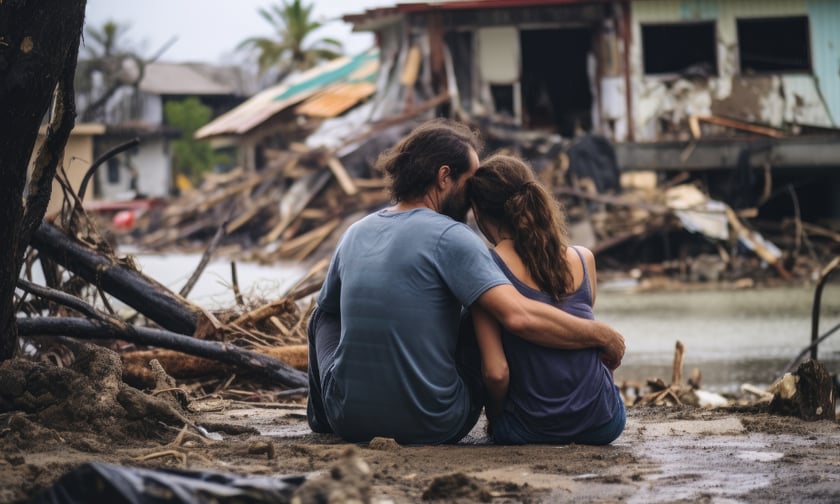
The scale of Australia’s natural peril losses is reshaping what the insurance industry considers part of its operating responsibility – and a growing number of insurers are committing to structured community programs in disaster-affected regions that extend well beyond claims handling. Youi’s Community Scrum program, now entering its third consecutive year in partnership with the National Rugby League (NRL), is one such initiative. Running from July to August 2026 across Victoria, New South Wales, and Queensland, the program delivers mental health, resilience, and grassroots sport activities to communities recovering from floods and severe storms, according to a Youi media release dated July 16, 2026.
The program’s expansion comes as the industry absorbs the consequences of an active catastrophe cycle. Extreme weather events cost almost $3.5 billion in insured losses from 264,000 claims in 2025, with five events declared significant or catastrophic by the Insurance Council of Australia (ICA), including Ex-Tropical Cyclone Alfred in March, the North Queensland Floods in February, and the Mid North Coast floods in May.
KPMG’s General Insurance Insights & Analysis 2026 reports that natural hazard losses across the industry totalled $4.46 billion for the year to December 2025 – up from $585 million in 2024 – with three catastrophes and three significant events producing claims six times higher and total losses seven times higher than the prior year. The ICA’s 2024-25 Insurance Catastrophe Resilience Report, drawing on Munich Re’s NatCatSERVICE global database, also found that Australia has ranked second only behind the US for economic and insured losses per capita from extreme weather events for most of the past 45 years.
Against that backdrop, the industry’s social licence is under active discussion at leadership level. ICA chair and Suncorp Group CEO Steve Johnston addressed it directly in his opening address at the ICA’s 2025 Annual Conference: “Our social license dictates we cannot be an industry for 70 or 80 percent of the population. Through our own efforts, and in partnership with the government, we must strive to provide affordable insurance for all our citizens.”
The ICA has identified community resilience as central to the industry’s long-term cost challenge. According to the ICA, insurance claims from natural disasters have surged in recent years, with $22.5 billion paid out over five years – a 67% increase on the preceding five-year period. In June 2026, the ICA and the Insurance Council of New Zealand (ICNZ) formalised a bilateral partnership, the Resilient Insurance Markets Initiative, designed to coordinate policy advocacy and drive community resilience outcomes. “Extreme weather is no longer just a community issue; it is a fiscal one,” ICA CEO Andrew Hall said.
Individual insurers are acting on that framing across multiple models. In August 2025, NRMA Insurance renewed a three-year partnership with the South Australian State Emergency Service (SA SES) to expand community disaster preparedness programs, with the SA SES noting the growing frequency and severity of weather events as driving the need for continued engagement. Youi’s program operates on a related logic, though its focus is post-event recovery rather than preparedness.
Youi chief marketing officer Angela Greenwood described the rationale directly: “As an insurer, we see firsthand the lasting impact these events can have on local communities. Through our partnership with the NRL, we’re able to support young people with programs that promote mental wellbeing, resilience, and connection at a grassroots level.”
The mental health component of the program sits within an established government policy framework. The Australian government’s National Disaster Mental Health and Wellbeing Framework, developed by the National Mental Health Commission and the National Emergency Management Agency (NEMA), identifies strengthening local community capability as a key priority and recognises that mental health support during a disaster requires a collaborative approach involving governments, community organisations, and the private sector.
In a July 2025 submission to the Productivity Commission, NEMA stated that increased demand for mental health services continues beyond the immediate aftermath of disasters for years later, and that the compounding nature of recurrent disasters is leading to growing impacts on community mental health across Australia. NEMA also notes that children and young people will have the greatest exposure to climate change across their lifetime and will disproportionately experience its adverse impacts – a finding that directly contextualises a program targeting school-age participants. A May 2025 University of Melbourne cohort study published in The Lancet Public Health found that additional disaster exposures were associated with greater declines in mental health and concluded that multiple disaster exposures must be urgently considered in public health, welfare, and disaster services.
The Youi Community Scrum launched in 2024, when Youi and NRL facilitators visited the NSW Northern Rivers and outer Brisbane regions – both still recovering from significant flooding. The program was delivered across local schools and clubs including the Mullumbimby Giants and Brothers Saint Brendan’s, with Youi providing equipment funding to replace training gear lost during flood events, according to Youi’s program page published in May 2025. The 2025 iteration extended the program to Gympie in Queensland, before the 2026 edition expands further to the Griffith/Wagga and Gold Coast regions. This year’s program is expected to engage more than 250 participants across schools and clubs including the Geelong Sharks Rugby League Club, Werribee Bears, and Coffs Harbour Comets.
Sessions are led by NRL community ambassadors, including former Warriors and Titans player Clinton Toopi, now NRL State of Mind program manager, and delivered through three frameworks: State of Mind, GAAME (Growth through Athletic Achievement, Mentoring, and Education), and League Stars Inspire. “We’re excited to partner with Youi once again to deliver the Community Scrum program in 2026, an important initiative dedicated to strengthening communities recovering from significant challenges,” Toopi said.
The ICA is simultaneously advocating for the Disaster Ready Fund to be extended to a 10-year rolling program and indexed against inflation, arguing the measure is essential to closing the insurance protection gap. For insurers carrying product exposure across vehicle, home, and small business lines in high-risk regions, the relationship between community resilience and long-term claims frequency is a live commercial question. The widening pattern of structured community investment across the sector suggests insurers are increasingly treating post-disaster engagement as a standard operating commitment – not a discretionary one.