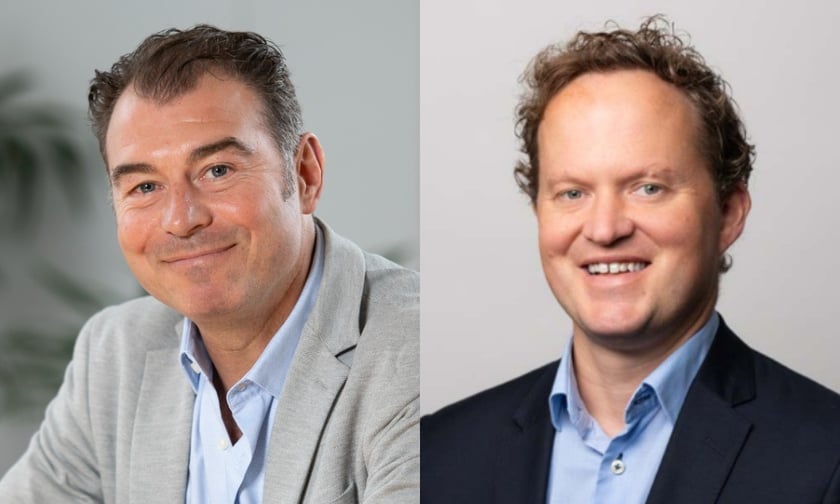
As insurance brokers continue to become less focused on the transaction and more focused on advice, they increasingly share turf with management consultants and risk consultants. This shared turf depends on trusted relationships and on the adviser's own experience - ideally of a client that has been through a loss. The title of a book by Adam Dixon (pictured left), a Sydney-based partner at global management consultancy Kearney and chair of its Australia and New Zealand business, could refer to the broking profession.
Australia: A Lighthouse in the Global Storm – The CEO Imperative is a metaphor about steady guidance in bad weather, which happens to be the oldest sales pitch in insurance broking. Consultants got there via productivity statistics. Brokers got there via nat cats. The book argues that slowing productivity growth, geopolitical fragmentation and artificial intelligence are combining into structural pressure that boards can no longer treat as background noise.
Asked directly whether there was any resemblance between his work and a broker's, Dixon did not hedge.
"I think the idea of a trusted advisor expands far beyond that of just the consultancy," he said to Insurance Business. "I think it's true of the professional services industry more broadly and I would include insurance brokers in that," he said.
In these relationship based businesses one quality matters above all others.
"When it's a relationship-based business – and I would say that insurance brokers, similar to consultancies and law firms and otherwise, have a relationship-based business – then trust is paramount in providing advice," said Dixon.
Patrick Hunter (pictured right), Pacific head of risk consulting at Lockton in Sydney, occupies the ground between the two. He is inside a broking firm but is not a broker and he was precise about the distinction.
"So risk consulting, risk practices - it's called different things, the blue team, the red team, the black team, whatever - but largely when you're talking about risk consulting, you are not talking about what the premium is going to be," he said. "You are talking about identifying the exposure, quantifying the exposure and coming up with ways to manage it."
He said these days more companies are far more interested in a risk led discussion about insurance that involves a wider discussion about risk.
"More and more so, companies are far more interested in – and we talk to CFOs, treasurers and sometimes risk managers - the wider risk discussion," said Hunter. " How are we best to manage finance risk? The discussion has moved on greatly, I think, in the last 15 years from what's the premium going to be which is only part of the risk transfer and not the only way to manage risk."
That shift is what makes the technical bench the differentiator and Hunter's warning to firms attempting the same move without one is direct: "So if you don't have a risk management background, a risk consulting background, you just don't know what you don't know, right?" Hunter said. "That's why we are really heading down the path of it's a risk-led discussion, not an insurance-led discussion."
It is the same test brokers apply when they assess which of their own partners bring genuine technical depth, an issue that surfaces repeatedly in broker feedback on the underwriting agencies delivering technical support and expertise.
Advice as a business has had a difficult run in Australia, with consulting firms appearing before parliamentary committees and the sector's integrity under public examination.
"I won't comment on any of the individual firms," said Dixon. "I would say that when there's a question of integrity within the market, it's bad for the market. It's not good for the whole industry, is all I'd say."
Read next: Why brokers see a global mid-market gap
He pointed instead to Kearney's founding principle. "At Kearney, our motto that we've had since we were founded 100 years ago – a quote by Thomas Kearney – was about providing essential rightness of advice," he said. "We as a firm try and stick to that and ironically – I know I'm talking to someone in the news – but we try and stay out of the news generally."
Hunter sets a similar bar and for him it starts with who does the work. "So often when you do pre-loss studies, it's the post-loss experience that you leverage to understand where those pre-loss studies should go," he said. "If you don't have that post-loss experience, if you haven't been through it, if you haven't seen the way companies react, people react, so on and so forth – there is no substitute for that experience being used in those pre-loss studies."
That is a live issue for brokers too. Any adviser making a recommendation faces the same retrospective test: whether it holds up once a loss has exposed it, a standard that runs through what ASIC's record enforcement year signals for insurance advice and claims conduct.
This applies as squarely to a broker recommending a business interruption limit as it does to a consultant modelling a supply chain. Neither judgment gets tested until something has already gone wrong. Process can be documented and audited. What cannot is whether the adviser holding the file has sat with a client trying to trade through a loss.