A softening commercial property market hands clients something they have not had for most of the past decade: room in the insurance budget. What happens to that room at renewal is the decision that gets tested years later, at claim time.
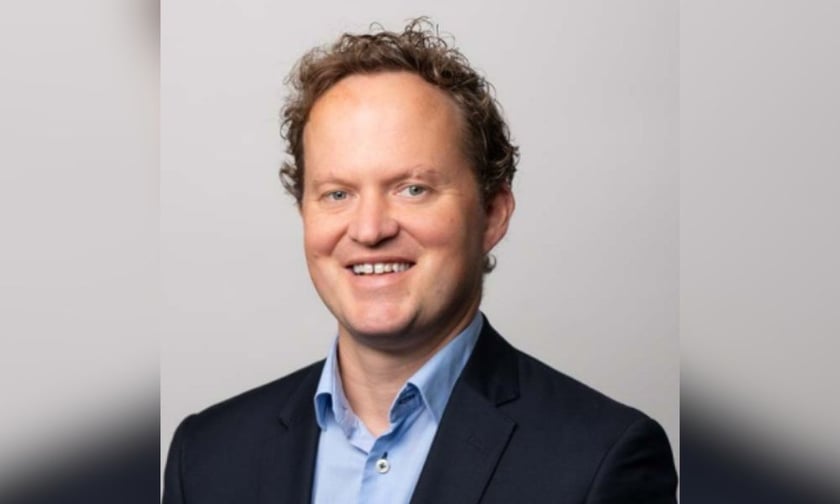
Patrick Hunter (pictured), Pacific head of risk consulting at Lockton in Auckland, has spent his career on both sides of a major loss - building pre-loss models, then standing on sites afterwards to work out what actually happened. He has watched the shortcut play out often enough to describe where it ends.
"If you go in going, oh, we don't want to do a valuation because we don't want the premium to increase, well, you know where that leads," Hunter said.
That is the sequence he identifies as the root of most underinsurance he encounters. It is not a market problem or a pricing problem. It is a process that begins with the premium and works backwards towards the risk, rather than the other way round.
Hunter puts it down to two things. The first is not having appropriately experienced people helping a client work out what their exposure actually is. That, he said, is the key one.
The second he described as the retrospective exercise - going out to a client where the whole conversation is about trying to prove a premium that has already been decided. In proper risk consulting, he argues, that is not the question at that stage of the work. The premium is down the line. The question is what the risk is and how to quantify it.
There is no black and white answer, he said, and how far down the rabbit hole a consultant should travel depends on the scenario.
Valuations are where the distinction bites hardest. An insurance valuation, Hunter said, is quite different to an accounting valuation. Consultants doing the work need relevant experience and a connection to a broader risk consulting capability, so the people producing the number understand what actually happens after a loss rather than working in a silo.
"Insurance valuations require specialist experience and a different perspective from other forms of valuation," Hunter said.
The consequence of getting that wrong does not surface at placement. It surfaces when a total loss is adjusted against a sum insured set several years and several construction cost cycles ago, or when an average clause bites on a partial loss nobody expected to be contentious.
The cycle changes the demand for risk work without changing the need for it. When capacity is tight, Hunter said, the key pillars of risk consulting - valuations, risk engineering, catastrophe modelling, business interruption analytics - are demanded by underwriters who can pick and choose. When capacity is easy to come by, the same work becomes a nice to have. More sophisticated underwriters will still ask for it. Others will not.
"A soft market is actually not a bad time to really get stuck into that risk discussion, because you can use the savings to invest in the right sort of work to make sure you're prepared for when the market turns," Hunter said.
The logic is that a soft market funds the work a hard market will require. Do the valuation and quantification work while there is budget for it, and the exposure is understood, cover is matched to it rather than carried lazily, and the evidence underwriters will want is already on file when conditions tighten again. Bank the saving instead, and the sum insured simply ages.
Hunter said the underlying exposure is indifferent to any of this. Risk, as he put it, does not overly care whether the market is hard or soft. The cycle changes how a risk is transferred or retained. It does not change the risk itself, or the discussion the entities he consults to are most interested in having. He made the point with a weather analogy: a cyclone has no view on conditions at Lloyd's, even if Lloyd's has a very clear view on the cyclone.
The saving is real. Spend it on a valuation and the sum insured holds up at claim time. Spend it elsewhere and nobody finds out it was too low until there is a loss.